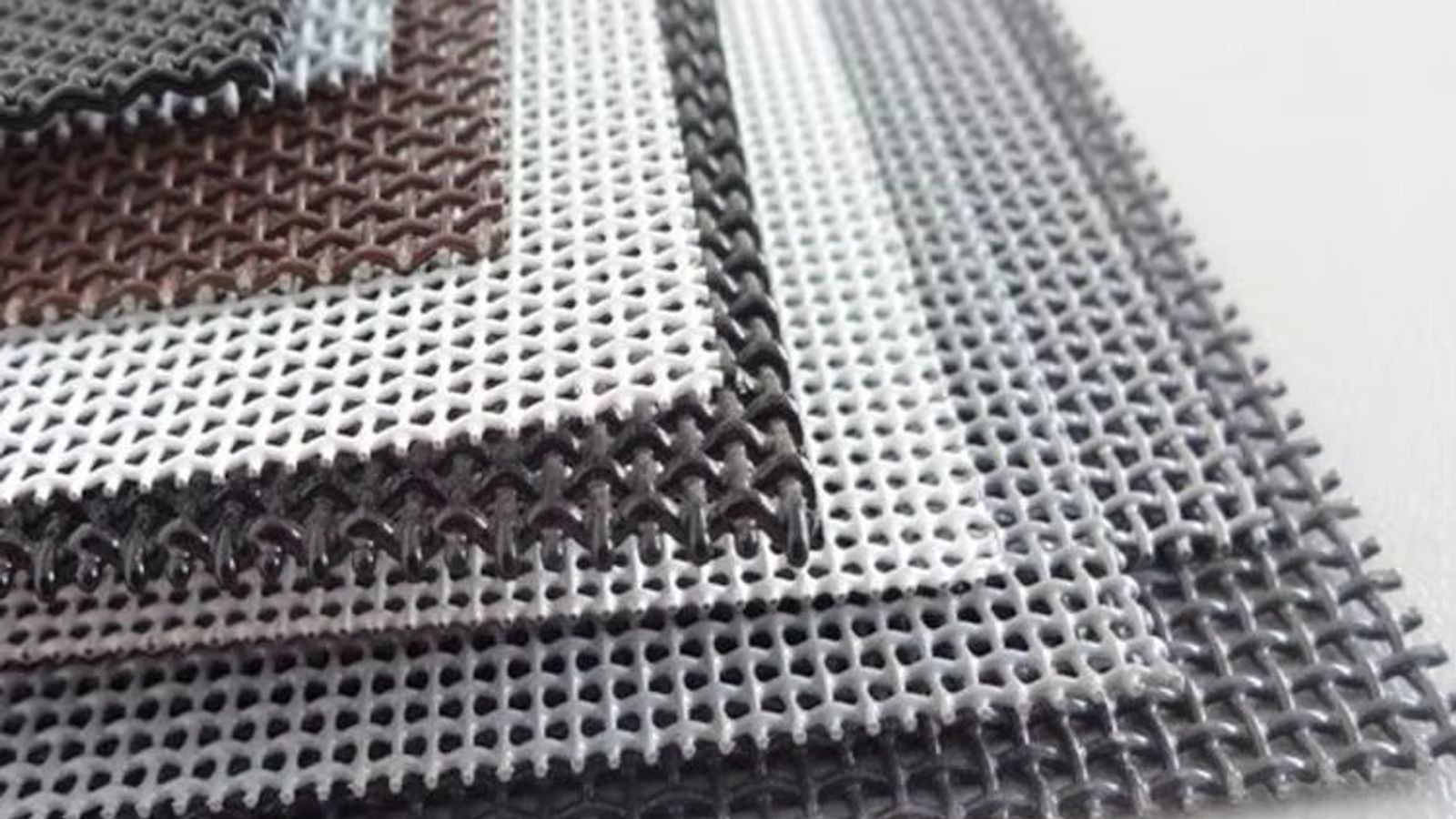
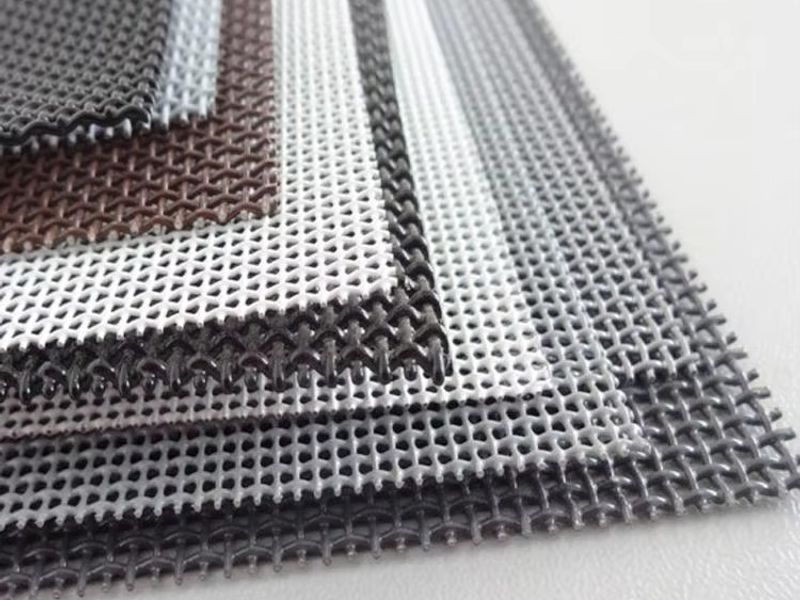
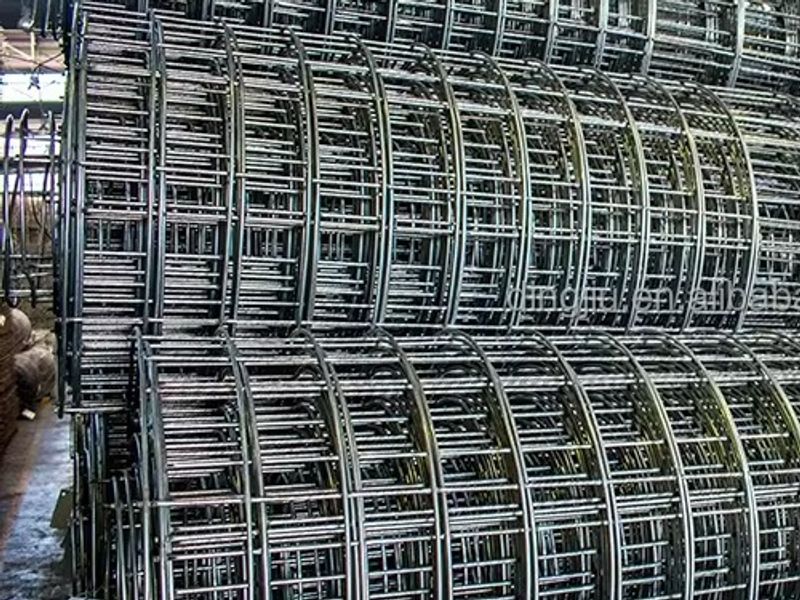
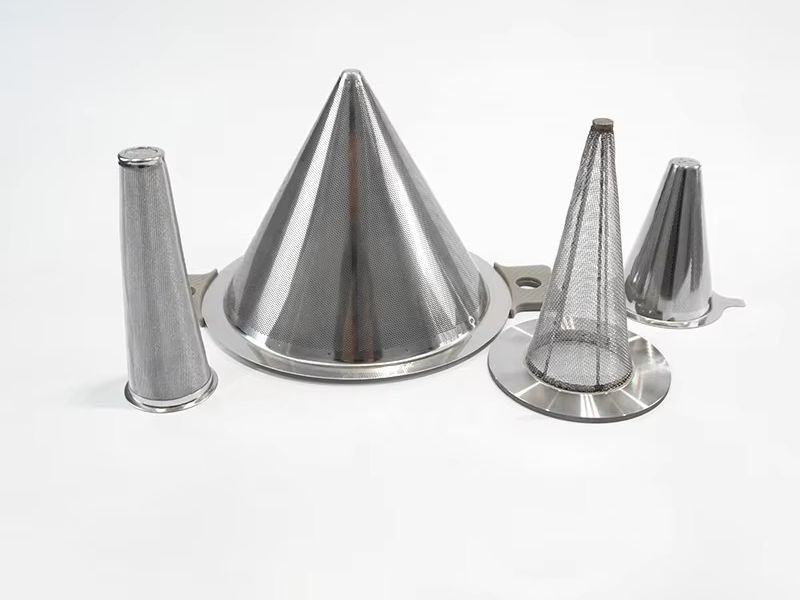
Mesh penyaring baja tahan karat standar pangan adalah media penyaring logam tenun atau sinter yang diproduksi dari baja tahan karat austenitik — paling umum SS316L (16–18% kromium, 10–14% nikel, 2–3% molibdenum, ≤0,03% karbon) — dan dirancang untuk pemisahan padat-cair dalam pengolahan makanan dan minuman. Produk ini disediakan dalam ukuran bukaan yang biasanya berkisar antara 5 hingga 500 mikron untuk tugas penyaringan makanan, mulai dari penyaringan persiapan kasar dan penyaringan pada 500 µm hingga penyaringan pemurnian halus pada 5–10 µm. Kepatuhan kontak makanan untuk mesh logam bukanlah 'persetujuan' FDA terhadap paduan itu sendiri; FDA mengatur bahan tambahan makanan tidak langsung dan zat kontak makanan, dan paduan logam memenuhi syarat ketika memenuhi kriteria permukaan kontak makanan — referensi CFR yang relevan mencakup 21 CFR 175.300 untuk lapisan resin dan polimer, sedangkan 21 CFR 177.2600 mengatur barang karet dan tidak berlaku untuk logam — serta lulus standar peralatan makanan yang diakui seperti NSF/ANSI 51 dan 3-A Sanitary Standards. Dalam praktiknya, menentukan spesifikasi mesh kawat 316L dengan sertifikat material EN 10204 3.1 yang dapat dilacak adalah standar dasar pembelian untuk penyaringan higienis.
Panduan ini memandu insinyur pengadaan dan manajer kualitas melalui pemilihan paduan, spesifikasi mikron dan jumlah mesh, persyaratan finishing permukaan, dokumentasi sertifikasi, dan protokol pembersihan — keputusan yang membedakan antara mesh yang mampu bertahan selama satu dekade siklus CIP dengan mesh yang gagal dalam audit higiene pada tahun pertama.
Mengapa Memilih 316L Dibandingkan 304 untuk Kontak Makanan
Pilihan utama untuk kontak makanan adalah kompromi antara biaya dan ketahanan korosi. Tipe 304 (18–20% kromium, 8–10,5% nikel, tanpa molibdenum) lebih murah dan sangat dapat diterima untuk tugas kering, klorida rendah, atau asam ringan seperti mengayak tepung atau menyaring air hangat. Masalahnya adalah pengolahan makanan jarang sekali seringan itu.
Tipe 316 menambahkan 2–3% molibdenum, yang secara mendasar mengubah perilaku paduan tersebut dalam tiga lingkungan yang mendominasi pabrik makanan: air garam yang mengandung klorida dan larutan garam, asam organik (sitrat, asetat, laktat), serta bahan kimia CIP terklorinasi panas. Molibdenum menstabilkan lapisan oksida pasif dan menahan korosi sumuran serta celah lokal. Pada konsentrasi klorida dan suhu yang umum dalam air garam olahan susu, jalur pengawetan, dan loop sanitasi, 304 akan mengalami korosi sumuran dan berkarat dalam hitungan bulan, sementara 316L bertahan selama bertahun-tahun. Perbandingan yang lebih mendalam dari kedua paduan ini dibahas dalam panduan kami tentang ketahanan korosi SS304 vs SS316.
Huruf "L" juga sangat penting. 316L membatasi karbon pada 0,03% dibandingkan dengan 0,08% untuk 316 standar. Selama pengelasan — dan sebagian besar mesh penyaring akhirnya dilas menjadi saringan, keranjang, kartrid, dan rumah penyaring — kandungan karbon di atas sekitar 0,03% dapat bergabung dengan kromium di batas butir, sebuah proses yang disebut sensitisasi, yang mengurangi kromium lokal dan menciptakan jalur korosi. Grade karbon rendah inilah yang memungkinkan rakitan mesh untuk dilas dan kemudian dipasivasi tanpa kehilangan ketahanan korosi sumurannya dalam aplikasi makanan. Jika proses Anda melibatkan pengelasan, 316L bukanlah peningkatan premium; ini adalah spesifikasi yang tepat.
Aplikasi Makanan dan Minuman yang Umum
Mesh makanan dan minuman bekerja di seluruh jalur pengolahan makanan dan minuman , mulai dari area penerimaan hingga mesin pengisi. Tugas umum dan konstruksi mesh-nya meliputi:
- Filtrasi minyak makan dan minyak goreng: pemurnian dan pembuangan partikel halus setelah penggorengan biasanya menggunakan screen anyaman plain atau Dutch weave berukuran 60–200 mesh pada filter press dan strainer, menahan partikel halus ampas, sedimen, dan partikel hangus sekaligus menjaga penurunan tekanan tetap cukup rendah untuk sirkulasi ulang yang berkelanjutan.
- Bir dan minuman: pembuangan trub setelah whirlpool serta penjernihan ragi dan kekeruhan mengandalkan media yang lebih halus. Filtrasi bir jernih sering kali menentukan mesh sintered atau Dutch-weave berukuran 10–30 µm, yang menyaring sel ragi tanpa menghilangkan senyawa rasa dan body.
- Jus dan konsentrat: screen pulp dan klarifikator menggunakan mesh anyaman berukuran 30–120 mesh pada strainer kerucut dan screen putar untuk memisahkan biji, serat, dan pulp pada kapasitas aliran tinggi.
- Produk susu dan keju: penanganan susu, whey, dan air garam membutuhkan mesh tahan klorida. Screen anyaman 316L pada strainer kerucut melindungi pompa dan penukar panas dari partikel halus keju dan partikel dadih.
- Saluran utilitas dan pengembalian CIP: bahkan sirkuit pembersihan pun membutuhkan perlindungan. Strainer saluran pengembalian yang dilengkapi dengan screen berukuran 40–80 mesh mencegah gasket, bulu sikat, dan serpihan kerak bersirkulasi kembali ke dalam peralatan proses.
Karena tugas penyaringan berkisar dari perlindungan kasar 500 µm hingga filtrasi pemolesan 5 µm, pabrik yang sama sering kali menyimpan beberapa konstruksi mesh dalam inventaris mereka. Pra-filter kasar dalam mesh tenun melindungi media hilir yang lebih halus, memperpanjang masa pakai kartrid dan memangkas biaya penggantian.
Peringkat Mikron vs Jumlah Mesh untuk Penggunaan Makanan
Satu-satunya kesalahan spesifikasi yang paling umum adalah memesan hanya berdasarkan jumlah mesh saja. Jumlah mesh hanyalah jumlah lubang kawat per inci linier. Ini menggambarkan kerapatan anyaman, bukan kinerja filtrasi absolut, karena ukuran lubang untuk jumlah mesh tertentu bergantung pada diameter kawat. Saringan 100-mesh yang ditenun dengan kawat 0.0045 in menghasilkan lubang nominal 149 µm; jika ditenun dengan kawat yang lebih tebal, ukurannya bisa turun hingga 125 µm atau di bawahnya.
Untuk filtrasi makanan, angka yang berarti adalah peringkat mikron — partikel terbesar yang akan melewati lubang tersebut. Seri ayakan Standar AS (ASTM E11 / ISO 3310-1) adalah referensi yang harus digunakan oleh pembeli industri makanan:
| Jumlah mesh | Lubang nominal (µm) | Tugas makanan tipikal |
|---|
| 40 | 420 | Penyaringan persiapan kasar; potongan pulpa; serpihan |
| 60 | 250 | Penyaringan umum; perlindungan pompa |
| 80 | 180 | Remah penggorengan; pulpa jus |
| 100 | 149 | Penyaringan halus; saluran balik CIP |
| 200 | 74 | Pemolesan minyak; sedimen halus |
| 325 | 44 | Klarifikasi; pemisahan ragi |
Di bawah sekitar 30 µm, Anda meninggalkan wilayah mesh persegi tenun. Anyaman Dutch polos — di mana kawat lusi lebih tebal daripada kawat pakan dan anyaman dirapatkan — mencapai peringkat absolut 2–100 µm, dan mesh tersinter lima lapis memperluas filtrasi hingga 1–5 µm dengan kekuatan yang jauh lebih tinggi. Jika target Anda adalah 10 µm atau lebih halus, spesifikasikan wire mesh anyaman Dutch atau laminasi tersinter daripada berasumsi bahwa jumlah mesh yang tinggi akan membantu Anda mencapainya. panduan konversi jumlah mesh vs peringkat mikron kami membahas aritmatika dan jebakan diameter kawat secara mendetail.
Finishing Permukaan dan Kualitas Las untuk Higienitas
Efisiensi filtrasi hanyalah setengah dari aspek kepatuhan. Elemen filter yang menyaring partikel tetapi menyimpan bakteri di celah-celah merupakan risiko kontaminasi, bukan komponen standar pangan. Higienitas ditentukan oleh finishing permukaan dan kualitas las.
Permukaan yang bersentuhan dengan makanan harus cukup halus sehingga kotoran tidak dapat menempel dan bahan kimia CIP dapat menjangkau setiap titik. Tolok ukur yang diterima, menurut Standar Sanitasi 3-A, adalah kehalusan permukaan yang bersentuhan dengan produk sebesar Ra ≤ 0.8 µm, dengan banyak pabrik menentukan Ra 0.4 µm untuk permukaan kritis. Sebaliknya, kawat mill-finish standar dan hasil las yang tidak dirawat dapat mencapai Ra 3.2 µm atau lebih kasar. Untuk mesh tenun, finishing ini sebagian besar ditentukan oleh kualitas penarikan kawat dan ketegangan tenunan; untuk bagian fabrikasi, tentukan kawat bright-annealed atau electropolished, pemolesan mekanis atau elektrolitis pada sambungan, dan pasivasi setelah pengelasan.
Kualitas las adalah bagian di mana rakitan mesh fabrikasi paling sering gagal dalam inspeksi. Las higienis harus terpenetrasi penuh, bebas dari retakan, porositas, dan celah, serta digerinda halus di bagian yang bersentuhan dengan produk. Hal itu memerlukan pengelasan orbital atau TIG dengan masukan panas yang terkendali — yang merupakan alasan tepat mengapa 316L lebih dipilih daripada 316, karena kelas rendah karbon tahan terhadap sensitisasi pada zona terpengaruh panas las. Jika Anda membeli bentuk kustom, pastikan pihak fabrikator mendokumentasikan prosedur pengelasan, dan perhatikan bagaimana bagian fabrikasi mesh kawat kustom disambungkan sebelum Anda berkomitmen pada pemasok.
Sertifikasi: Apa yang Sebenarnya Diperlukan oleh "Aman untuk Makanan"
"Aman untuk makanan" adalah istilah pemasaran; kepatuhan adalah serangkaian dokumen yang dapat diverifikasi. Untuk mesh filter 316L dalam layanan makanan, kerangka kerja yang relevan adalah:
- Kriteria kontak makanan FDA: Seperti yang dicatat di atas, FDA tidak mengeluarkan persetujuan untuk paduan logam. Kepatuhan berarti bahan tersebut memenuhi persyaratan permukaan kontak makanan berdasarkan bagian CFR yang berlaku (21 CFR 175.300 untuk pelapis; aturan zat kontak makanan untuk komponen lainnya). Pemasok harus menyatakan kepatuhan ini secara tertulis daripada menunjukkan sertifikat "disetujui FDA" yang tidak ada untuk logam.
- NSF/ANSI 51: Standar "Bahan Peralatan Makanan" yang mencakup bahan-bahan yang digunakan dalam peralatan makanan, banyak disyaratkan oleh pembeli layanan makanan komersial dan pemrosesan. Mesh dan strainer fabrikasi dapat diuji dan terdaftar dalam NSF 51.
- Standar Sanitasi 3-A: Standar sukarela untuk peralatan pemrosesan susu dan makanan yang mengatur desain, bahan, finishing, dan kemudahan pembersihan. Peralatan yang harus dibersihkan dengan metode CIP di pabrik pengolahan susu biasanya memerlukan kepatuhan 3-A.
- EU 1935/2004: Regulasi kerangka kerja Eropa tentang bahan dan barang yang ditujukan untuk bersentuhan dengan makanan. Regulasi ini mensyaratkan bahwa bahan tidak mentransfer zat penyusun ke makanan dalam jumlah yang membahayakan kesehatan atau mengubah karakteristik makanan, dan ini berlaku untuk logam yang dijual ke EU.
- Sertifikat material EN 10204 3.1: Dokumen inspeksi yang diterbitkan oleh produsen yang menyatakan bahwa material tersebut memenuhi komposisi kimia kelas dan sifat mekanis yang ditentukan, dengan ketertelusuran penuh ke nomor peleburan (heat). Sertifikat ini adalah bukti Anda bahwa kawat tersebut benar-benar 316L — mintalah sertifikat ini untuk setiap pesanan standar pangan.
Untuk komposisi kimia paduan itu sendiri, konfirmasikan juga kepatuhan ASTM A240 / A580 untuk lembaran, pelat, dan kawat. Pemasok terkemuka akan menyediakan sertifikat uji pabrik yang dapat ditelusuri ke nomor peleburan (heat lot), dan sertifikat 3.1 harus dianggap sebagai hal yang tidak dapat ditawar untuk setiap mesh yang bersentuhan dengan makanan.
Pembersihan dan Penggunaan Kembali: Kompatibilitas CIP/SIP
Salah satu alasan media mesh sangat diandalkan di pabrik makanan adalah karena 316L dirancang untuk dibersihkan di tempat secara berulang tanpa mengalami penurunan kualitas. Screen anyaman yang dipilih dengan baik pada strainer in-line atau kartrid filter dapat bertahan melalui ratusan siklus pembersihan.
Protokol pembersihan umum:
- Pencucian CIP: deterjen alkali pada suhu 60–85 °C, diikuti dengan pembilasan asam (nitrat atau fosfat) untuk melarutkan kerak mineral dan melakukan pasivasi ulang pada permukaan.
- SIP (sterilisasi uap): uap jenuh pada suhu 121–134 °C selama 20–60 menit. 316L mampu menangani suhu ini tanpa batas waktu; mesh mempertahankan geometrinya karena anyaman telah melalui proses annealing jauh di atas suhu SIP selama pembuatan.
- Pembilasan balik: untuk media sintered dan anyaman Dutch, aliran balik akan melepaskan partikel yang terperangkap di dalam kedalaman media, memulihkan aliran tanpa perlu pembongkaran.
Dua hal yang perlu diperhatikan mengenai penggunaan kembali. Pertama, bahan sanitasi berklorin panas (di atas sekitar 60 °C dengan klorin aktif) dapat menyebabkan korosi sumuran (pitting) bahkan pada 316L seiring waktu — lakukan sanitasi berbasis klorin setelah pencucian kaustik panas dan bilas hingga bersih. Kedua, jangan mengasumsikan bahwa screen anyaman bermikron tinggi dapat menyaring bakteri; mesh anyaman adalah filter partikel, bukan penghalang sterilisasi. Jika Anda memerlukan filtrasi absolut yang higienis, pertimbangkan mesh sintered lima lapis atau kartrid berlipat yang dapat diuji integritasnya, dan pasangkan dengan siklus SIP yang divalidasi.
Perbandingan: 304 vs 316L untuk Kontak Makanan
| Sifat | Tipe 304 | Tipe 316L |
|---|
| Kromium | 18–20% | 16–18% |
| Nikel | 8–10.5% | 10–14% |
| Molibdenum | Tidak ada | 2–3% |
| Karbon (maks) | 0.08% | 0.03% |
| Ketahanan pitting (PREN) | ~19 | ~24–28 |
| Ketahanan klorida / air garam | Buruk — mudah mengalami pitting | Baik — lebih disukai untuk air garam; acar; CIP |
| Ketahanan asam organik | Cukup | Baik |
| Kemampuan las | Mudah tersensitisasi | Tahan terhadap sensitisasi |
| Biaya relatif | Dasar | ~15–25% lebih tinggi |
| Penggunaan makanan tipikal | Barang kering; layanan ringan | Produk susu; minuman; minyak makan; CIP; SIP |
PREN (Pitting Resistance Equivalent Number) adalah prediktor kasar ketahanan korosi sumuran: semakin tinggi angkanya, semakin baik paduan tersebut bertahan terhadap klorida. Jika jalur Anda bersentuhan dengan air garam, garam, atau sanitizer berbahan dasar klorin pada suhu tertentu, 316L adalah spesifikasi yang tepat — dan mesh kawat anyaman polos konstruksi biasanya merupakan titik awal untuk semuanya mulai dari 40 hingga 500 mesh.
FAQ
Apakah mesh baja tahan karat 316L disetujui FDA? Tidak ada paduan logam yang "disetujui FDA." FDA mengatur zat yang bersentuhan dengan makanan dan aditif makanan tidak langsung; baja tahan karat patuh jika memenuhi kriteria permukaan kontak makanan yang relevan (termasuk 21 CFR 175.300 jika berlaku) dan lulus standar peralatan makanan seperti NSF/ANSI 51 atau 3-A. Mintalah pernyataan kepatuhan tertulis kepada pemasok Anda ditambah sertifikat material EN 10204 3.1 alih-alih "persetujuan FDA."
Berapa rating mikron yang saya butuhkan untuk filtrasi minyak makan? Untuk partikel halus dan sedimen minyak goreng, 60–200 mesh (250–74 µm) mencakup sebagian besar tugas pemurnian. Untuk filtrasi akhir minyak sulingan, media anyaman Dutch atau media sinter berukuran 10–30 µm adalah hal yang umum. Sesuaikan rating dengan ukuran particle yang Anda saring dan penurunan tekanan yang dapat diterima.
Apa perbedaan antara jumlah mesh dan rating mikron? Jumlah mesh adalah jumlah lubang per inci; rating mikron adalah ukuran lubang yang sebenarnya. Dua saringan 100-mesh dapat memiliki rating mikron yang berbeda jika diameter kawatnya berbeda. Untuk filtrasi makanan, tentukan rating mikron dan rujuk ke seri ayakan Standar AS (ASTM E11) untuk menghindari ambiguitas.
Apakah mesh kelas makanan dapat dibersihkan di tempat? Ya. Anyaman kawat 316L dirancang untuk CIP dengan detergen alkali pada suhu 60–85 °C, pembilasan asam, dan sterilisasi uap SIP pada suhu 121–134 °C. Hindari bahan sanitasi berbasis klorin yang panas di atas ~60 °C dan selalu bilas di antara tahapan kimia untuk melindungi lapisan pasif.
Bagaimana cara memilih antara anyaman kawat dan anyaman kawat sinter untuk makanan? Untuk aplikasi kasar hingga sedang (40 µm ke atas) di mana Anda menginginkan biaya rendah dan pembersihan yang mudah, gunakan mesh anyaman. Untuk filtrasi halus di bawah ~30 µm, kekuatan yang dapat dibilas balik, atau aplikasi higienis berperingkat absolut, gunakan mesh sinter multi-layer. Pilihan yang tepat bergantung pada ukuran partikel, aliran, dan apakah media tersebut harus diuji integritasnya.
Dapatkan Penawaran dengan Spesifikasi Anda
Menentukan mesh yang tepat bergantung pada tiga angka: rating mikron (atau jumlah mesh dengan diameter kawat), paduan logam (316L untuk kontak makanan), dan dimensi fabrikasi — diameter cakram filter, panjang strainer, ukuran kartrid, atau area terbuka yang dibutuhkan. Kirimkan ketiga angka tersebut ke KAIFIL dan teknisi kami akan mengonfirmasi konstruksi anyaman, finishing, serta dokumentasi pendukung yang tepat, termasuk sertifikat material EN 10204 3.1 jika diperlukan. Hubungi KAIFIL dengan jumlah mesh, mikron, dan spesifikasi ukuran Anda untuk penawaran harga mesh filter 316L kelas makanan yang mematuhi FDA, dan biarkan kami mencocokkan media yang tepat dengan proses Anda — bukan sebaliknya.