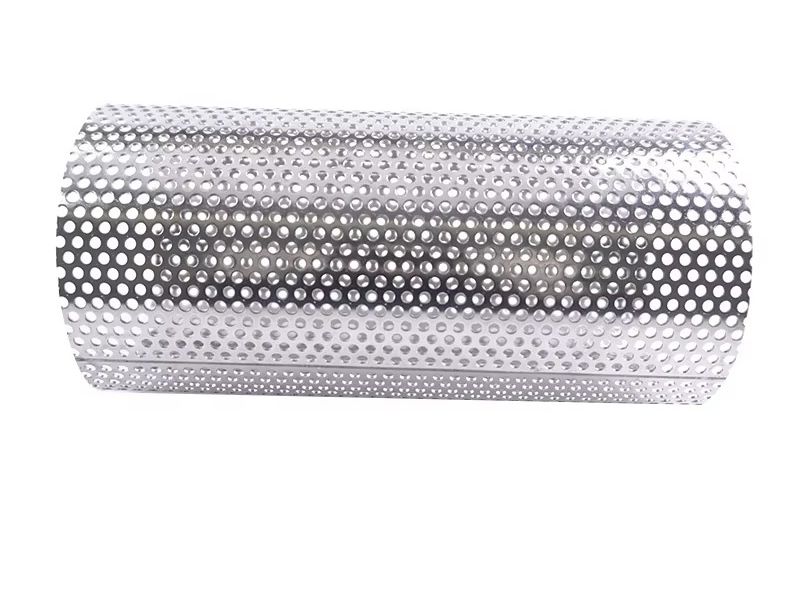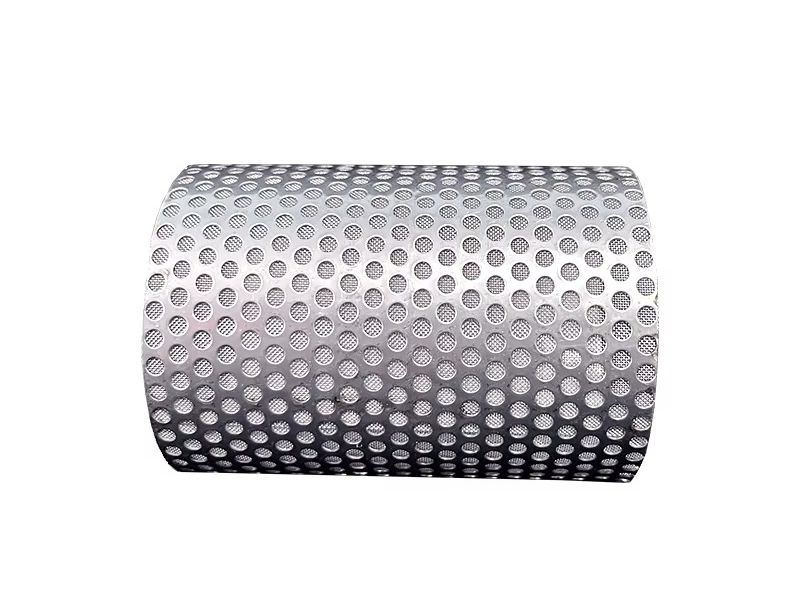
Perforated Metal Filter Cylinders
Cylinders / tubes / sleeves for filter support cores and protective sleeves, supplied to drawing with material, size and packing details confirmed at RFQ stage.
Material: SS304 / SS316LDetails →
Wire mesh filter cylinders and tubes combine woven or welded mesh into rigid or semi-rigid forms for support, protection, pre-filtration and fluid distribution. They appear in strainer housings, coalescer supports, reactor internals, automotive and hydraulic assemblies, and as reusable pre-filters upstream of fine media. Buyers struggle with seam strength, roundness tolerance, end finishing (open, flanged, threaded) and matching mesh grade to differential pressure — especially when replacing an OEM part from a sample only. KAIFIL produces cylindrical and tubular mesh elements by welding, rolling and seam finishing, with SS304, SS316L and special alloys. Send OD, ID, length, mesh specification, end type and quantity; we confirm manufacturability, seam method and lead time per drawing or sample, with MOQ confirmed per quote.
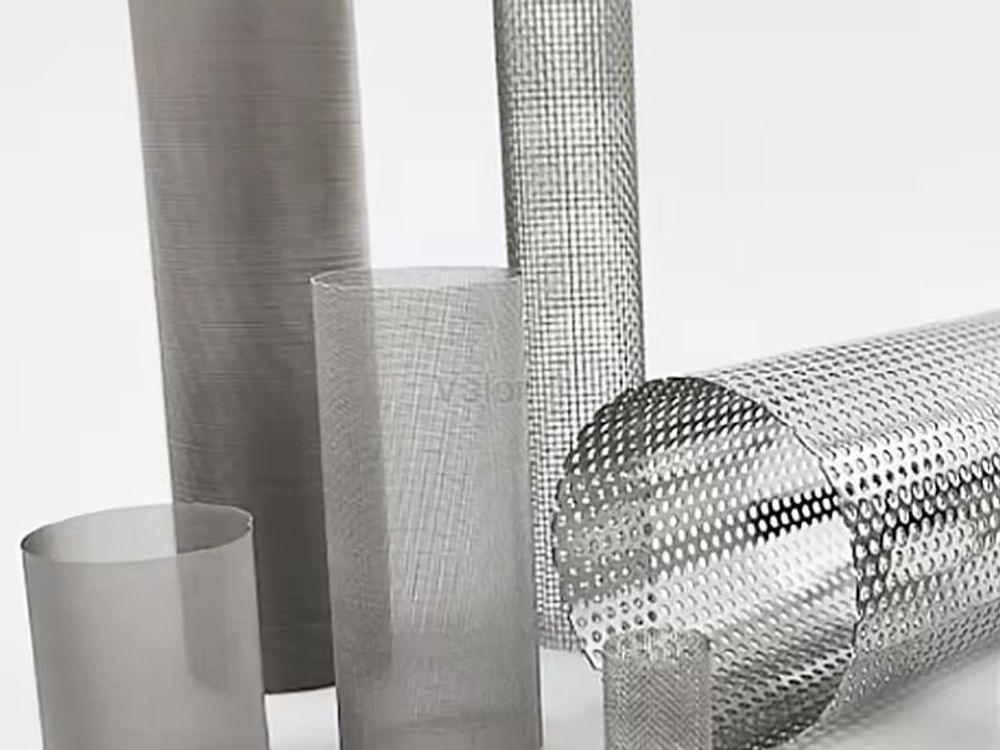
We reverse-engineer from sample or drawing — mesh grade, seam type and end finish matched to installation and duty.
Seam method (straight, spiral, overlap) and wire grade are selected for your differential pressure and CIP/chemical exposure — confirmed before production.
OD/ID tolerance, roundness and length are quoted against your housing drawing — send groove, shoulder or thread details with the RFQ.
Mesh count, weave and open area are checked against flow direction and particle load — not copied blindly from a part number.
Cylinders / tubes / sleeves for filter support cores and protective sleeves, supplied to drawing with material, size and packing details confirmed at RFQ stage.
Perforated tubes / cylinders / sleeves for filter cores, protective sleeves and liquid strainer supports, supplied to drawing with material, size and packing details confirmed at RFQ stage.
Cylindrical mesh elements act as support cores, protective shrouds, coarse pre-filters and flow distributors. They may carry no filtration rating alone or pair with inner fine media. Applications span strainers, hydraulic suction guards, catalyst support, fluidized beds and custom OEM assemblies. Define whether the part is structural, filtration-rated or both — that drives mesh selection and wall construction.
When the cylinder is structural only, open area and wire gauge can be relaxed; when it must retain particles, weave and micron mapping drive the build — list both mechanical and filtration requirements on the RFQ.
Flat mesh is cut, rolled to diameter and joined by seam welding or locking; caps, flanges or threaded ends may be added. Multi-layer cylinders combine coarse outer and fine inner mesh for graded filtration. Perforated metal support can be added for high differential pressure duties. Process choice depends on diameter, length, alloy and cleanliness requirements — confirmed per drawing.
Long cylinders may use spiral seam orientation for strength; short inserts may use straight seam with minimal distortion. Caps welded flush or extended for handle tabs are quoted from your assembly drawing — note weld symbol requirements if applicable.
Outer diameter, inner diameter, overall length, mesh specification (count, weave, material), seam orientation, end finish (open, closed, flanged, threaded), tolerance class and quantity. For replacement parts, photos of ends and caliper readings on OD/ID accelerate review. Note operating temperature, media and whether the element is cleaned in place.
For hydraulic suction screens, note flow direction and whether the element sees pulse or steady differential pressure. For reactor internals, note cleaning frequency and whether the mesh is replaced or cleaned in place.
SS304 suits many water, air and neutral fluid supports. SS316L is preferred for chlorides, aggressive cleaners, food/pharma CIP and many chemical streams. Higher alloys are quoted for specialty corrosion or temperature — list media composition and peak temperature on the inquiry.
Passivation or pickling after welding may be required for food or pharma service — state surface finish and cleanliness requirements. Material certificates for base metal and weld filler can be included when specified on the PO.
Drawing or sample with OD, ID, length, mesh spec, end details, quantity and installation notes. Mark critical tolerances and seal surfaces. MOQ and unit price depend on diameter, seam type and end machining — confirmed per quote after specification review.
Annual volume and repeat part numbers help us plan seam tooling and mesh lot alignment. First-article dimensional reports are available when your validation file requires measured OD, ID, length and mesh spec confirmation.
Standard diameters in SS304/SS316L mesh may ship faster than first-time threaded or multi-layer designs. Samples or first-article photos are offered when validation is required — schedule confirmed per project. Share target delivery date on the RFQ.
Mesh grade is sourced from our Woven Wire Mesh range; complex flanged or multi-layer assemblies link to Custom Fabrication. Related cylindrical products also appear under Wire Mesh Filter Cylinders in the product families below.
Browse cylindrical and tubular family products listed in the product range section on this page. Mesh specification for cylinders draws from our Woven Wire Mesh category; perforated support layers may reference Perforated & Expanded Metal. When your drawing combines mesh, frame and machined ends in one assembly, quote through Custom Fabrication with the full assembly PDF. Related blog articles on mesh selection and corrosion-resistant grades help complete your RFQ — use the related blog block below for weave and material comparisons before you submit OD, ID, length and end details.
| Type | Best for | Typical note |
|---|---|---|
| Plain weave | General sieving | High open area |
| Twill weave | Fine mesh strength | More flexible structure |
| Dutch weave | Micron filtration | Dense and stable pores |
Final specification should be confirmed by sample or drawing.
Plain weave suits general screening and coarse filtration. Twill gives a tighter weave at the same mesh count. Dutch weave (especially reverse dutch) is the standard for polymer melt and fine liquid filtration—send your micron target and we recommend the weave.
Mesh count is openings per inch; micron rating is the nominal particle size retained. They correlate but depend on wire diameter and weave. Send either value from your spec sheet and we cross-check before quoting.
Request edge treatment when the mesh sits in a frame, groove or gasket seat, or when loose wires would snag in handling. We can supply raw cut, folded edges or welded frames—note the installation method on your RFQ.
Yes. Provide length, width, frame type and tolerance. We can cut from roll stock and weld or bind edges for machine installation.
List the medium, temperature and chloride exposure. SS304 covers most neutral duties; SS316L is the usual upgrade for chlorides, acids and food/pharma cleaning chemicals.
Yes—note if you need lot traceability for validation or repeat orders. We can align roll and cut-piece shipments when scheduled together.
Send your specification, drawing or operating conditions. We reply with a technical quote, not a form letter.
Uploaded reference files are included with the inquiry. For larger CAD packages, reply to the confirmation email or send them here:
Our team typically replies within 24 business hours.
Stainless steel woven wire mesh for screening, support layers and micron-rated filtration — supplied as rolls, cut pieces, discs and framed panels to drawing.
Cleanable metal filter cartridges — pleated mesh, sintered and hybrid constructions for high temperature, pressure and corrosive media where disposable media fail.
Rigid sintered stainless filters — discs, tubes, cartridges and 5-layer laminates for precision retention, high differential pressure and cleanable industrial filtration.