Wedge Wire Screen Pipe
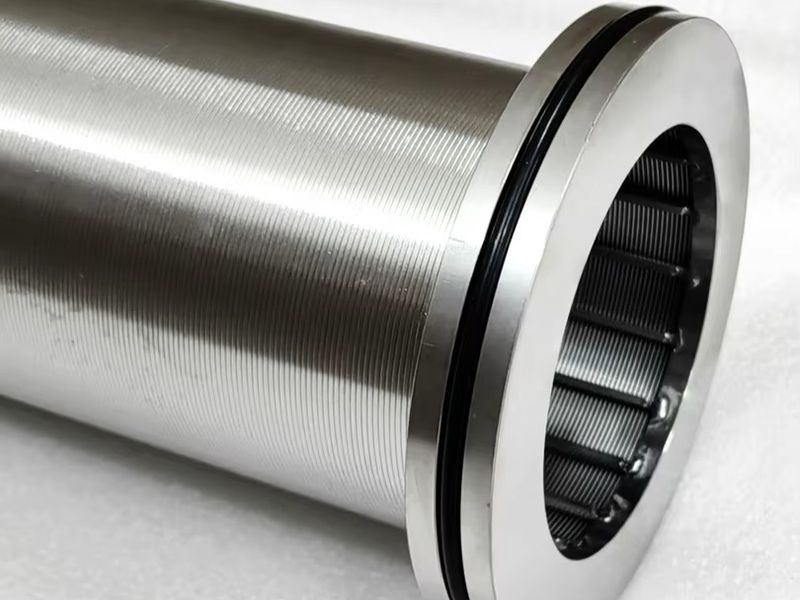
Continuous-slot screen pipe for wells, vessel internals, resin traps and dewatering systems.
Material: SS304 / SS316L / DuplexDetails →
Wedge wire screens use V-shaped profile wire wrapped on support rods to form continuous slot openings — strong, non-clogging surfaces for water wells, intake screens, pulp and paper, food processing and industrial solids separation. Buyers specify slot width (or micron equivalent), cylinder diameter, length, end connection and alloy for corrosion and strength — often comparing wedge wire to perforated or woven options without a clear duty match. KAIFIL produces wedge wire pipes, panels and laterals to drawing, with SS304 and SS316L common. Send slot size, flow direction, media, installation method (threaded, welded, flanged) and quantity; we confirm wrap geometry, support rod spacing and lead time per specification, with unit price and MOQ confirmed per quote after full drawing and slot review.
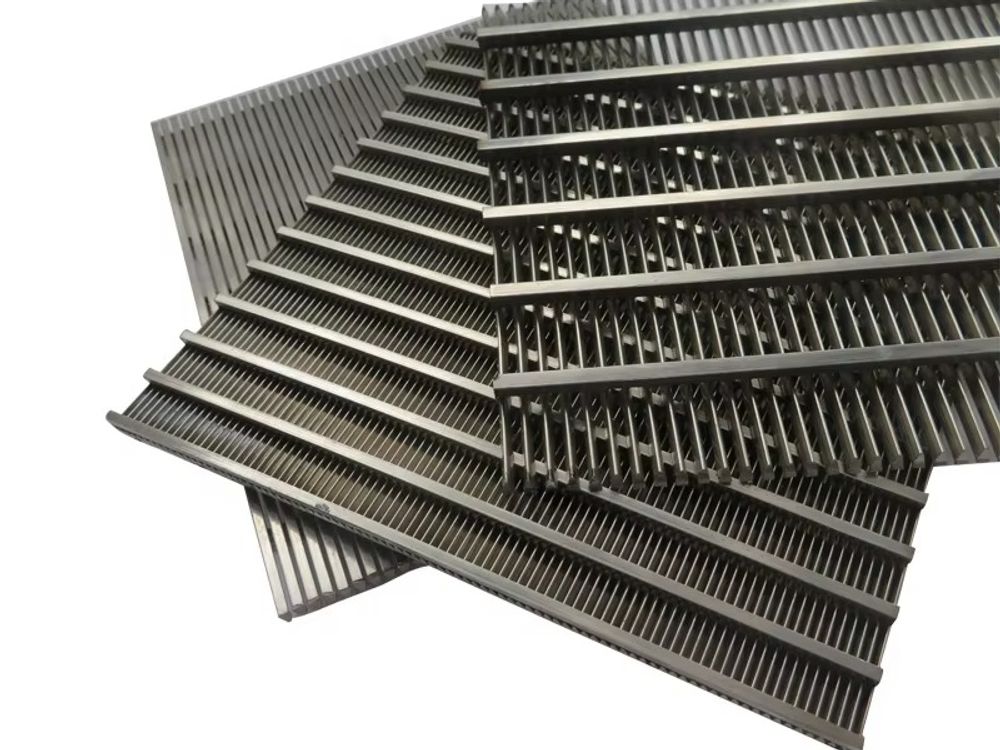
Slot width (mm) or equivalent micron opening is specified directly for wedge wire — we translate your retention requirement to slot and profile, not mesh count.
Wrap wire size, rod count and cylinder wall structure are sized for external pressure and flow — send depth, flow rate and mounting details.
Surface geometry and slot orientation relative to flow are reviewed for cleanability — note CIP or back-wash capability on the RFQ.
Reverse-engineer from sample or drawing with explicit slot tolerance and end connection machining — schedule confirmed per quote.
Continuous-slot screen pipe for wells, vessel internals, resin traps and dewatering systems.
Custom wedge wire screens / shaped panels / assemblies for non-standard dewatering, intake and separation equipment, supplied to drawing with material, size and packing details confirmed at RFQ stage.
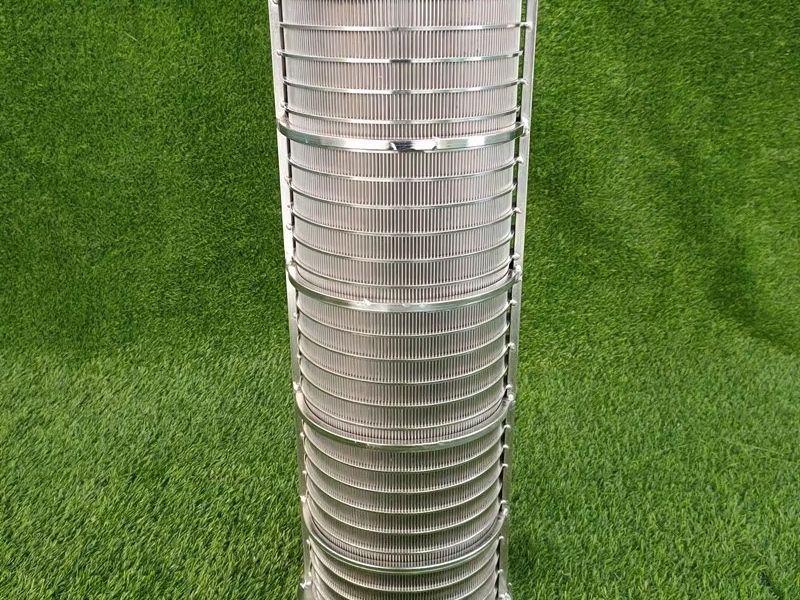
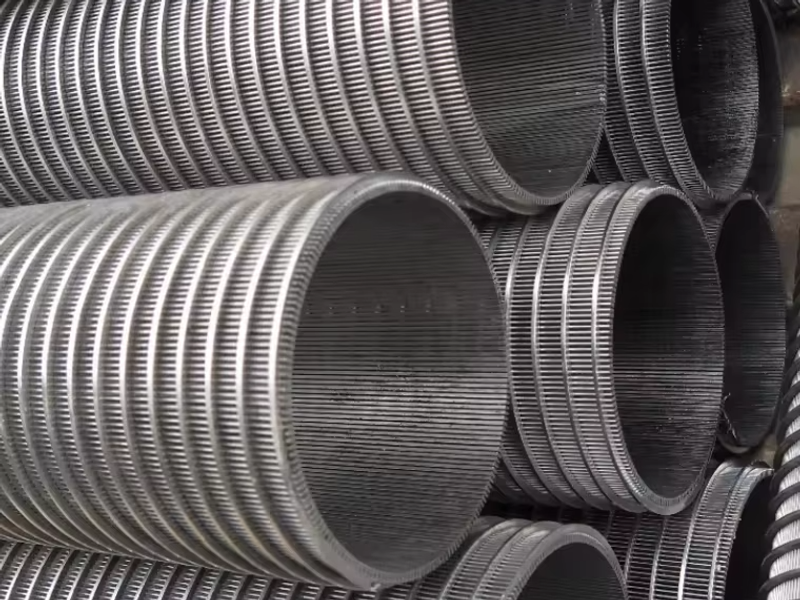
Screen cylinders / pipes / baskets for intake, resin traps, strainers and distributor internals, supplied to drawing with material, size and packing details confirmed at RFQ stage.
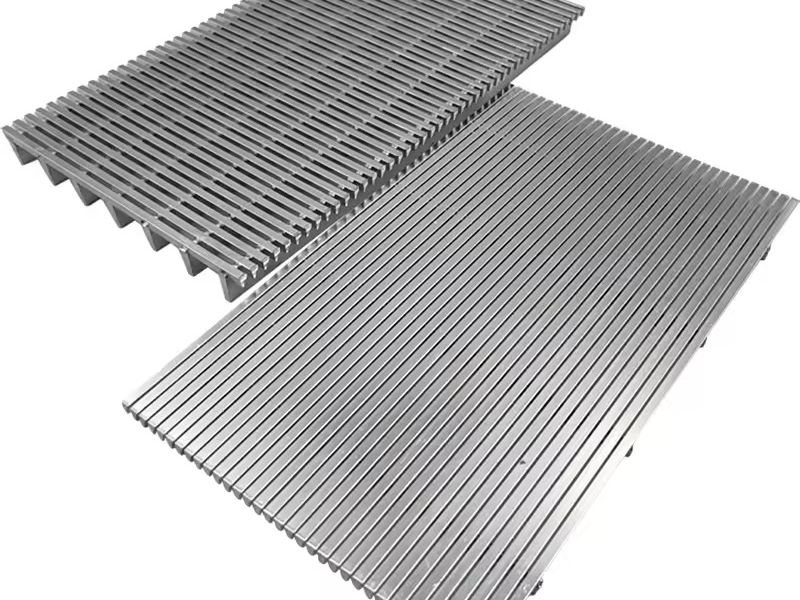
Flat panels / sieve bends / framed panels for dewatering, sizing and solid-liquid separation, supplied to drawing with material, size and packing details confirmed at RFQ stage.
Wedge wire excels where continuous slot, high open area, mechanical strength and non-clogging surface matter — wells, intake bays, centrifuge screens and some food processes. Perforated plate suits thicker support and impact duty; woven mesh suits fine rated filtration and flexible forms. If your search intent is slot screen or Johnson screen, wedge wire is usually the correct category.
Johnson-type screens for water wells often specify slot size in inches or millimeters plus minimum open area — we confirm wrap wire and rod spacing against your pump intake and gravel pack design when those details are available.
Slot width is the distance between adjacent profile wires; it defines particle passage differently from square mesh aperture. Provide required retention, fluid viscosity, allowable bypass and whether rating is nominal. Support rod spacing and wrap wire size affect strength and open area — confirmed on drawing review.
Flat panels for centrifuge or static sieves need support frame or bolt pattern on the drawing; unsupported large panels may require thicker profile wire or additional rods.
Well screens and industrial laterals are cylindrical with threaded or welded ends; flat panels suit static sieves and custom housings. Length, diameter, end cap type and connection thread must match the housing or well completion design — send complete assembly drawings where available.
Slot orientation relative to flow affects blinding in pulp and starch duty — note whether the screen is cleaned mechanically or chemically. Viscous food products may need wider slot at same nominal rating to maintain throughput.
SS304 and SS316L cover many water and mild chemical duties; higher alloys for aggressive streams. Abrasive slurries may require heavier profile wire — describe solids content and cleaning method.
Threaded end connections must state thread standard (NPT, BSP, metric) and engagement length. Welded flanges require flange rating, bolt circle and facing type — send complete flange detail, not only cylinder length.
Slot width, diameter, length, end connection, alloy, quantity and drawing or sample. Note installation environment and required documents.
Screen sections for multi-stage well completions may ship in halves with coupling sleeves — note field assembly access and whether split screens are acceptable.
MOQ depends on diameter, length, slot size and end machining — confirmed per quote. Welding to existing housings or flanges is quoted from drawing; field replacement may need split-sleeve designs — note installation access.
Compare with Perforated & Expanded Metal when duty is primarily support or coarse passage without profile wire economics. Wedge wire screen pipe family products are listed in the product range section below.
See wedge wire screen family products below for pipe and panel starting points. Compare Perforated & Expanded Metal when duty is support-heavy without profile-wire economics. Well and industrial laterals with non-standard couplings are quoted from drawing through Custom Fabrication. Application pages linked in the industry browse section show typical slot sizes and alloys by duty — cross-check before you send slot width, diameter, length and end connection on your RFQ.
For well completions, note gravel pack design, pump intake clearance and whether the screen ships in one piece or field-coupled sections. Industrial flat panels may need frame weldments or bolt patterns on the same drawing as the screen blank — quote as assembly when the housing is not yet on site. Slot tolerance tighter than typical catalog may require first-article measurement before batch release.
| Form | Use | Note |
|---|---|---|
| Pipe | Well and vessel internals | Custom OD and length |
| Flat panel | Screening and drainage | Frame optional |
| Basket | Process filtration | Drawing required |
Slot tolerance depends on size and construction.
Yes—SS316L is standard for water well, food and corrosive duties. Slot size, wall thickness and length are confirmed per drawing.
Slot is usually matched to formation grain size and pump intake design. Send borehole data or the incumbent screen spec and we propose a slot range.
Wedge wire gives non-clogging slots, high open area and rigid support for deep wells. Woven mesh suits finer retention in vessel applications—see our comparison article or send your duty.
Yes. Provide vessel diameter, header layout, lateral length and slot. We quote fabricated assemblies with welding maps on request.
Standard slot ranges in common diameters are often 2–4 weeks typical after drawing approval—confirmed per quote.
Send your specification, drawing or operating conditions. We reply with a technical quote, not a form letter.
Uploaded reference files are included with the inquiry. For larger CAD packages, reply to the confirmation email or send them here:
Our team typically replies within 24 business hours.
Welded and woven mesh filter cylinders, tubes and sleeves for support, protection and pre-filtration in industrial assemblies — made to OD, ID, length and end-finish drawings.
Stainless steel woven wire mesh for screening, support layers and micron-rated filtration — supplied as rolls, cut pieces, discs and framed panels to drawing.
Cleanable metal filter cartridges — pleated mesh, sintered and hybrid constructions for high temperature, pressure and corrosive media where disposable media fail.
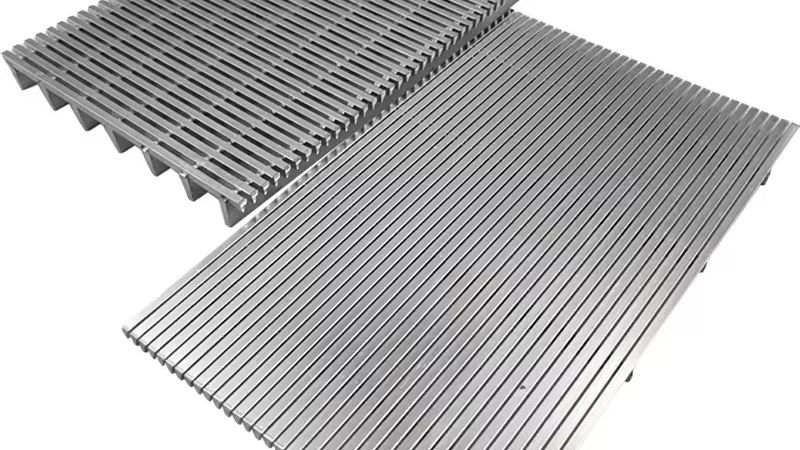
Learn how wedge wire screens improve wastewater fine screening, sludge dewatering, and MBR pre-screening. Request a quote for stainless…
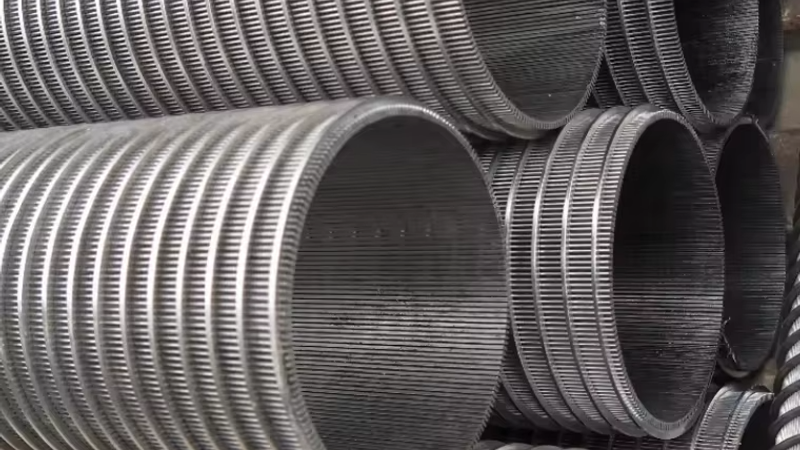
Demineralized water distributor design guide: stainless steel lateral sizing, slot selection, open area targets, and flow uniformity for…
How abrasion-resistant wedge wire screen pipe survives iron ore slurry: V-profile self-cleaning, open area optimization, slot sizing…