Perforated Metal Sheet
Perforated metal sheet for filter support, guards, screens and custom formed components.
Pattern: Round / slotted / customDetails →
Perforated and expanded metal provide rigid open structures for filter support plates, diffuser layers, acoustic and screening applications and combined mesh-perforated assemblies where woven mesh needs backing under pressure. Buyers specify hole pattern (round, square, slot), open area percentage, sheet thickness, width and alloy — often as a support layer without understanding interaction with overlaid mesh. KAIFIL supplies perforated sheet and expanded metal cut to size, with SS304, SS316L and carbon steel options where applicable. Send hole size, pitch, plate thickness, dimensions, quantity and whether the part is standalone support or paired with mesh; we confirm manufacturability, flatness tolerance and MOQ per quote, with unit price and lead time confirmed after full specification, drawing and open-area review on each request.
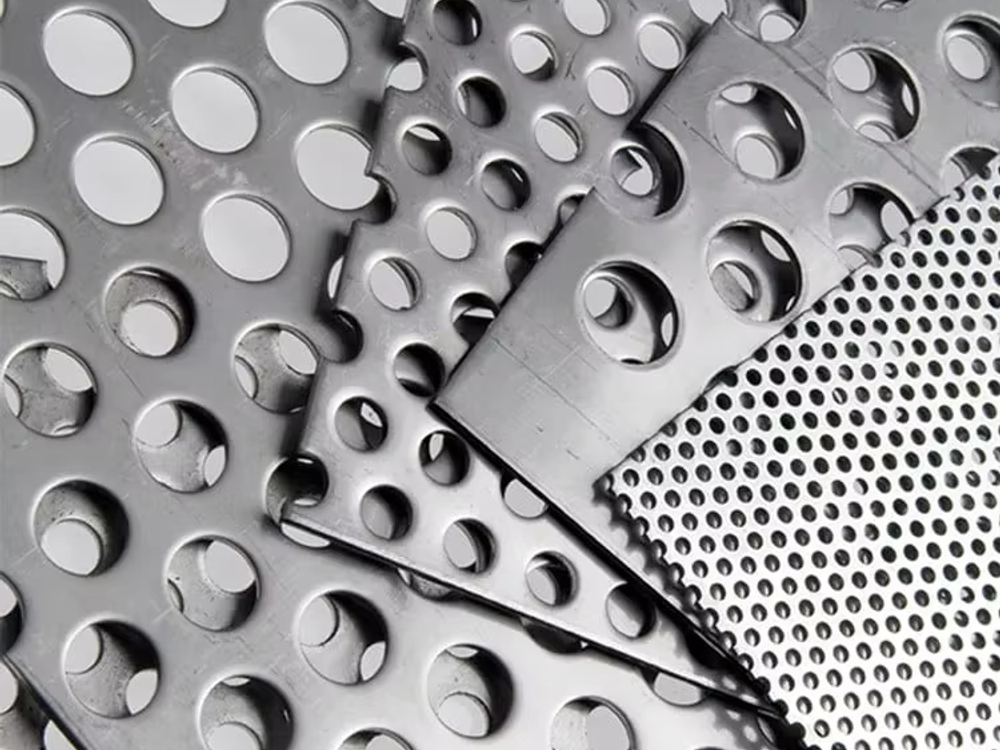
Perforated or expanded backing thickness and open area matched to mesh grade and differential pressure — combined assemblies quoted from drawing.
Hole size, pitch and pattern selected for required passage and strength — not guessed from catalog thumbnails.
Thickness and margin around bolt holes reviewed for your flange or frame load — send drawing with hole edge distance.
Alloy selection aligned for both mesh and plate in the same fluid — avoid mixed-grade stacks without engineering sign-off.
Perforated metal sheet for filter support, guards, screens and custom formed components.
Perforated sheet offers defined round or shaped holes in flat plate — precise open area and thickness for support and diffusion. Expanded metal is slit and stretched to a diamond pattern — lightweight rigidity and directional flow. Support for filter mesh usually means perforated plate; some guards and panels use expanded metal.
Round hole staggered pattern is most common for support plates; square or slot patterns suit specific flow or screening aesthetics — state pattern from your process spec or send sample plate for reverse match.
Hole diameter, center pitch and staggered vs straight pattern determine open area and strength. Provide target open area or hole size from process spec; flow direction and allowable differential pressure help validation. Slot patterns available for some duties.
Open area percentage interacts with plate thickness: high open area with thin plate may deflect under mesh lamination pressure — we flag combinations that need thicker plate or stiffening ribs on DFM review.
Thickness affects strength and weight; flatness tolerance matters when mesh is spot-welded or laminated on top. Specify sheet size, blank outline and tolerance class. Large blanks may require seam weld for oversize — noted on drawing review.
Expanded metal louver orientation may matter for directional flow in diffuser plates — note flow arrow on drawing. Carbon steel perforated support with stainless mesh overlay is possible but requires explicit approval of galvanic or process compatibility.
Combined discs and packs use perforated plate as core with mesh or sintered overlay — common in extruder and inline holders. Quote as assembly with layer stack defined; see Filter Discs & Packs and Custom Fabrication.
Blank size limits depend on press or laser bed — oversized blanks may ship as welded sections with joint location approved on drawing. Deburring of hole edges may be required before mesh lamination — specify edge condition.
Hole diameter, pitch, pattern, thickness, alloy, blank dimensions, tolerance and quantity.
Standard catalog hole patterns ship faster; new tooling for proprietary hole pitch incurs tool cost and MOQ — confirmed before order. Repeat releases can align coil or sheet lot for traceability.
MOQ depends on thickness, pattern and cut size — confirmed per quote. Standard patterns ship faster than custom tool holes; tool cost stated when new perforation pattern is required.
Used as core in filter discs and extruder packs — see Filter Discs & Packs. Mesh-over-perforated assemblies with complex outlines are quoted under Custom Fabrication with layer stack on the drawing.
Perforated sheet family products appear below for standard support plate starting points. Combined mesh-over-perforated discs and packs are covered under Filter Discs & Packs; complex welded panels under Custom Fabrication. Woven Wire Mesh overlays require aligned alloy and open-area review — send both mesh and plate specs on one drawing when quoting assemblies. Include hole pattern, thickness, blank size and quantity for standalone perforated or expanded metal supply.
When perforated plate is only the core in a laminated disc, send total assembly thickness and sealing face tolerance — not only hole pattern on the plate layer. Custom hole pitch may require new tooling and MOQ; standard staggered round patterns ship faster for support-only duty. Deburring, passivation and flatness class should match your lamination or bolt-up process — state edge condition and inspection needs on the RFQ.
Expanded metal diamond orientation may affect directional flow in diffuser or guard panels — mark flow arrow on the drawing when asymmetry matters. Oversize blanks beyond standard press width may ship as welded sections with joint location approved before cutting — note if the joint may sit in the active filtration zone. Carbon steel support with stainless mesh overlay requires explicit process approval on corrosive duty.
| Material | Feature | Use |
|---|---|---|
| Perforated sheet | Controlled holes | Support and guards |
| Expanded metal | No punching scrap | Strength and ventilation |
Surface finish and flatness can be specified.
Yes—perforated support with fine mesh lining is common for media retention and structural strength. Send total thickness budget and retention target.
Yes. Provide diameter, pattern, seam preference (welded or flanged) and tolerance.
Share required throughput and particle size. We propose hole size, pitch and plate thickness—confirmed on drawing before production.
Yes for some guard and coarse screening duties. Send load, aperture and finish requirements for comparison.
Depends on pattern tooling and sheet size. Share quantity and annual usage—we confirm whether standard tooling covers your pattern.
Send your specification, drawing or operating conditions. We reply with a technical quote, not a form letter.
Uploaded reference files are included with the inquiry. For larger CAD packages, reply to the confirmation email or send them here:
Our team typically replies within 24 business hours.
Welded and woven mesh filter cylinders, tubes and sleeves for support, protection and pre-filtration in industrial assemblies — made to OD, ID, length and end-finish drawings.
Stainless steel woven wire mesh for screening, support layers and micron-rated filtration — supplied as rolls, cut pieces, discs and framed panels to drawing.
Cleanable metal filter cartridges — pleated mesh, sintered and hybrid constructions for high temperature, pressure and corrosive media where disposable media fail.
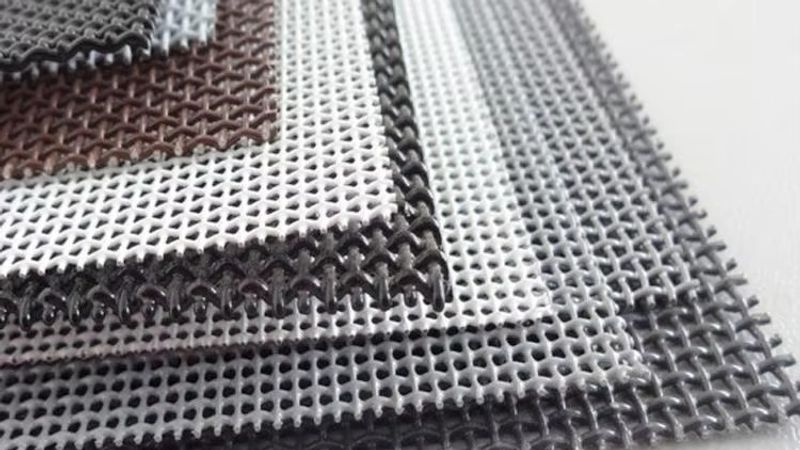
Learn how stainless steel wire mesh price per square meter is built, and how to convert per-kg, per-roll, and per-m² quotes into one…
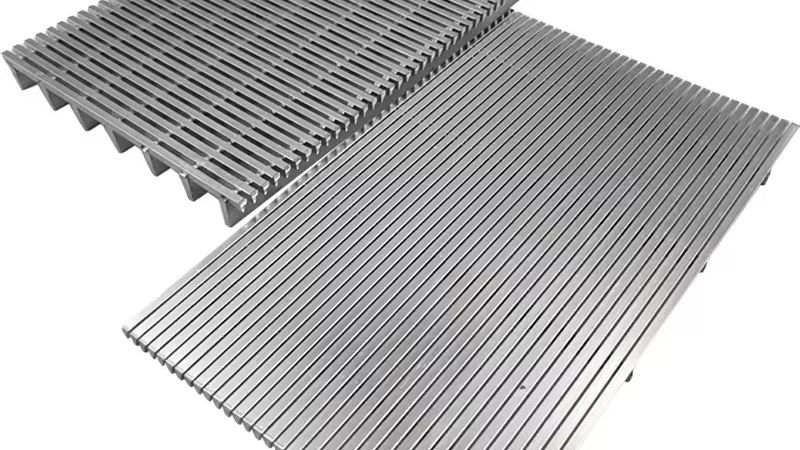
Learn how wedge wire screens improve wastewater fine screening, sludge dewatering, and MBR pre-screening. Request a quote for stainless…
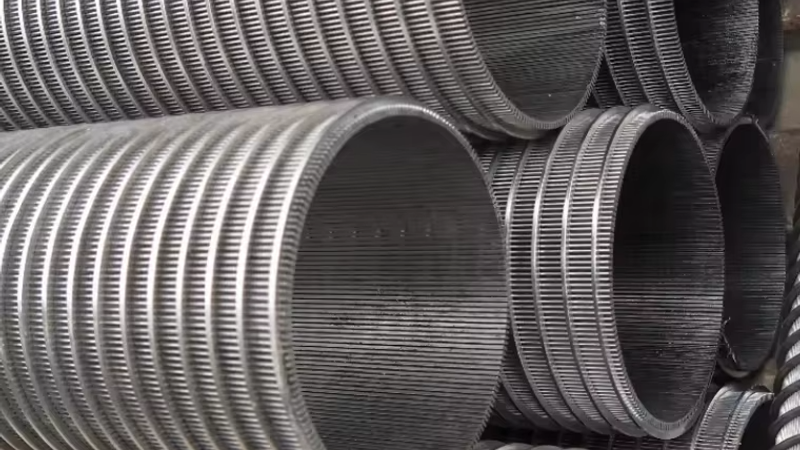
Demineralized water distributor design guide: stainless steel lateral sizing, slot selection, open area targets, and flow uniformity for…