Selection Guide
Stainless Steel Wire Mesh Price per Square Meter Explained
Learn how stainless steel wire mesh price per square meter is built, and how to convert per-kg, per-roll, and per-m² quotes into one comparable figure.
Learn how stainless steel wire mesh price per square meter is built, and how to convert per-kg, per-roll, and per-m² quotes into one comparable figure.
Two suppliers can quote the same SS304 mesh and land 40% apart. The mesh is rarely the reason. The unit is.
One quote may be USD/kg, because the mill sells metal by weight. Another may be a wire mesh price per roll, hiding width and length. A third may be per m², but exclude cutting or edging. Alloy grade, roll width, and order quantity may also differ.
Convert every offer to one wire mesh cost per m² basis. Until then, the lowest number is often the least transparent one. Normalize first, then compare.
The stainless steel wire mesh price per square meter is not a catalog figure. It is a build-up of four cost layers, and metal is usually the largest.
The first layer is pure material. A denser mesh with thicker wire packs more steel into the same square meter. That is why two screens with the same opening can carry very different weights.
The second layer is machine time. Fine mesh runs slower and breaks more often. Dutch weave also uses more wire per unit area, so its material and weaving costs rise together. This plain versus twill versus Dutch weave comparison explains why weave style changes the cost base.
The third layer is where many quotes diverge. A full roll and a cut panel with a folded edge are not the same product. Cutting adds labor and scrap. Edging adds wire, welding, or stitching.
The fourth layer is commercial rather than physical. A 100 m² order spreads setup and inspection over more area than a 10 m² order. Payment and delivery terms also change the landed cost.
Kaifil weaves plain, twill, Dutch, and crimped mesh in-house, then cuts, welds, rolls, and forms it. That means one quote can cover both the plain weave stainless steel wire mesh and the finished part. Fewer handoffs usually mean fewer hidden cost lines.
Wire diameter and alloy grade are the two biggest levers. Width and quantity decide how much of the quoted price is waste.
| Variable | Direction | Magnitude / note |
|---|---|---|
| Wire diameter | ↑ strongest | +25% diameter ≈ +56% metal mass |
| Alloy grade | ↑ | 316L often 20–40% above 304 |
| Mesh count | ↑ | Fine mesh can cost several times coarse |
| Weave type | ↑ | Dutch or crimped roughly 1.2–2× plain weaving cost |
| Roll width | ↑ if nonstandard | +10–30% per m² |
| Cutting and edge | ↑ | +15–40% over full roll |
| Order quantity | ↓ as volume rises | Small lots can approach double |
| Certification | ↑ | +1–5% |
Use these as ranking tools, not fixed multipliers. A fine Dutch weave in 316L with folded edges will not price like a coarse 304 roll.
Normalize every offer to USD/m² at the same width, edge, quantity, and delivery term. Each basis hides a different cost.
Confirm that mesh count and micron rating describe the same opening; a unit conversion cannot fix a spec mismatch. This mesh count to micron conversion chart helps when two quotes name the same cloth differently.
| Quote basis | What it covers | Convert to USD/m² | Ask |
|---|---|---|---|
| Per kg | Metal; maybe weaving | kg price × area mass (kg/m²) | Is area mass actual or nominal? |
| Per roll | Full roll at standard width | Roll price ÷ (actual width × length) | Is width open or trimmed? |
| Per m² | Mesh area only | Match width and edge first | Are cutting and freight included? |
Never compare a per-kg material quote with a per-m² finished-panel quote. One includes fabrication; the other may not.
Two formulas turn any quote into USD per m². First calculate area mass, then add the non-metal lines.
W = d² × N × k gives area mass in kg/m². Here d is wire diameter in mm, N is mesh count per inch, and k is a weave factor. Plain weave uses roughly 0.4–0.6; crimped or Dutch weave raises it.
P = W × A + F + C + R gives price per m². A is alloy price in USD/kg, F is weaving cost, C is cutting and edging, and R is margin.
Worked example. Take d = 0.10 mm, N = 100, k = 0.5. Then W = 0.10² × 100 × 0.5 = 0.50 kg/m². At B USD/kg, material cost is 0.50B per m². If d rises to 0.12 mm, W becomes 0.72 kg/m², up 44%. Total price rises less than 44% because F and C stay fixed.
For cut panels, itemize fabrication. A quote for custom wire mesh fabricated parts should show cutting, edge, and nesting yield separately.
A factory can quote lower because it removes duplicated handling, not because it uses less metal.
When a trader buys finished mesh, every later step adds a margin and a second inspection. A mill that weaves its own mesh controls the first cost layer directly. It can match roll width to the order, so less edge trim is scrapped.
Full-width delivery avoids welding narrow strips into a wide panel. Shared nesting between cut jobs also raises material yield.
In-house checks for mesh count, opening, and dimensions replace third-party inspection fees. Stock mesh often ships in 5–10 days; custom work typically takes 15–25 days after deposit.
Ask how much of the process stays in one plant. This guide on choosing a wire mesh filter manufacturer lists the questions worth sending with an RFQ.
The SS304 mesh price has no single value. It moves with wire diameter, mesh count, width, edge work, and order size. A coarse stock roll and a fine cut panel can differ by several times per m². Convert your quote to USD/m² and compare the same specification.
Usually the cheaper offer uses thinner wire, a narrower actual width, a lower alloy grade, or no edge finishing. It may also quote per kg while the other quotes per m². Check the specification and unit before treating it as cheaper. A 40% gap often disappears after normalization.
Neither is better in isolation. Per kg reflects metal value and suits raw mesh comparison. Per m² reflects what you install and should include cutting, edge, and packing. Buyers should ask for both, then convert to USD/m² for the final price comparison.
Yes. Standard widths use less edge trim and fit common looms. Nonstandard widths create more waste and may need extra slitting. Very wide panels may require joining, which adds labor and a seam. Quote actual open width and usable area, not nominal width.
Minimum quantity depends on setup and nesting yield, not a fixed number. A simple panel may run from a small trial batch. Complex shapes with tight tolerances need more pieces to absorb setup. Share the drawing and annual volume so the supplier can propose a sensible lot.
Sample charges depend on size and material. Ask whether a small stock swatch is free and who pays freight. Custom-cut samples usually carry a setup charge. Request the sample policy and lead time with the quotation before you place the order.
Send your mesh specification or drawing to Kaifil's contact page. Include alloy, wire diameter, mesh count, width, length, and edge detail. You will receive a line-by-line quote in USD per m², with cutting and freight shown separately.
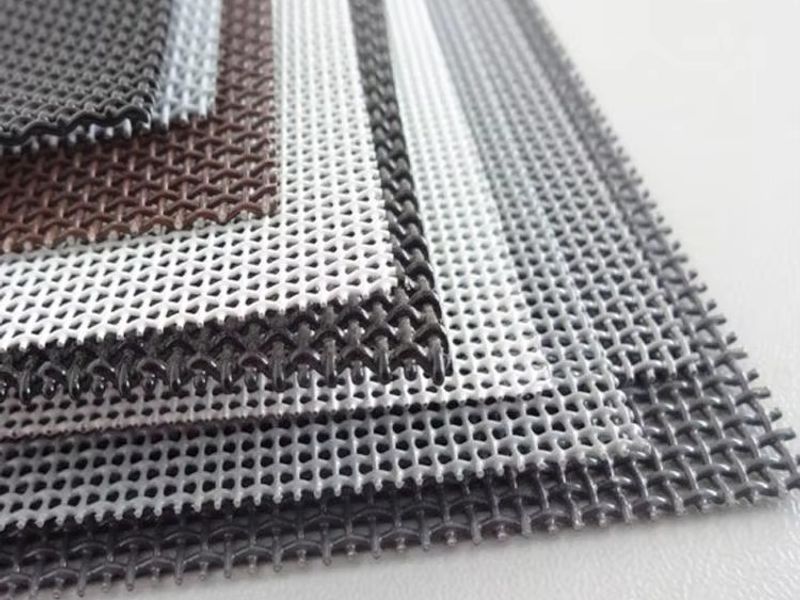
Square-opening woven wire mesh for screening, support layers and custom fabricated filter parts.
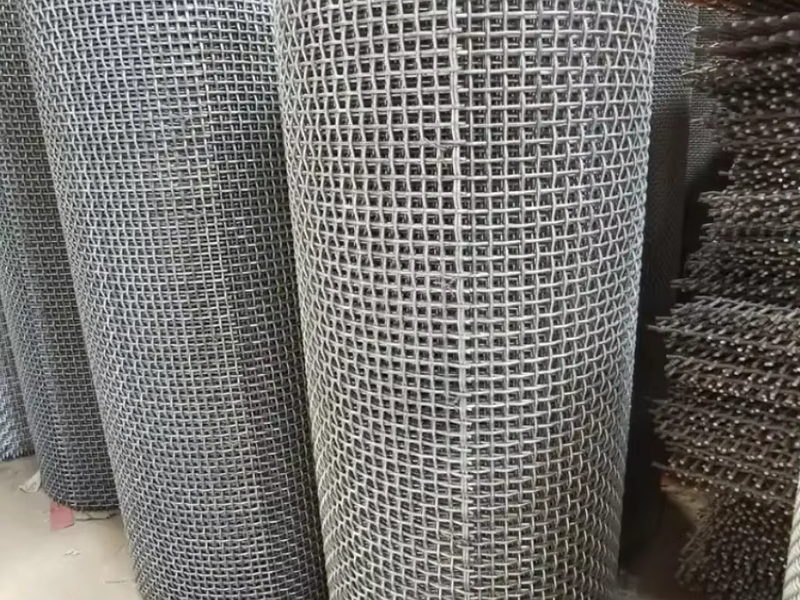
Panels / sheets / custom screens for heavy-duty screening and protective mesh, supplied to drawing with material, size and packing details confirmed at RFQ stage.
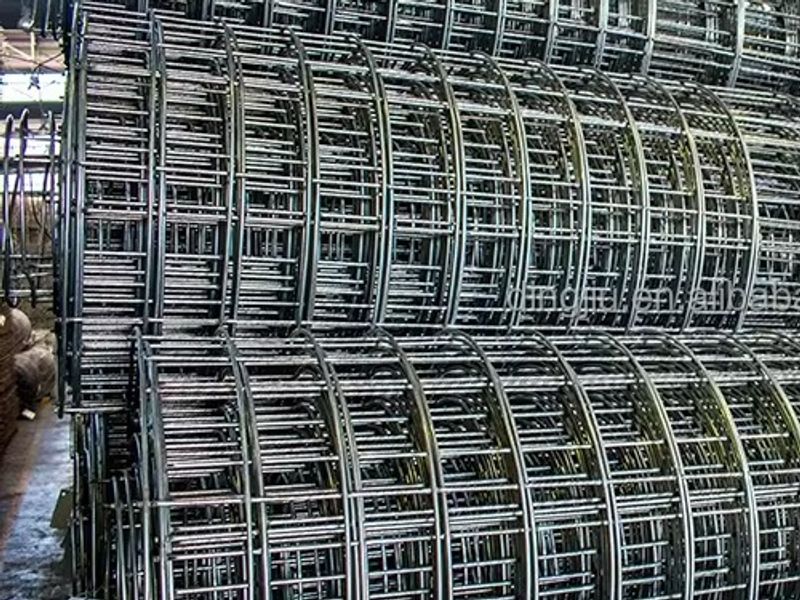
Dense woven wire mesh for fine filtration and custom screen packs in demanding process lines.
Send drawings, dimensions, material, environment or operating conditions, and we will help confirm the right specification.
Uploaded reference files are included with the inquiry. For larger CAD packages, reply to the confirmation email or send them here:
Our team typically replies within 24 business hours.