Selection Guide
OEM Stainless Steel Filter Components: Balance Cost & Quality
Balance cost vs quality in OEM stainless steel filter components. Compare TCO vs unit price, cut costs safely, and get a free quote from KAIFIL.
Balance cost vs quality in OEM stainless steel filter components. Compare TCO vs unit price, cut costs safely, and get a free quote from KAIFIL.
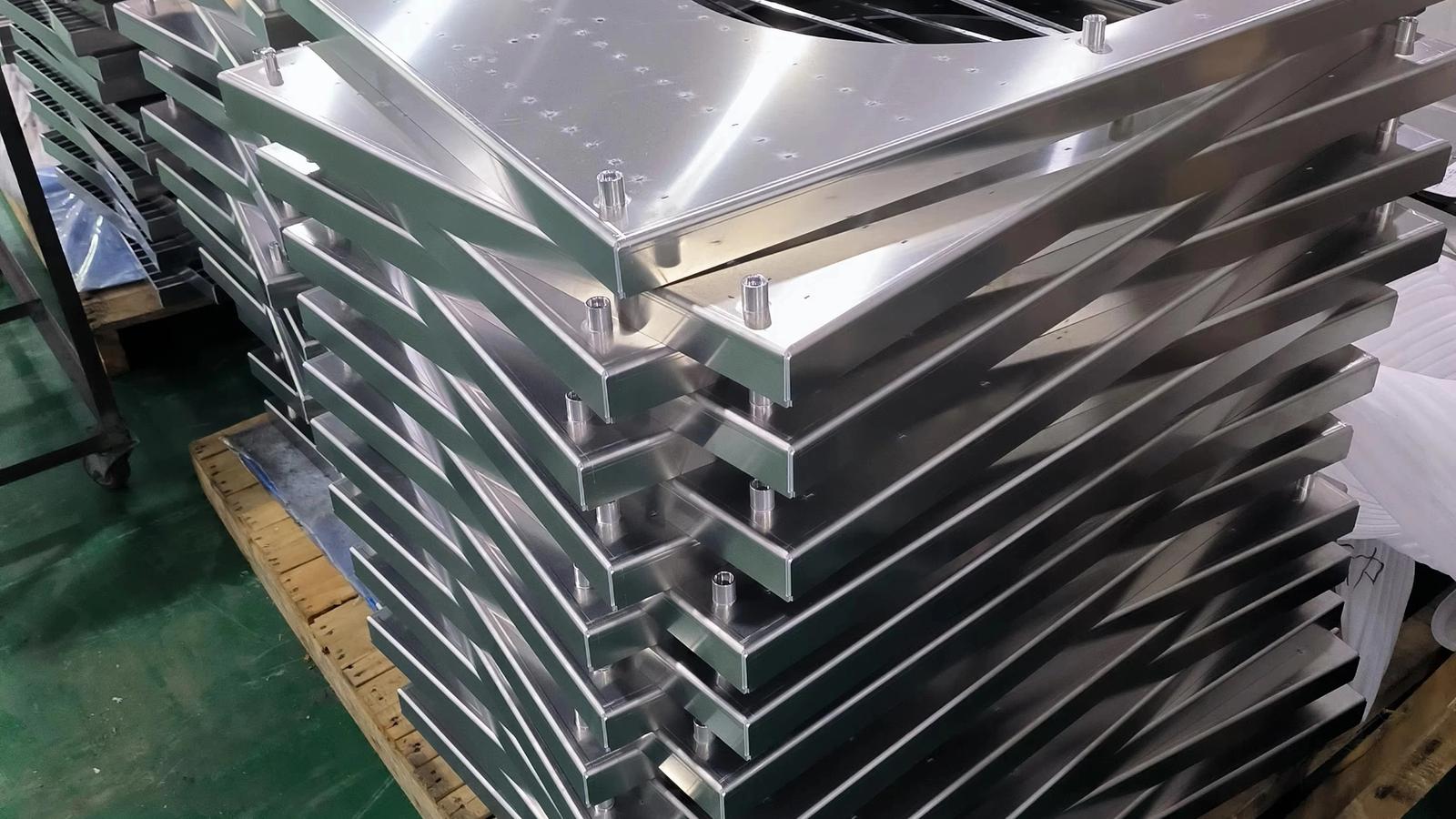
OEM stainless steel filter component development is the process by which a procurement team commissions a manufacturer to design, sample, validate, and mass-produce custom wire-mesh filtration parts — filter baskets, cartridges, discs, screen packs, and wedge-wire assemblies — to the buyer's own drawing, tolerances, and application requirements, instead of purchasing standard off-the-shelf products. In practice this means supplying a drawing or reference sample, agreeing on material grade and filtration rating, approving tooling and samples, and receiving a first-article inspection report before any production quantity is manufactured. Typical fine filter wire mesh spans roughly 5 to 500 micron, precision filter disc blanks are commonly held to ±0.1 mm on critical dimensions and down to ±0.05 mm on sealing faces, and a dimensional report is generally required before a batch ships. For a procurement manager, the real problem is rarely "can a supplier make this part." It is finding a supplier whose quoted price is honest about the true, total cost of the part — and knowing which corners are safe to trim and which ones silently turn a bargain into a recall.
This article is written from the buyer's side of the table: where OEM stainless steel filter components costs genuinely come from, how to run a supplier development project without losing control, where cost can be cut legitimately, and where cutting it destroys the value of the component.
Most filter-component RFQs are evaluated on a single number: unit price. That number is real, but it is also the least informative number in the project. A basket quoted at 30% below every competitor is either a supplier who has genuinely found efficiency, or a supplier who plans to make that money back in tooling, samples, shipping, and rework — and who may plan to never tell you which one it is.
The disciplined way to compare quotes is total cost of ownership (TCO) for the whole program, not the sticker price of one part. A typical custom filter component program carries five layers of cost beyond the per-piece price:
| Cost item | What it looks like in unit price | What it looks like in TCO |
|---|---|---|
| Tooling & fixtures | Often quoted "free" or buried in a higher piece price | Amortized over expected lifetime volume; a quoted tool life of 50;000 parts vs 500;000 changes the real unit cost |
| Samples & pre-production | "Sample cost refunded with order" is common — but only if you actually order | Sample lead time and sample quality determine how many design iterations your team pays for |
| Inspection & first-article validation | Cheap suppliers quote faster because they inspect less | Dimensional reports; material certificates; and weld checks are real work; skipping them moves the cost downstream |
| Rework; scrap & quality escapes | The big hidden line — a 1% defect rate in a 316L part that costs $18 is not 1% of $18 | Late-stage rework costs 10–100x the cost of catching the defect at incoming inspection |
| Logistics; duties & expediting | Usually excluded from the quote "to keep the price competitive" | Air freight to recover a late batch routinely doubles the landed cost of that batch |
| Field failure & warranty | Not in the quote at all | A failed filter assembly in a process line can cost more in downtime than the entire annual order |
For TCO stainless steel filter parts, a useful rule of thumb is that the purchase price typically represents only 60–80% of the total landed cost of a small custom program once tooling amortization, inspection, and logistics are included. That means a 10% saving on unit price is often worth less than a supplier who shortens the sample loop by two weeks or who delivers a complete, correct PPAP on the first submission.
The cost of OEM stainless steel filter components is decided less at the quotation stage than at the workflow stage. A disciplined development process — RFQ → DFM review → sample → PPAP/first-article inspection → batch — protects the buyer because each gate is a chance to reject a problem before it multiplies.
Gate 1: RFQ with a complete drawing. The single biggest driver of custom wire mesh filter parts cost is ambiguity. A drawing that specifies material grade, mesh count or micron rating, wire diameter, outside/inside diameters, weld type, surface finish, and dimensional tolerances gets priced once. A drawing missing any of these gets priced defensively — the supplier quotes worst-case uncertainty. Add to the RFQ your expected annual volume and any target price; without a volume signal, suppliers quote small-batch pricing that you will not be able to negotiate down later.
Gate 2: DFM (design for manufacturability) review. Before sampling, the supplier should return a DFM report that flags the parts of the design that drive cost. Common flags: a tolerance that is tighter than the fabrication process can reliably hold, a mesh count that is unusual and therefore more expensive than the nearest standard count, or a weld that requires hand finishing on every part. This review is where legitimate cost reduction begins — see the cost levers below. A supplier who returns a DFM review without being asked is usually a supplier who understands cost; that is a strong signal, and it is one of the practical tests covered in our guide on how to choose a wire mesh filter manufacturer.
Gate 3: Samples. Sample lead time for custom wire-mesh parts typically runs 7–15 working days for a straightforward disc or basket, and 15–25 days for welded assemblies with fixturing. Use the sample stage to verify three things: dimensional accuracy against the drawing, filtration performance (bubble-point or flow testing where the application demands it), and the material certificate. For critical process applications, EN 10204 3.1 material certification — which ties the material to a specific cast and includes mill test results — should be requested at sample stage, not discovered to be unavailable at batch stage. Verify the sample with your own measurements rather than trusting the report; this is the cheapest quality check in the entire project.
Gate 4: PPAP / first-article inspection (FAI). Before the first production batch, agree a first-article inspection that checks critical dimensions against the drawing (typically ±0.1 mm on machined or formed features), confirms the wire mesh specification against the agreed standard, and verifies weld quality where applicable. The FAI report is your contractual record that the batch matches the approved sample. Do not let a supplier ship a batch "on the strength of the sample" without an FAI for that specific batch — mesh rolls and wire lots change, and an un-inspected batch is an uncontrolled batch.
Gate 5: Batch production with agreed inspection points. For ongoing supply, agree in the contract which checks are performed per batch and which per lot of material. Incoming inspection on your side should sample per a defined AQL, check the material certificate against the agreed grade, and verify critical dimensions. Batch traceability — part number, lot number, material heat, and date — is not paperwork; it is the only thing that lets you isolate a problem when one appears in the field.
Each gate costs a little money and buys a lot of control. Procurement managers who skip Gate 4 to save a few hundred dollars of inspection routinely spend thousands on rework and expediting in the first three months of a program.
The core question in cost vs quality wire mesh fabrication is not "how do I pay less," but "which design and process decisions can I change without changing what the part does." There are two very different lists, and conflating them is where programs fail.
| Cost-saving lever | What changes | Typical saving | What you must keep fixed |
|---|---|---|---|
| Material grade selection | 304 vs 316L in non-corrosive or mildly corrosive media | 316L typically costs roughly 20–30% more than 304 in wire and sheet form; so a justified downgrade is the single largest lever | Corrosion environment; temperature; regulatory requirement — verify before downgrading |
| Mesh choice | Moving to a standard mesh count near the required micron rating instead of a custom weave | Standard counts are stocked and woven on existing looms; custom counts add mesh cost and 2–4 weeks lead time | Actual filtration rating in micron; a "close enough" mesh that passes particles is not a saving |
| Tolerance relaxation | Loosening non-critical tolerances from ±0.05 mm to ±0.2 mm | Fewer rejections; faster forming; less fixturing | The sealing face and any dimension that mates with another component — never loosen these |
| Order volume & framework agreements | Committing to annual volume or blanket orders | The strongest legitimate lever; MOQs for custom filter parts commonly start around 100–500 pcs; with price breaks above | Committing to volume you cannot take creates its own liability |
| Simplified fabrication | Combining welds; standardizing edge treatments; reducing hand finishing | DFM-driven; often 10–20% of fabrication labor | Filtration function and structural integrity of the welded joints |
These levers are legitimate because they change the design or the business arrangement, not the material performance the part was specified to deliver. A 304 filter basket for a water-filter application is a different, correctly-engineered part — not a cheaper version of the same part.
The mirror image of that list is where savings are illusory, because the money is simply moved to a more expensive place:
Weld quality. Filter baskets, screen packs, and wedge-wire assemblies live or die by their welds. A weld that skips penetration, leaves inclusions, or burns through the mesh destroys the filtration function and becomes a contamination source. Poor weld quality in a filter assembly is not a cosmetic defect — it is a failure of the part's only job. This is one of the reasons welded wire mesh filter assemblies demand a supplier with real fixturing and weld-control discipline, and it is the first thing to check when a price seems too good.
Mesh spec substitution. A supplier who quietly substitutes a "similar" mesh count or a thinner wire to hit a price target has changed the micron rating of your filter without telling you. If the application is pharmaceutical or chemical processing, where a downstream process is validated around a specific rating, an unapproved substitution can invalidate a regulatory file. Mesh specification should be treated as an immutable requirement, confirmed at FAI, and any proposed substitution must go through a formal engineering-change process.
Skipped inspection. Inspection is not overhead; it is the mechanism that makes the other cost levers safe. If you relax a tolerance but skip the dimensional check that verifies it, you have removed the safety net from a riskier design. Inspection is cheap relative to the rework it prevents, and first-article inspection is the cheapest form of insurance in the entire program.
Uncontrolled process changes. A supplier who changes wire supplier, weave loom, or weld settings without notifying you has effectively shipped an unvalidated part. Your contract should require written notification of any change to material source, tooling, or process. Without that clause, "we always do it this way" is not traceability.
When you are deciding whether a potential saving is safe, run it through this four-question framework:
If a proposed saving survives all four questions, take it — and spend part of it on the inspection that confirms it. If it fails any of them, walk away or push it through proper engineering change.
Before you sign the PO for custom filter baskets or any custom wire-mesh part, confirm the following:
Work through this list once, and it becomes a standing part of every RFQ rather than a per-project scramble. For a fuller treatment of supplier selection signals, our guide on how to choose a wire mesh filter manufacturer covers the audit side of the same question.
What is the typical MOQ for custom stainless steel filter components? Most custom filter parts — baskets, discs, and screen packs — start around 100–500 pieces, depending on fabrication complexity. Welded assemblies with custom fixtures may have lower piece MOQs but carry tooling or fixture costs. Volume commitments usually unlock the best pricing.
How long does a custom filter component program take from RFQ to production? A realistic timeline is 1–2 weeks for quotation and DFM, 1–3 weeks for samples, then first-article inspection before a production batch that typically takes 2–4 weeks depending on volume and complexity. Programs where the drawing is complete and volume is stated move measurably faster.
Is 316L worth the extra cost over 304 for filter parts? 316L generally costs 20–30% more than 304 in wire and sheet form, and it is worth it wherever media is corrosive, chloride-laden, or at elevated temperature. For benign applications, 304 is a legitimate cost lever — but the decision belongs to engineering, not to the price comparison.
What tolerances can be held on custom wire-mesh filter parts? Formed and welded features are commonly held to ±0.1 mm, with precision disc blanks and sealing faces down to ±0.05 mm. Mesh opening itself is governed by the weave standard, not the fabrication tolerance, which is why mesh spec must be verified separately at first-article inspection.
What should a first-article inspection report include? A complete FAI report should include the dimensional report against the drawing, verification of the mesh specification, material certification (such as EN 10204 3.1), weld inspection results where applicable, and photographic evidence of the part against the drawing. If any of these are missing, treat the report as incomplete.
The difference between a filter component program that bleeds money and one that runs clean is decided in the first two weeks: complete drawings, an honest DFM review, and a supplier who treats inspection as part of the product rather than an optional extra. If you are developing custom wire mesh filter parts for baskets, cartridges, discs, screen packs, or wedge-wire assemblies, KAIFIL's engineering team works from your drawing or sample, returns a DFM review that shows exactly where cost can be saved without touching performance, and supports the full supplier development workflow — RFQ to PPAP and beyond. Explore our stainless steel filter components, our custom wire mesh fabricated parts range, and our custom shape wire mesh filter discs to see the standard of workmanship we build on. For more demanding process applications, our welded wire mesh filter assemblies are built under controlled weld and inspection disciplines for the oil, gas and petrochemical and pharmaceutical and chemical sectors. If you need guidance on material certification, read our EN 10204 3.1 material certificate guide. Get a quote today — send your drawing to the KAIFIL engineering team and see what a properly engineered filter component program costs before you commit.
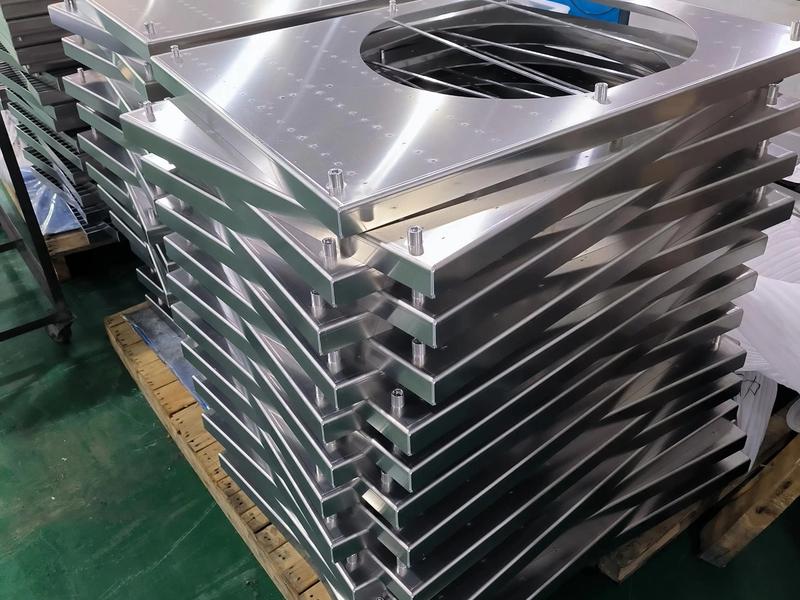
Cut, formed and welded wire mesh parts for custom equipment screens and fabricated filter inserts, supplied to drawing with material, size and packing details confirmed at RFQ stage.
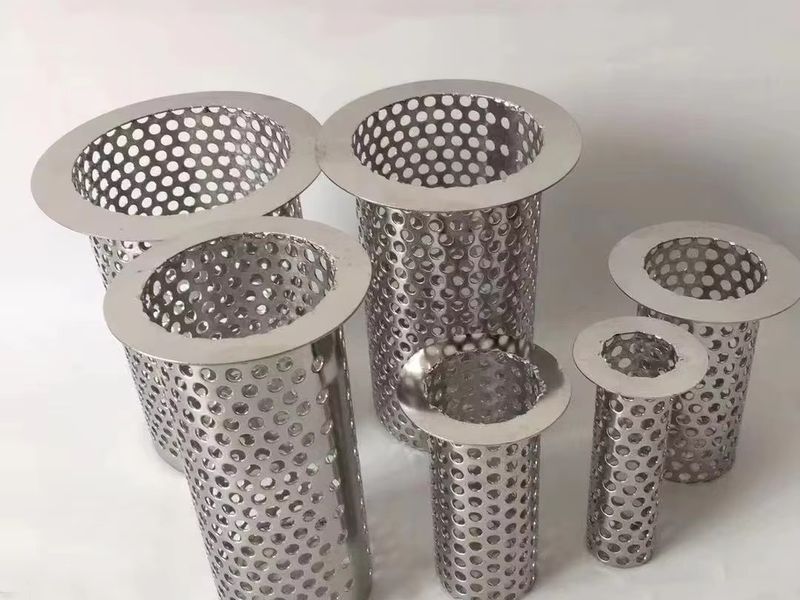
Screen filter parts / cylinders / custom inserts for mixed stainless steel screen and filter part rfqs, supplied to drawing with material, size and packing details confirmed at RFQ stage.
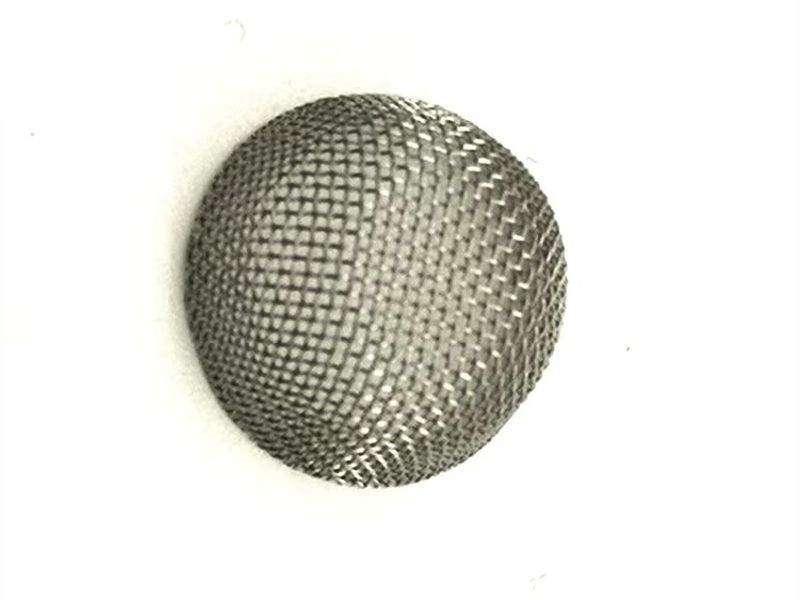
Custom components / inserts / strainers for replacement filter parts and oem stainless assemblies, supplied to drawing with material, size and packing details confirmed at RFQ stage.
Send drawings, dimensions, material, environment or operating conditions, and we will help confirm the right specification.
Uploaded reference files are included with the inquiry. For larger CAD packages, reply to the confirmation email or send them here:
Our team typically replies within 24 business hours.