Selection Guide
Wedge Wire Screen Price per Meter: Cost Build-Up
See what each meter really pays for: wire weight, slot density, welding jigs, inspection and packing, plus why per-meter quotes only compare within one spec.
See what each meter really pays for: wire weight, slot density, welding jigs, inspection and packing, plus why per-meter quotes only compare within one spec.
A per-meter wedge wire screen price reflects wire mass, wire count, weld time, rings, inspection, and packing, not metal alone. Use it as a specification-specific rate. Never rank suppliers on that rate until both quotes use the same diameter, slot, length basis, and delivery scope.
Three suppliers answer the same inquiry with three different per-meter rates. One quote looks 20% lower. Then the buyer notices different outer diameters, slot widths, end-ring counts, and inspection terms.
The question "how much does wedge wire screen cost" has no single answer. The rate is real, but the basis is not shared. A screen panel price may include framing, while a cylinder quote may exclude crates. Without a common basis, the cheapest wedge wire screen price per meter can become the most expensive order.
A per-meter rate is a sum of process costs, not a metal price. Five cost blocks usually sit behind it. Request that split even when the quote shows one number.
Diameter amplifies every block above. At one slot and wire profile, diameter changes wire count. A 300 mm cylinder carries about 2.7 times the axial wires of a 110 mm tube. Its per-meter rate should not be close.
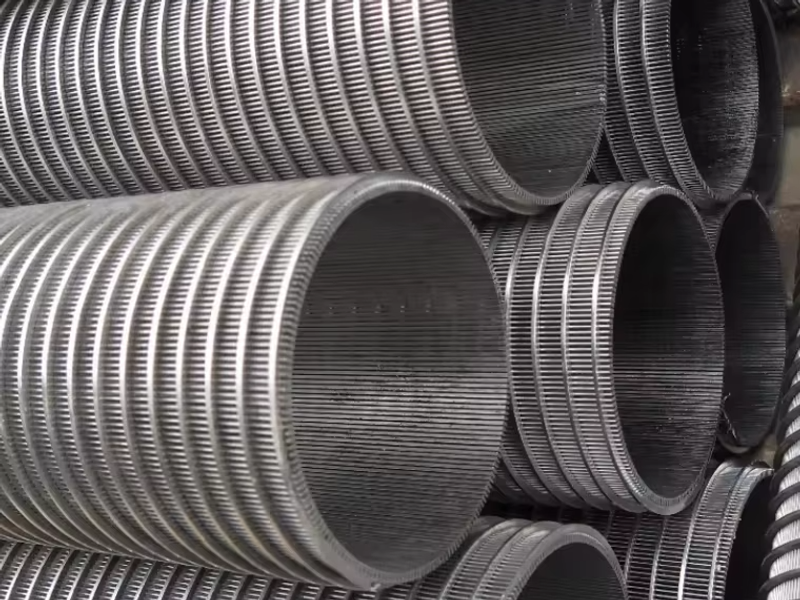
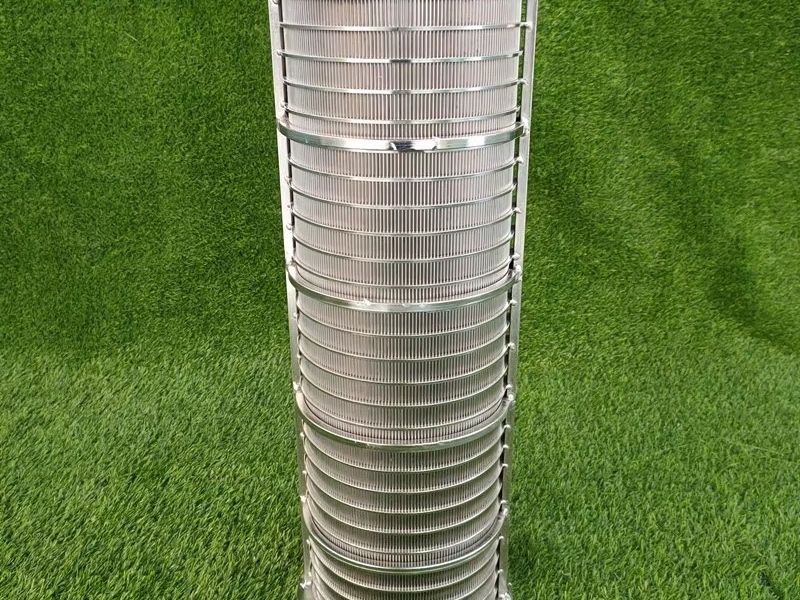
A 1 m section of wedge wire screen cylinder may look simple on a drawing. The quote still depends on how those five blocks are scoped.
Per-meter rates can also hide yield. A 6 m mill length cut into 1 m sections leaves offcuts. Ask whether the supplier billed cut length or purchased length.
KAIFIL runs its own welding jigs and screen panel line, so each meter is priced by process. Material grade changes the rate, but it rarely explains a large per-meter gap alone.
A vee wire screen cost estimate follows the same blocks, whatever name the profile uses.
Use this table as a sanity check, not a price list. It assumes one material, finish, ring design, and order band.
| Profile wire (mm) | Slot (mm) | Outer diameter (mm) | Wires per m of circumference | Relative cost index |
|---|---|---|---|---|
| 2.0 × 3.0 | 1.00 | 110 | 115 | 1.00 |
| 2.0 × 3.0 | 0.50 | 110 | 138 | 1.65 |
| 1.5 × 2.5 | 0.50 | 110 | 173 | 1.60 |
| 2.0 × 3.0 | 1.00 | 220 | 230 | 1.85 |
| 2.0 × 3.0 | 0.50 | 220 | 276 | 2.45 |
| 1.5 × 2.5 | 0.25 | 220 | 395 | 3.20 |
The index tracks wire count, weld points, and expected yield. A smaller slot adds wires. A larger diameter adds more. Use the slot size selection guide to settle the opening first. A slot change can alter the quote more than a grade change.
The price per square meter vs per meter question has no universal answer. Each basis answers a different buying question. Mixing them creates false savings.
| Basis | Best use | What it hides | Conversion check |
|---|---|---|---|
| Per meter | Cylinders and tubes with fixed OD | Diameter; ring count; cut yield | Divide by developed area: π × D × 1 m |
| Per m² | Flat panels; plate; and mesh | Edge prep; framing; small cuts | Divide piece price by usable area |
| Per piece | Framed panels and custom parts | Setup and tooling share | Divide by piece area; then add setup |
A screen panel price is often per piece. Flat mesh suppliers often quote per m², as covered in stainless steel wire mesh price per square meter. Convert every quote to the same basis first. Ask for the developed area, not the finished footprint.
Use this formula to test a wedge wire cost quote. Supplier differences become visible.
P_m = (W_w × p_s + N_w × t_w × r_w) × (1 + k_jig + k_qc) + C_end / L
P_m is the per-meter price. W_w is wire mass per meter, and p_s is the material rate per kilogram. N_w is weld points per meter, t_w is time per point, and r_w is the labor rate.
k_jig spreads fixture cost, while k_qc covers inspection and rejects. C_end is ring and finishing cost per unit, spread over length L.
Halving the slot from 1.0 mm to 0.5 mm at one diameter adds wires and weld points. Material and labor often land at 1.6–1.9× the original per-meter rate. Moving from 110 mm to 220 mm OD typically adds 1.7–2.1×.
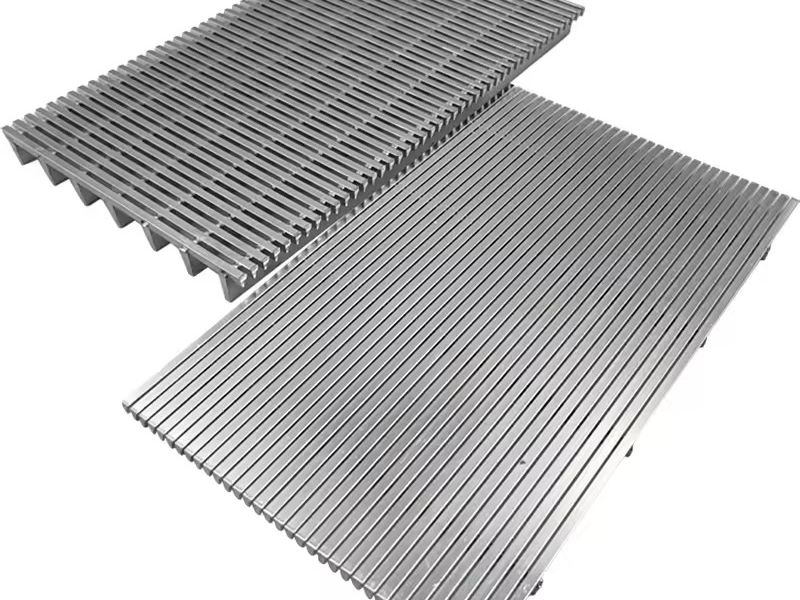
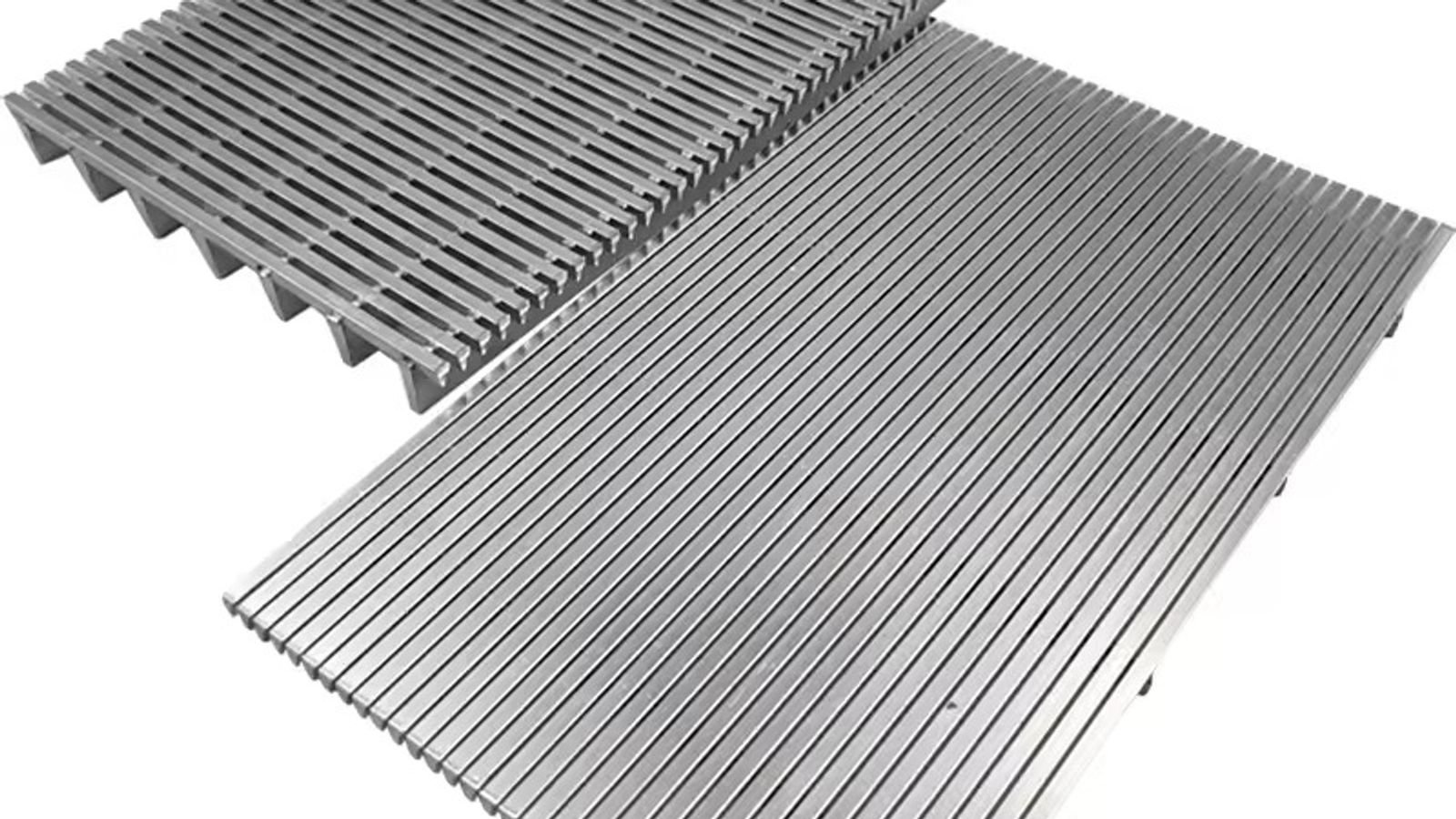
Small custom batches can add 30–50% for rings and setup. The same model applies to wedge wire screen panels, with panel area replacing cylinder length.
Do not treat these ranges as a quote. Use them to challenge a rate that falls far outside the expected band. Ask which variables are included or extra.
A stable per-meter rate depends on process control. Incoming profile wire is checked for height, width, and straightness. Welding fixtures hold wrap pitch and slot alignment. Go/no-go gauges or optical tools verify slot width along the full length. End rings are checked for concentricity and squareness. Packing protects wire edges and ring faces.
Lead time usually runs 15–25 working days after drawing approval. Ring machining, material grade, and batch quantity can extend it. Larger batches spread setup cost, so repeat orders often price better. For special rings or transitions, review the custom wedge wire screen parts scope before release. Confirm the inspection record you need before production starts.
Not by default. The screen usually costs more than perforated plate or woven mesh, but it lasts longer in abrasive duties. Judge it by cost per operating hour, not purchase price alone. A high rate can still be cheaper when slots stay open.
They measure different surfaces. Per-meter pricing follows finished cylinder length. Per-m² pricing uses developed screening area. A large diameter adds wire count and area, so the rates diverge. Convert with developed area before comparing. Ask both suppliers to state diameter, slot, rings, and packing.
Minimum order depends on profile, diameter, and whether tooling exists. Simple cylinders may start at one piece for a trial. Custom rings, unusual alloys, or special slot widths usually need a batch to absorb setup. A slightly larger batch often lowers the effective per-meter rate.
Standard lead time is often 15–25 working days after drawing approval. Custom end rings, nonstandard diameters, and large batches can extend it. Material availability matters more than welding speed for uncommon grades. Include inspection and packing time, not just cutting and welding.
Yes, often strongly. A narrower slot adds wires and weld points at the same diameter. Moving from 1.0 mm to 0.5 mm can raise material and labor by roughly 1.6–1.9×. Confirm the slot tolerance with the drawing before comparing rates.
Usually yes. Suppliers can provide a short section or a small panel for dimensional and slot checks. Expect a sample charge, often credited against the first order. Ask whether the sample uses production wire and the same welding fixture. A sample proves fit and finish, not delivery performance.
Send KAIFIL your drawing, slot width, diameter, and order quantity through the quote request form. You will receive a per-meter build-up covering wire, welding, rings, inspection, and packing, plus the pricing basis used. One review is enough to test your current rate.
Continuous-slot screen pipe for wells, vessel internals, resin traps and dewatering systems.
Flat panels / sieve bends / framed panels for dewatering, sizing and solid-liquid separation, supplied to drawing with material, size and packing details confirmed at RFQ stage.
Screen cylinders / pipes / baskets for intake, resin traps, strainers and distributor internals, supplied to drawing with material, size and packing details confirmed at RFQ stage.
Send drawings, dimensions, material, environment or operating conditions, and we will help confirm the right specification.
Uploaded reference files are included with the inquiry. For larger CAD packages, reply to the confirmation email or send them here:
Our team typically replies within 24 business hours.