Technical
316L vs Hastelloy C-276 vs Monel 400: Chemical Filter Material Guide
316L vs Hastelloy C-276 vs Monel 400 metal filter materials: corrosion limits, temperature ranges, chemical compatibility, cost. Get a quote from KAIFIL.
316L vs Hastelloy C-276 vs Monel 400 metal filter materials: corrosion limits, temperature ranges, chemical compatibility, cost. Get a quote from KAIFIL.
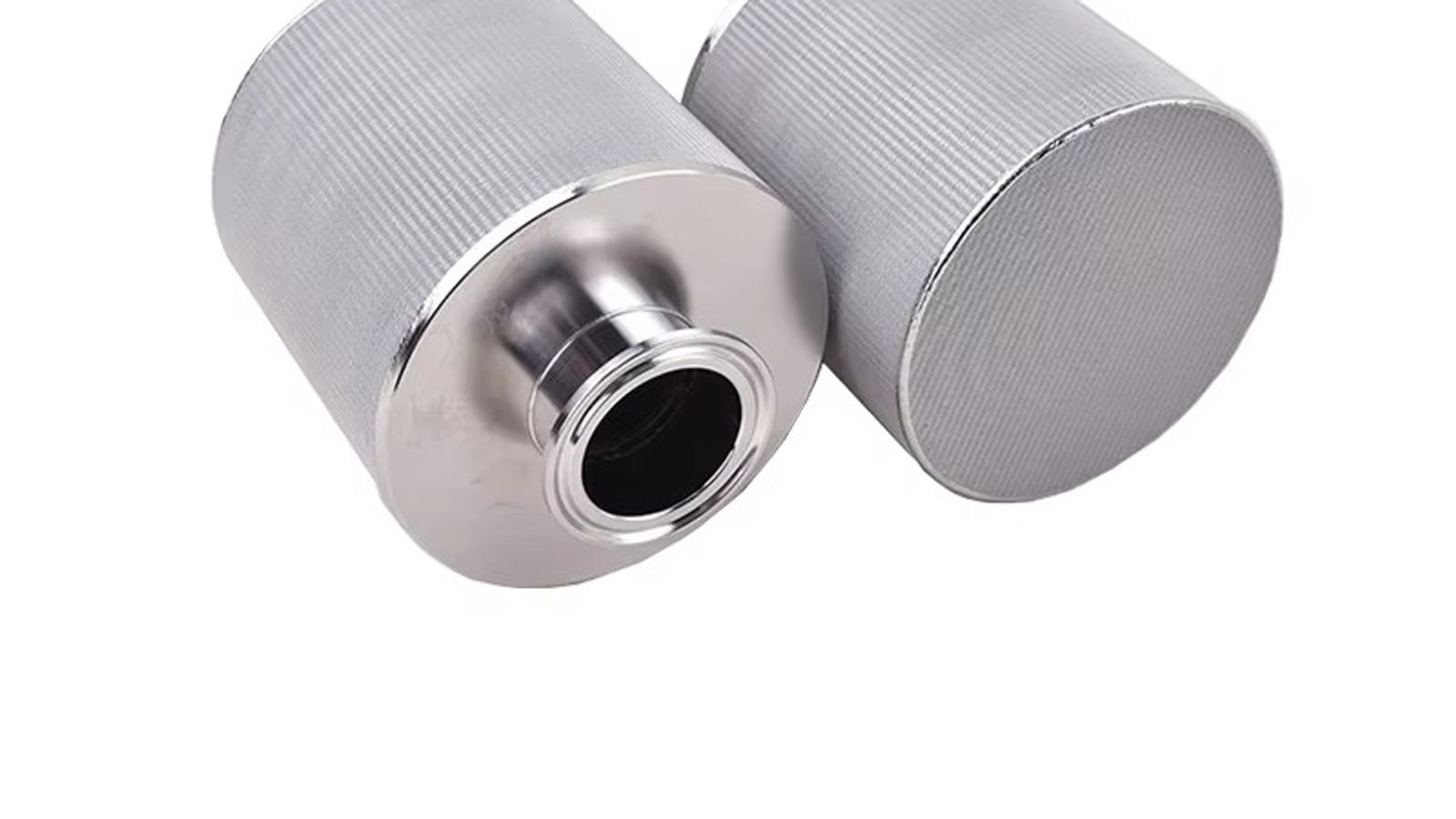
Filter material compatibility is the process of matching the alloy of a metal filter element to the chemical, thermal, and chloride conditions of the process stream. For sintered metal filters and wire mesh cartridges, the wrong alloy fails in months — not years — typically through localized pitting or crevice attack that punches holes through the media and dumps unfiltered solids downstream. Three alloys cover most chemical process duty: 316L stainless steel, Hastelloy C-276, and Monel 400. The practical differences are dramatic. 316L typically begins pitting in chloride service above roughly 1,000 ppm Cl⁻ once temperature exceeds about 50 °C without an electropolished finish, while Hastelloy C-276 tolerates chloride concentrations above 100,000 ppm and survives wet chlorine service. Temperature limits differ just as sharply: around 450 °C for 316L filtration duty, roughly 650–800 °C for Hastelloy C-276, and about 540 °C for Monel 400. Cost follows the same ladder — Monel 400 runs roughly 2–4× the price of an equivalent 316L element, and Hastelloy C-276 another 2–4× step above Monel. These are the anchors of a selection decision that directly drives uptime, product purity, and total filtration cost.
Filter elements fail differently from pipe and vessels. A process pipe has thick walls and can tolerate some corrosion allowance; a sintered element is built from fine wires or powder particles that are 0.1–1 mm in cross-section, so even a shallow pit can fully penetrate the filtration layer. Because sintered media has high surface area per unit volume, localized corrosion attacks propagate quickly across the sheet, seam welds, and end caps. The failure is usually catastrophic: media breakthrough, catalyst or product loss, and an unplanned plant shutdown.
Three corrosion mechanisms dominate in chemical filtration:
For filtration, the practical question is not "does this alloy corrode?" but "how fast, and can the remaining wall carry the differential pressure for the target service life?" That is why alloy selection is a design input, not an afterthought. A 316L sintered wire mesh filter cartridge is the default workhorse; an aggressive chloride-laden stream demands a step up in alloy before the element is ever manufactured.
The table below summarizes the properties that drive most selection decisions. All figures are typical industry values and engineering guidelines, not vendor certifications — validate against coupon testing for critical service.
| Property | 316L | Hastelloy C-276 | Monel 400 |
|---|---|---|---|
| Alloy family | Austenitic stainless steel | Nickel–chromium–molybdenum | Nickel–copper |
| Nickel content | ~10–14% | ~57% | ~63–67% |
| PREN (pitting resistance equivalent number) | 24–28 | 65–69 | Not applicable (no chromium passivation layer) |
| Approximate chloride tolerance | Pitting risk above ~1;000 ppm Cl⁻ above ~50 °C | Handles >100;000 ppm Cl⁻ | Excellent in seawater; not rated by PREN |
| Typical max operating temperature (filtration) | ~450 °C | ~650–800 °C | ~540 °C |
| Primary strengths | Low cost; general chemical duty; easy fabrication | Wet chlorine; ferric/cupric chlorides; mixed acid; high temperature | Hydrofluoric acid; seawater; caustic alkalis |
| Typical relative material cost | 1× (baseline) | ~4–9× | ~2–4× |
The PREN formula — %Cr + 3.3 × %Mo + 16 × %N — is a useful shorthand for pitting resistance in stainless and nickel alloys, but it does not apply to Monel 400, which contains no chromium and resists corrosion through a different (copper-nickel) mechanism. More important than the number is what each alloy tolerates in real service, covered next.
316L is the default choice for sintered metal filter elements, and for good reason. Its 16–18% chromium and 2–3% molybdenum give it a PREN of roughly 24–28, enough for neutral and mildly corrosive streams, most pharmaceutical processes, and many hydrocarbon services. The "L" grade limits carbon below 0.03%, preventing chromium carbide precipitation at weld seams and at the sintering temperatures used to bond layers together. This makes 316L the standard media alloy for sintered metal filter elements and the majority of sintered wire mesh filter cartridges shipped worldwide.
Where 316L is well suited:
Where 316L reaches its limit:
If the process stream contains measurable chlorides, elevated temperature, or strong acids, 316L becomes a baseline to upgrade from rather than a final answer.
Hastelloy C-276 is a nickel–chromium–molybdenum alloy (about 57% Ni, 15–17% Mo, 14.5–16.5% Cr, with tungsten) that was designed for exactly the environments that destroy 316L. Its PREN of roughly 65–69 reflects outstanding pitting resistance, and its molybdenum content extends resistance into reducing conditions while chromium handles oxidizing media — a combination that makes C-276 one of the most versatile alloys in chemical processing.
A Hastelloy C-276 filter is the standard answer for:
C-276 is not cheap — a typical rule of thumb places a C-276 element at roughly 4–9× the material cost of 316L depending on wire diameter, media construction, and quantity — and it is harder to weld and sinter than austenitic stainless steel. It earns its premium in reactor discharge filtration, catalyst recovery, and chloride-laden recycle streams where a failed element would cost far more than the alloy difference. For the highest-temperature applications, its oxidation ceiling also makes C-276 the rational choice over Monel.
Monel 400 is a nickel–copper alloy (about 63–67% nickel, with copper making up most of the balance) that solves a different set of problems than either stainless steel or the Hastelloys. It has no chromium, so PREN does not apply; its corrosion resistance comes from the nickel-copper system itself. The result is an alloy with three signature strengths:
A Monel 400 filter element is typically rated to about 540 °C maximum operating temperature, which is above 316L's filtration limit but below C-276's ceiling. Cost sits between the two — roughly 2–4× an equivalent 316L element.
The critical limitation: Monel 400 must not be used in strong oxidizing acids such as nitric acid, concentrated aerated sulfuric acid, or oxidizing salt solutions. In those environments the copper content causes rapid attack. Monel is also only marginally suitable for hot hydrochloric acid. Choose Monel for fluoride, marine, and alkali service — not for oxidizing acid service.
The table below is a screening guide for typical industry experience. Rows are for filtered process streams; ratings assume the concentration and temperature windows described in each row's note, not extremes. Use it to shortlist alloys, then confirm with corrosion data for your exact concentration and temperature.
| Chemical medium | 316L | Hastelloy C-276 | Monel 400 | Notes |
|---|---|---|---|---|
| Sulfuric acid; dilute (<20%) | Fair (ambient only) | Good (moderate temp) | Poor–fair (avoid if aerated) | C-276 widens the temperature window |
| Sulfuric acid; concentrated | Poor | Fair–good (limited temp) | Poor | Oxidizing conditions rule out Monel |
| Hydrochloric acid; dilute | Poor | Good (moderate temp) | Fair (ambient; low conc.) | 316L unsuitable beyond traces |
| Hydrochloric acid; hot/concentrated | Poor | Fair–good (limited) | Poor | C-276 is the only realistic choice |
| Hydrofluoric acid | Poor | Limited | Excellent | Monel is the HF workhorse |
| Caustic soda / potash | Fair (SCC risk hot) | Good (moderate) | Excellent | Monel for hot concentrated caustic |
| Seawater / brine | Poor (pitting) | Excellent | Excellent | Monel historically the marine standard |
| Wet chlorine | Poor | Excellent | Fair | C-276 is the industry choice |
| Ferric / cupric chlorides | Poor | Excellent | Fair | Classic C-276 application |
Two points worth emphasizing. First, media construction interacts with alloy choice: a five-layer sintered mesh distributes stress differently from a single-layer Dutch weave, which can improve the fatigue life of an alloy that is marginally acceptable on corrosion grounds — but it cannot rescue an alloy that is actively dissolving. Second, all of these figures are engineering guidelines. Actual corrosion rates depend on aeration, impurities, flow velocity, and trace oxidizers; for a critical service, request coupon testing in a representative sample of the actual process liquor.
A repeatable workflow for chemical filter material selection looks like this:
Upgrading is warranted when any of the following appear:
When an upgrade is justified, pay attention to the whole assembly, not just the media. Seam welds, end caps, and support structures are often the first corrosion sites because they concentrate stress and trap stagnant chloride. A welded wire mesh filter assembly built from the same alloy as the media, with full-penetration welds and minimal crevices, lasts far longer than a hybrid element with a mismatched frame.
In practice, the upgrade ladder maps cleanly onto applications. API crystallization and pharmaceutical filtration almost always stay on 316L, where cleanability, validation, and cost dominate (pharmaceutical and chemical applications). Catalyst recovery stays on 316L in benign organic service but jumps to C-276 when the liquor is chlorinated or acidic. Reactor discharge filtration follows the chemistry of the reactor: mild → 316L, aggressive chlorides or mixed acids → C-276, HF-bearing → Monel. Offshore and chemical plants with seawater and chloride-laden streams (oil, gas, and petrochemical applications) default to Monel or C-276 for critical elements, accepting the premium as insurance against a corrosion-driven shutdown.
What is the difference between 316L and Hastelloy C-276 filter elements? 316L is a molybdenum-bearing stainless steel with a PREN of roughly 24–28, suited to neutral and mildly corrosive streams up to about 450 °C. Hastelloy C-276 is a nickel-chromium-molybdenum alloy with a PREN of roughly 65–69 that resists wet chlorine, ferric and cupric chlorides, and hydrochloric and sulfuric acids at moderate temperatures, and can serve filtration duty up to about 650–800 °C. C-276 elements typically cost several times more than 316L.
When should I choose Monel 400 over 316L for a filter element? Choose Monel 400 for hydrofluoric acid, seawater and brine, or hot concentrated caustic service. Monel's nickel-copper chemistry gives it excellent resistance to these media where 316L pits or cracks. Do not use Monel in strong oxidizing acids such as nitric or concentrated aerated sulfuric acid.
Can 316L sintered filters handle seawater? Generally no. Seawater contains roughly 19,000 ppm chloride, far above 316L's practical threshold of about 1,000 ppm above 50 °C, so 316L pits and suffers crevice corrosion in marine service. Monel 400 and Hastelloy C-276 are the standard seawater-tolerant alloys for metal filter elements.
What is PREN and why does it matter for filter selection? PREN (pitting resistance equivalent number) is calculated as %Cr + 3.3 × %Mo + 16 × %N. It predicts relative pitting resistance in chloride service: roughly 24–28 for 316L and 65–69 for Hastelloy C-276. It does not apply to Monel 400, which has no chromium and resists corrosion by a different mechanism.
How much more expensive is a Hastelloy C-276 filter element than 316L? As a typical guideline, a Hastelloy C-276 element costs roughly 4–9× the material price of an equivalent 316L element, while Monel 400 sits between at about 2–4×. Exact pricing depends on media construction, wire diameter, quantity, and fabrication complexity.
Alloy selection is only half of a reliable filtration system; the other half is media design and fabrication quality. KAIFIL engineers sintered metal filter elements, wire mesh cartridges, and custom assemblies in 316L, Hastelloy C-276, Monel 400, and other alloys to match your process conditions. Send your medium, temperature, chloride content, and target micron rating, and the KAIFIL team will recommend the right alloy and media construction for your application. Contact KAIFIL today for a quote and engineering support for your chemical filtration project.
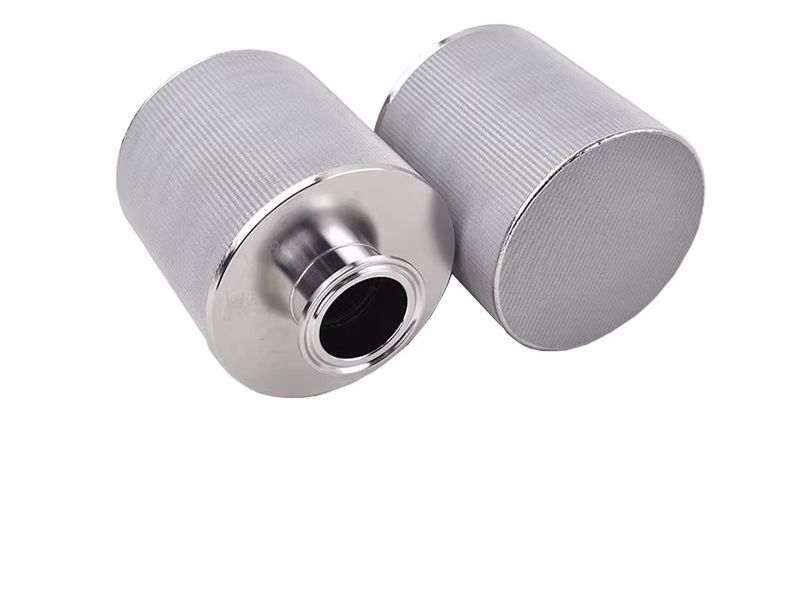
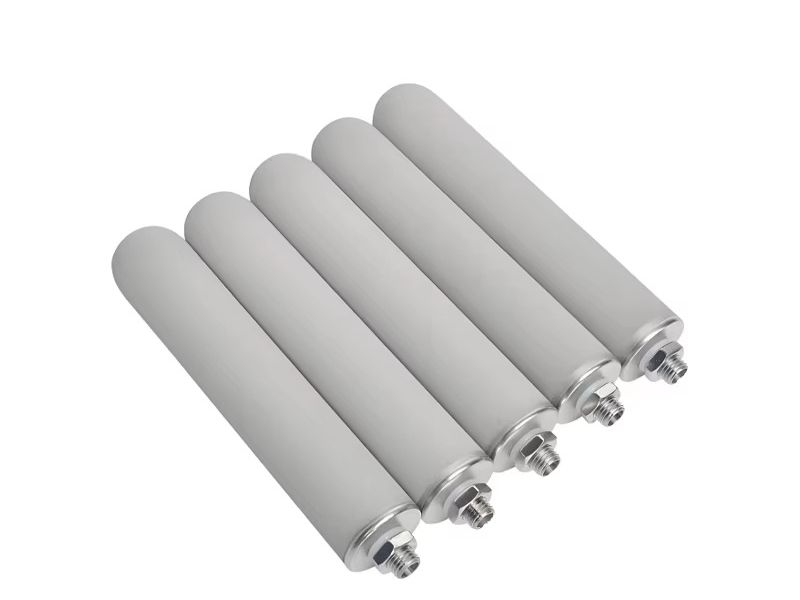
Cartridges / tubes / cylinders / cones for reusable high-strength filtration elements, supplied to drawing with material, size and packing details confirmed at RFQ stage.
Cartridges / tubes / cylinders for reusable cartridge filtration with rigid sintered mesh media, supplied to drawing with material, size and packing details confirmed at RFQ stage.
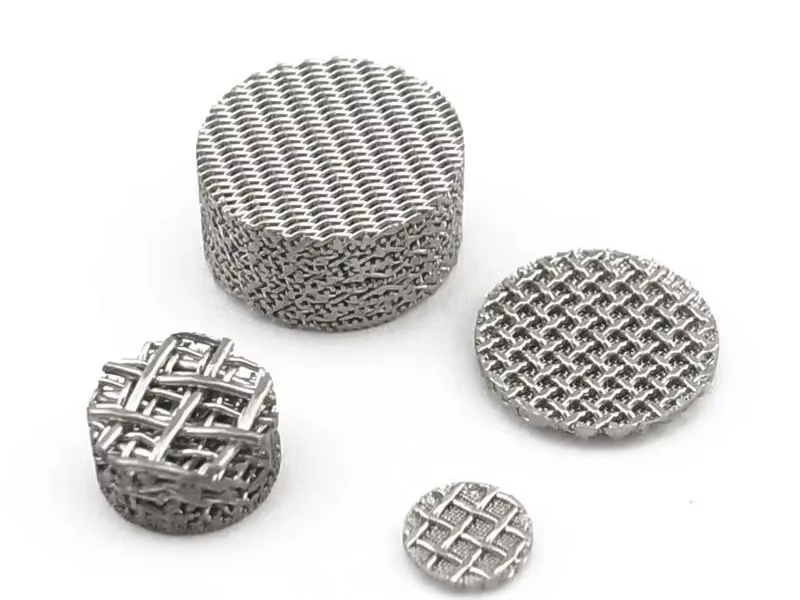
Rigid five-layer sintered wire mesh laminate for cleanable precision filtration and custom elements.
Send drawings, dimensions, material, environment or operating conditions, and we will help confirm the right specification.
Uploaded reference files are included with the inquiry. For larger CAD packages, reply to the confirmation email or send them here:
Our team typically replies within 24 business hours.