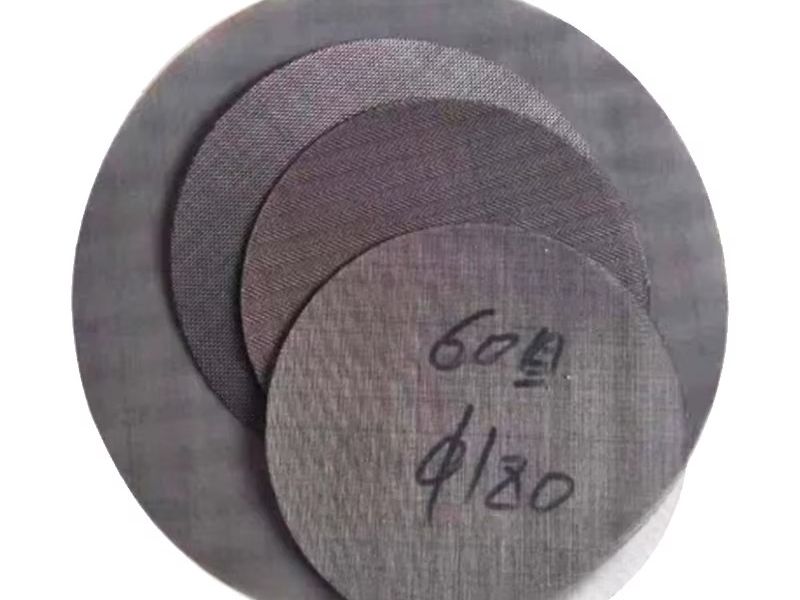
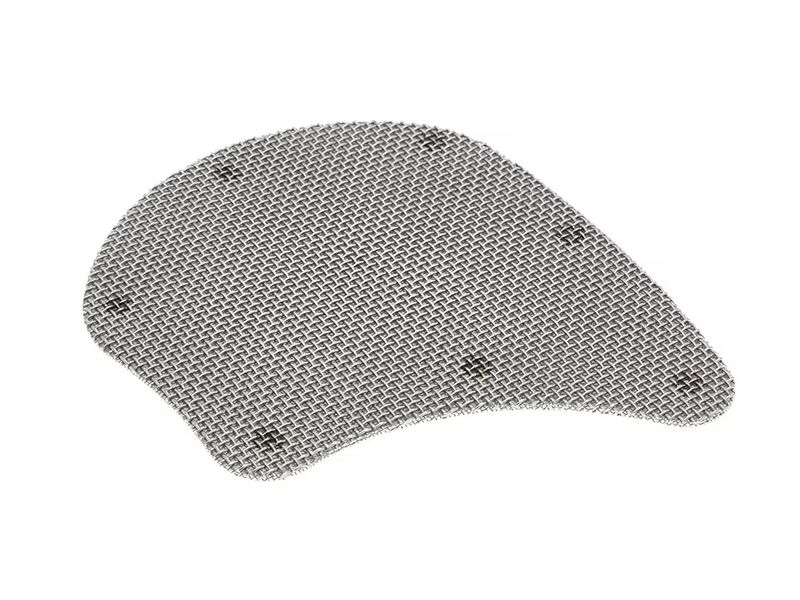
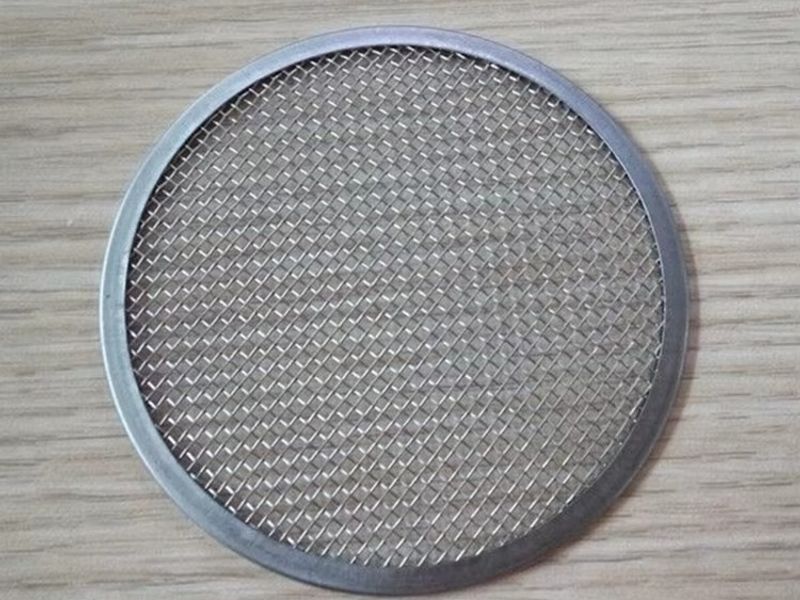
An extruder screen pack is a stack of woven stainless steel wire mesh discs, usually 20 to 150 mesh and two to five layers thick, mounted in a screen changer or breaker plate ahead of the die to filter polymer melt flowing under pressures of roughly 50 to 400 bar. It is the main line of defence between the compounding or recycling process and the finished profile, film, sheet or pellet, and it is also the most frequently replaced wear item on an extrusion line. There is no universal service life for a screen pack: a clean-virgin film line might run the same pack for several shifts or even a week, while a heavily contaminated recycled stream can saturate a fine 150-mesh pack in under an hour. The reliable signal that a pack is due is not the calendar but the process itself — specifically the rise in melt backpressure across the pack, which is why differential pressure is the primary trigger used in every serious change strategy.
Why screen packs need changing
Screen packs do not fail on a fixed clock; they are consumed by the material that passes through them. Three mechanisms combine to end a pack's useful life.
Contaminant loading. Every melt carries some solids — catalyst residues, gel particles, cross-linked polymer, metal fines, paper, wood and carbonised resin. The mesh intercepts these particles at its surface and in its interstices. As contaminant accumulates, the open flow area shrinks, the filter gets more efficient at trapping, and the resistance to flow climbs. A pack that starts with maybe 5 to 20 bar of clean-pressure drop can rise steadily until the differential reaches the change setpoint, often 50 to 80 bar, at which point the line can no longer hold a stable process.
Polymer degradation. Heat and shear degrade the resin itself, especially at the high shear zones around the screen. Degraded polymer forms gels and carbonised specks that do two things: they add to the contaminant burden, and they create their own surface fouling on the mesh. Degradation accelerates as backpressure rises, because higher pressure drives higher melt temperature and longer residence time in the filtration zone, which in turn produces more degradation products. It is a feedback loop, and it is one reason running a pack too long degrades quality even before the screen physically blocks.
Melt flow restriction. A loaded pack behaves like a throttling valve. Throughput drops or, if the screw compensates, pressure and motor load rise to force the melt through. The extra shear raises melt temperature, which can push the process out of spec for film thickness, dimension and colour. When the restriction becomes severe, flow can become unstable, alternating between starved and surging conditions that produce scrap.
Backpressure as the primary change trigger
Backpressure is the single most useful change signal because it directly measures the condition of the pack in the line, not an estimate of it. As the pack loads, the pressure upstream of the screen rises while the pressure downstream stays relatively constant; the difference between the two is the differential pressure across the pack, and it tracks contaminant loading nearly linearly. This is why experienced operators and screen changer control systems both default to pressure-based change logic.
Understanding the pressure readings
Three pressure values matter, and confusing them causes both premature and late changes.
Pressure at the screen changer is the absolute melt pressure just upstream of the breaker plate. It is the value most operators watch on the gauge. A clean pack might sit at 60 to 120 bar; a loaded pack can push toward 300 to 400 bar or the machine's rated limit. It is a good trip signal but it mixes pack loading with everything else upstream, so it is a coarser indicator than differential pressure.
Differential pressure across the pack is the difference between the melt pressure on the upstream face of the screen and the pressure downstream, usually measured at the breaker plate or just after the screen changer. This is the value that isolates the pack's own condition, and it is what automatic screen changers use for their trigger. Typical change setpoints fall in the 50 to 150 bar range depending on the machine, with many processors changing at 50 to 80 bar and reserving the higher values for continuous changers rated to tolerate high differentials.
Melt pump inlet pressure matters on lines with a gear pump. In a pump-equipped line the screen changer normally sits upstream of the pump, and the pump inlet must never be allowed to starve. Here the controlling limit is often the minimum inlet pressure the pump needs, not the maximum the pack can stand — if a loaded pack causes the inlet pressure to drop below the pump's requirement, the pump cavitates, output surges and product is ruined. On these lines the change trigger is frequently set so that pressure before the pump stays inside the pump manufacturer's window, which can mean changing at a lower differential than a non-pump line would use.
Typical trigger thresholds and alarm logic
A sound alarm scheme uses two levels. A pre-alarm sounds at roughly 70 to 80 percent of the change setpoint — for a 60 bar change threshold, alarm at about 45 to 50 bar differential — warning the operator to prepare screens and schedule the change at the next convenient point. The change trigger itself, typically 50 to 80 bar differential on manual systems and up to 150 bar on continuous changers rated for high differentials, initiates the change either automatically or as a hard alarm. On automatic changers the logic is usually: trigger on differential pressure reaching setpoint, with a maximum absolute pressure interlock that trips regardless of differential, and a time limit that forces a change if the pack has been in service beyond a set number of hours even when pressure is low.
For manual lines, the practical rule is to change at the differential where the line starts to lose stability — commonly 50 to 80 bar — rather than waiting for the maximum the changer is rated to hold. Changing late saves little screen life and costs product.
Pressure-based vs time-based vs quality-based change strategies
| Strategy | How it works | Strengths | Weaknesses | Best fit |
|---|
| Pressure-based | Change when differential or absolute melt pressure reaches a setpoint (commonly 50–80 bar differential) | Reacts to actual pack condition; maximises screen life; catches process upsets | Needs reliable pressure instrumentation; a sudden spike can arrive before the operator | Most extrusion lines; automatic screen changers; recycling lines where contaminant load varies |
| Time-based | Change on a fixed schedule; e.g. every 4 or 8 hours; or per shift | Simple; no instrumentation; predictable labour and screen consumption | Wastes screen life on clean runs; or changes too late on dirty runs; ignores real process condition | Stable virgin-resin lines with consistent feed; small lines without pressure gauges |
| Quality-based | Change when product quality degrades — gels; specks; thickness variation; pressure-driven melt temperature rise | Directly ties the change to what the customer sees | Discovers the problem only after scrap has been made; inconsistent between shifts | Finishing lines with tight film/sheet specs; final filtration stage before high-value product |
Most processors combine them: pressure-based as the primary trigger, with a time-based upper limit as a backstop for slow-loading packs and a quality check on the finished product as the final arbiter. On a clean, stable line a time-based schedule alone can be perfectly adequate and is far cheaper than adding instrumentation. On recycling lines, where contamination varies bag to bag, pressure-based triggering is effectively mandatory — a fixed time schedule will either change too often during clean stretches or blow through the pack during dirty ones.
How mesh count, layer count and pack arrangement change service life
The construction of the pack is the second-largest influence on change frequency after feedstock contamination.
Mesh count sets the finest filtration level and has a direct effect on life. A coarse 20-mesh screen (about 840 micron openings) holds a large dirt load before it clogs and may run for many hours or several shifts on recycled material, while a fine 150-mesh screen (about 100 micron) on the same feed can saturate in under an hour. Every step finer roughly shortens the interval. As a rule of thumb, doubling filtration fineness can cut screen life by more than half because fine apertures block with small particles that coarse mesh would pass.
Layer count and arrangement balance protection, life and cost. A single-layer pack is cheapest and has the highest initial flow, but it fails suddenly when the first pinhole forms and gives downstream screens no protection. A two-layer pack protects the fine layer with a coarse backing. The most common configuration for recycling is a three-layer pack: a coarse protective layer upstream, a fine working layer in the middle, and a heavier support mesh downstream to stop the fine layer from being pushed into the breaker plate by high pressure. Five-layer packs, typically built from sintered or reinforced mesh, offer the best resistance to rupture at high differential pressure and are used where a pack must survive long intervals or high pressures — for example with polymer melt pressures above 300 bar.
Pack arrangement also includes whether a prefilter is used. Putting a coarse screen upstream as a sacrificial dirt catcher keeps the expensive fine layer cleaner for much longer and is the single cheapest way to extend interval. A 20 to 40 mesh prefilter upstream of a 100 to 150 mesh working layer can multiply fine-screen life several times over on recycled feed. Our guide to screen pack mesh combinations walks through common layer stacks in detail.
Virgin resin vs recycled resin
Feedstock is the dominant variable in change frequency, and the gap between virgin and recycled resin is enormous.
Virgin resin. Clean virgin pellets carry low contaminant loads, so packs run long. A 250 kg/h LDPE film line might run a pack for six or more hours; a lab or compounding line on clean specialty compound may change once a week. Because the feed is consistent, time-based scheduling works, and the interval is governed more by fine particles and polymer degradation products than by true solids. Melt pressures are typically in the 50 to 250 bar range.
Recycled PET. Post-consumer PET flake carries contamination from labels, adhesives, coatings and degraded polymer. Filtration is usually done at 60 to 120 mesh for food-grade rPET, and change intervals are measured in hours, not days. Because PET is hygroscopic and degrades readily with moisture and heat, the line must balance backpressure against melt temperature — a loaded pack raises melt temperature and accelerates IV loss. Our PET recycling melt filtration guide covers the specific pressure and temperature tradeoffs in detail.
Recycled PE/PP and contaminated regrind. Post-consumer streams commonly carry 3 to 8 percent contamination by weight — metal, paper, wood, cross-linked polymer and gels. On fine screens the result is dramatic: at 150-mesh filtration on a blown film line running 30 percent PCR, operators report 6 to 10 screen changes per 8-hour shift, or roughly one pack every 48 to 80 minutes. Coarser 20 to 60 mesh on pelletising lines runs far longer, often a shift or more, because coarse apertures hold more dirt before blocking. The recycled plastic extrusion filtration pain points article details how these contamination levels drive both screen selection and change frequency.
The practical rule: if a line needs more than one change per shift, or runs more than 10 to 15 percent post-consumer content, the economics of automatic or continuous screen changing should be evaluated against manual packs.
Automatic screen changers vs manual change
Manual change means stopping the line, dropping pressure, opening the changer, swapping the pack and restarting — typically 15 to 45 minutes of lost production, plus restart scrap. It is simple, cheap in capital and perfectly reasonable on lines that change once a shift or less. Its cost grows quickly with frequency: at 6 changes per shift, a line can spend a third of its operating time stopped.
Automatic changers eliminate the stop. Discontinuous automatic changers swap a fresh pack in seconds while the line runs, triggered by differential pressure, and suit moderate contamination. Continuous changers — rotary, belt and self-cleaning designs — advance fresh filter area incrementally, keeping differential pressure nearly constant, and are effectively mandated for heavily contaminated recycled streams where manual change is impractical. Belt systems complete a screen advance in under a second and hold pressure within a few bar, which is why they dominate high-PCR film and sheet lines. The trade-off is capital cost and maintenance; for a line that would otherwise change only once a day, a manual pack is usually the right answer.
Whatever the system, the underlying physics of trigger points is the same, and choosing extruder screens with a life matched to the change strategy reduces both screen cost and downtime.
Consequences of running past the change point
Operating past the change setpoint saves no screen life — it buys risk. The costs arrive in three forms.
Screen rupture. As differential pressure climbs, the fine layer is pushed harder against its support. Once the mesh deflects or tears, contaminant passes through in a burst — a hole that can dump an entire batch of dirt into the die and ruin hours of product. Rupture usually happens at the higher differentials, above 100 to 150 bar on a well-supported pack, but it can occur earlier if the support layer is missing or the pack is assembled wrong. A five-layer or sintered pack is more forgiving here precisely because its support layers carry the load.
Flow surging and pressure instability. A nearly blocked pack makes the screw alternately push against a closed restriction and then break through, producing surging output, gauge variation and wavy or thick/thin film. The sudden pressure release when the pack finally clears (or is changed) also disrupts the process; melt pressure swings on restart are a common cause of start-up scrap.
Degraded product quality. Gels, specks, discolouration and loss of mechanical properties all show up before a screen visibly blocks, because the rising backpressure raises melt temperature and residence time, degrading the polymer. On film and sheet this means haze, gels and thickness variation; on fibre it means breaks; on pellets it means black specks in otherwise good material. Quality-based triggers catch these; a pressure trigger set slightly below the stability limit catches most of them earlier.
Change-frequency planning table
The table below gives realistic starting intervals. Treat every number as a starting point, not a spec — feed contamination and line conditions dominate, and the pressure gauge should always have the final say.
| Application | Typical mesh | Change interval (rough) | Primary trigger |
|---|
| Virgin film / sheet; stable feed | 100–150 mesh | 8–24 hours or per shift | Time-based or ΔP 50–60 bar |
| Virgin compounding; clean compound | 60–100 mesh | Days to one week | Time-based with ΔP backstop |
| Recycled pelletising; 20–40% PCR | 20–60 mesh | 4–8 hours | ΔP 50–80 bar |
| Recycled film with 10–30% PCR | 60–100 mesh | 2–6 hours | ΔP 50–70 bar; automatic preferred |
| Recycled film with 30%+ PCR | 80–120 mesh | 0.5–2 hours | ΔP 50–80 bar; continuous changer |
| Fine 150-mesh filtration on dirty regrind | 120–150 mesh | Under 1 hour | ΔP; automatic or belt changer |
These intervals collapse to a practical rule: change at a differential of 50 to 80 bar, never let the pack sit above the changer's rated differential, and if changes are more frequent than about one per shift, look at pack construction and then at automation. For a deep treatment of layer choices, see the mesh combinations guide or the plastic extrusion filtration application overview.
FAQ
How do I know when my extruder screen pack needs changing?
Watch the differential pressure across the pack. When it reaches the change setpoint — commonly 50 to 80 bar on manual systems, up to about 150 bar on continuous changers — the pack is due. Secondary signs are rising melt temperature, higher motor load, falling throughput and the appearance of gels or specks in the product.
What is a normal differential pressure across a clean screen pack?
A clean pack typically shows 5 to 20 bar of differential pressure. Values much above 20 bar on a fresh pack usually indicate a blocked or wrongly specified screen, while the 50 to 80 bar zone is the normal change window.
Why do my screen packs block faster with recycled resin?
Recycled resin carries 3 to 8 percent contamination by weight — metals, paper, wood, gels and cross-linked polymer — compared with near-clean virgin pellets. At 150 mesh, heavily contaminated PCR can saturate a pack in under an hour, versus six hours or more for virgin feed. A coarse prefilter layer upstream extends the working screen's life substantially.
Should I change screens on a time schedule or by pressure?
Pressure-based is more reliable whenever contaminant load varies, as it changes screens based on actual pack condition. Time-based scheduling is acceptable on stable virgin-resin lines without pressure instrumentation, but should be paired with a maximum-pressure backstop.
What happens if I run a screen pack too long?
The pack loads until differential pressure climbs, melt temperature rises and flow becomes unstable. Risks include screen rupture at high differentials, flow surging, and degraded product quality with gels, specks and dimension variation. On film lines, running past the change point is usually detected as scrap before the screen physically fails.
Get screen pack quotes from KAIFIL
Change frequency is a process problem, but it is also a screen selection problem — the right mesh, layer count and pack arrangement can multiply pack life and cut downtime. KAIFIL is a custom stainless steel extruder screens and filter discs manufacturer based in Shijiazhuang, China, supplying extruder screen packs and custom stainless steel wire mesh filter discs for plastic extrusion and recycling lines worldwide. We also produce rimmed filter discs, plain wire mesh filter discs, five-layer sintered mesh and sintered wire mesh filter cartridges engineered to your line's pressure rating and change interval.
Send us your mesh combination, pack dimensions and target change frequency — or simply your process conditions — and we will quote screen packs and custom stainless steel filter discs matched to your line. Contact KAIFIL today for a quote.