Technical
Reverse Dutch Weave 80×700 Wire Mesh: Micron Rating & Performance
80×700 reverse dutch weave: construction math, 2–10 µm ratings, ΔP & flow tradeoffs vs plain dutch and sintered media. Get a quote from KAIFIL.
80×700 reverse dutch weave: construction math, 2–10 µm ratings, ΔP & flow tradeoffs vs plain dutch and sintered media. Get a quote from KAIFIL.
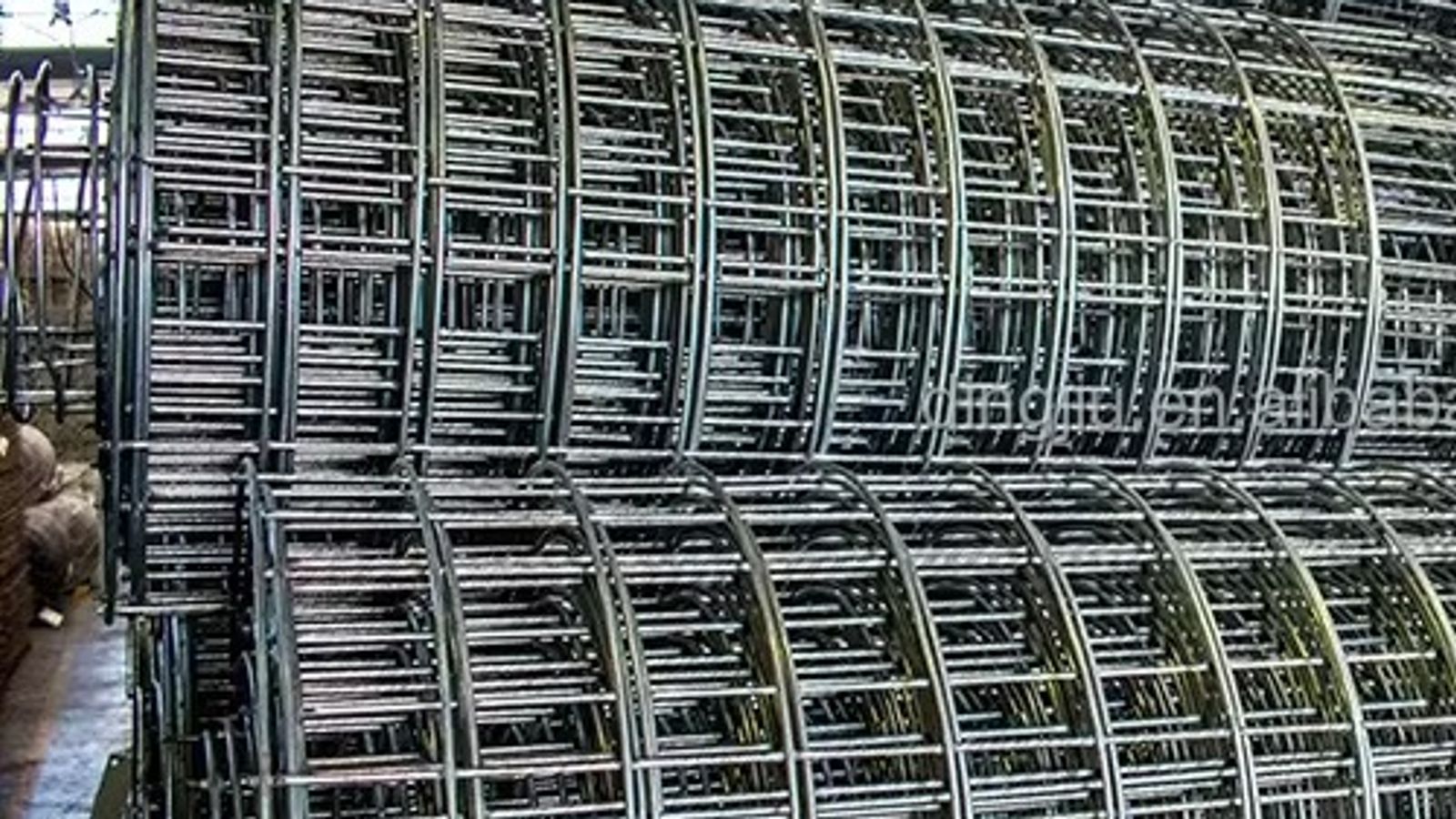
Reverse dutch weave wire mesh is a high-filtration-density woven metal media in which heavy warp wires—for 80×700, approximately 0.14 mm in diameter—are interlaced with a tightly packed layer of very fine shute wires (approximately 0.02–0.03 mm at 700 wires per inch), and the smooth, fine-wire side is deliberately oriented to face the incoming flow. The result is a depth-type filter with a typical nominal retention of 2–10 µm, an open area of well under 1%, and a smooth upstream face that roughly doubles the effective filtering area compared with a standard dutch weave of identical wire geometry. Because the construction is all-metal, 304/316 stainless reverse dutch weave elements can run in continuous service up to roughly 450–500 °C, which is why 80×700 is a workhorse choice for polymer melt filtration, hydraulic and chemical fine filtration, and food and beverage clarification. This article explains how the 80×700 designation is derived, what performance you can realistically expect from it, and how to decide between reverse dutch weave and alternative media.
Every dutch weave—plain dutch, twill dutch, and reverse dutch alike—uses the same asymmetry: heavy warp wires run in the length direction of the cloth, while fine shute wires are packed tightly across them. The warp wires act as the skeleton that gives the cloth mechanical strength; the densely woven shute wires do the actual filtering. The "reverse" in reverse dutch weave refers to orientation in service, not to a different weave geometry: the cloth is mounted so that the smooth, fine-shute side faces the incoming fluid, whereas a standard dutch weave faces the heavy warp side upstream.
The designation 80×700 is read left to right as warp count × shute count, both expressed in wires per linear inch:
The wire diameters are what turn a mesh count into a filtration rating, which is why two "80×700" cloths from different suppliers can behave differently—mesh count alone does not set the micron rating; the wire gauge does. The math is worth doing once: at 700 shute wires per inch, subtracting a 0.025 mm shute wire from the 0.036 mm pitch leaves a theoretical slit of roughly 11 µm between adjacent shute wires. That number already explains why 80×700 sits in the low-micron range, but it is not the full story—particles must also travel a tortuous path through multiple wire layers and across the warp wires, which is why effective nominal retention is quoted lower, typically at 2–10 µm.
In practice the two common construction choices for 80×700 use shute wires of 0.02 mm or 0.03 mm. The 0.03 mm variant is slightly stronger and more rigid; the 0.02 mm variant achieves a finer theoretical slit and marginally higher open area. Because shute wires this thin are the limiting member, the cloth is normally woven and handled carefully, and it is almost always supplied as cut discs, gasketed elements, or formed filter leaves rather than loose cloth.
Reverse dutch weave filters by depth, not by surface sieving. There are no straight-through square apertures as in a plain square weave; instead the flow path zig-zags through the interstitial spaces between the fine shute wires. That geometry gives 80×700 three performance properties engineers rely on.
Nominal retention of 2–10 µm. Typical industry figures for 80×700 reverse dutch weave put nominal retention at 2–10 µm. Because the pore structure is irregular and depth-type, a percentage of particles smaller than the nominal rating will still be captured, while a percentage of larger particles can pass. These are nominal ratings, not absolute ones: a claim of "sub-10 µm absolute" varies significantly by construction, wire tolerance, and test method, and should only be accepted from a supplier who can show a validated bubble-point or particle-challenge test on the actual lot. If your process genuinely needs a certified absolute cut-off, a rigid five-layer sintered element is the more defensible specification.
High dirt-holding capacity for the fineness. Because the contaminant is captured throughout the wire matrix rather than on a single surface plane, a single layer of 80×700 carries substantially more solids than a surface screen of equivalent rating before the pressure drop becomes unacceptable. The smooth upstream face reinforces this: cake deposits uniformly across the whole surface instead of bridging across the valleys between heavy warp wires. This is the origin of the commonly quoted rule that reversing the weave orientation effectively doubles the usable filtering area relative to a standard dutch weave of the same wire geometry.
All-metal temperature and chemical resistance. 304 and 316 stainless versions of 80×700 are routinely used in continuous service up to approximately 450–500 °C, with the practical limit set by the alloy, the atmosphere, and the pressure rating of the housing rather than by the cloth. For aggressive chemical streams, the same weave can be supplied in 316L, 904L, or Hastelloy. This distinguishes woven stainless media from polymer filter media, which collapse well below 200 °C, and from paper or felt media, which are single-use.
Not every reverse dutch weave is as fine as 80×700. The same weaving principle is available across a range of counts, and choosing the right one is a flow-versus-fineness decision. The table below gives typical, construction-dependent figures for three counts you will meet in practice.
| Mesh designation | Warp wires/in | Shute wires/in | Typical warp dia | Typical shute dia | Typical nominal retention | Typical open area |
|---|---|---|---|---|---|---|
| 24×110 | 24 | 110 | ~0.35 mm | ~0.14–0.15 mm | ~40–60 µm | ~2–4% |
| 80×700 | 80 | 700 | ~0.14 mm | ~0.02–0.03 mm | 2–10 µm | < 1% (≈0.5%) |
| 132×17 | 132 | 17 | ~0.09 mm | construction-dependent | tens of µm; construction-dependent | low; count-dependent |
The 24×110 is the coarse end of the family: a rugged, high-flow media for bulk solids removal and pre-filtration. The 80×700 is the fine end, delivering sub-10 µm nominal retention at the cost of very low open area. The 132×17 sits between them on throughput: with a high warp count and a comparatively low shute count, it is a coarser companion construction used where engineers want reverse-dutch cake behavior and cleanability but cannot afford the pressure drop of an 80×700. For any of these, wire diameters and tolerances are what fix the actual cut-off, so specify them explicitly when you quote.
The price of 2–10 µm retention in a woven medium is low open area and a steep, non-linear pressure-drop curve. An 80×700 cloth with roughly 0.5% open area cannot pass fluid like a 24×110 at 2–4% open area, and it behaves very differently from a square-weave screen.
For a clean 80×700 element at moderate liquid face velocities, differential pressure is typically in the range of a few tenths of a bar—on the order of 0.1–0.5 bar (1.5–7 psi). Because the flow path is tortuous, pressure drop increases faster than linearly with flow rate: doubling the flux typically more than doubles the clean-media ΔP. This is why sizing reverse dutch elements is always done on ΔP budget, not on mesh count alone. In service, elements are normally changed or backwashed when the differential reaches roughly 1.5–3.5 bar (20–50 psi), depending on the system's pressure rating and the acceptable leakage risk; pushing beyond that point risks collapsing the thin shute layer or blinding the media permanently.
A few rules of thumb follow directly:
Polymer melt filtration. This is the flagship application for fine reverse dutch weave. In extruder screen packs and melt filters, 80×700 removes gels, specks, degraded polymer, and catalyst residue from molten resin, protecting dies and downstream equipment and improving product quality. The all-metal construction tolerates melt temperatures that would destroy polymer media, and the 2–10 µm range covers the fineness required for film, fiber, and engineering-compound production. Because these are high-pressure, high-temperature duties, 80×700 is usually supplied as part of a screen pack built around precision filter discs, and the whole assembly is treated as a consumable. For a broader view of the duty, see how plastic extrusion filtration is specified in practice.
Hydraulic and chemical fine filtration. In servo-hydraulic systems, injection systems, and corrosive chemical process streams, 80×700 protects precision valves, orifices, and nozzles from fine particulate. The woven construction offers high mechanical strength for a fine media, and the smooth upstream face keeps ΔP rise predictable between change-outs. For reusable duty, elements can be backwashed in place; for single-use duty, the cloth is inexpensive enough to discard.
Food and beverage clarification. Reverse dutch weave is used to polish wine, juice, edible oils, and syrups to the clarity consumers expect without introducing organic media into the product. Stainless construction is cleanable and CIP/SIP-compatible, which matters for food and beverage processing lines where media hygiene and traceability are audited.
Pharmaceutical and fine chemical solids removal. Where a downstream step can tolerate nominal rather than absolute filtration, 80×700 provides fine solids removal with excellent chemical compatibility across solvents and pH ranges.
The choice between weave orientations and media families usually comes down to four questions: how fine a cut-off you need, whether the rating must be absolute or nominal, whether the element is reusable or single-use, and what pressure budget you have.
Reverse dutch vs plain dutch. The wire geometry is the same family; only the orientation differs. Choose reverse dutch when you want the smooth side facing flow—roughly double the effective filtering area, a more uniform and cleanable cake, and better resistance to blinding in reusable elements. Choose a standard dutch orientation when the heavy warp side should take the upstream mechanical abuse, or when the element is disposable and the orientation gives you a specific cake-handling characteristic. For a full comparison of the weave families, the plain weave vs twill vs dutch weave selection guide walks through the trade-offs in more depth.
Reverse dutch vs twill dutch. Twill dutch weave uses a twill interlacing pattern that packs the fine shute wires even more tightly, reaching finer cut-offs for a given wire diameter. If your target is below roughly 5 µm and you are choosing between families, twill dutch can sometimes deliver the finer rating. Reverse dutch 80×700, however, remains attractive when the 2–10 µm nominal range is sufficient and you want the smooth-face cake behavior, easier cleaning, and lower cost of a plain-dutch family weave.
Reverse dutch vs sintered mesh. This is the most important decision for fine-filtration applications. Five-layer sintered mesh fuses a fine woven layer between support layers into a rigid, homogeneous sheet with tightly controlled pore size. It offers a more reproducible and often absolute-rated cut-off, resists deformation at high differential pressure, and backwashes repeatedly without the weave shifting. The costs are higher price and lower open area. Choose reverse dutch weave when nominal filtration is acceptable, when cost per square meter matters, when the element will be replaced rather than intensively cleaned, or when you need a pliable cloth that can be formed into discs, leaves, and gaskets. Choose sintered media when the process demands a validated absolute rating, mechanical rigidity under high ΔP, or long service life through aggressive backwashing.
What is reverse dutch weave wire mesh? Reverse dutch weave wire mesh is a woven stainless filter cloth with heavy warp wires and fine, tightly packed shute wires, mounted so the smooth fine-wire side faces the incoming flow. That orientation increases the effective filtering area—commonly cited as about double that of a standard dutch weave of the same geometry—and produces a uniform, easily released filter cake.
What does 80×700 mean in wire mesh? It is the weave count: 80 warp wires per inch (roughly 0.14 mm in diameter) and 700 shute wires per inch (roughly 0.02–0.03 mm in diameter). The fine, dense shute layer performs the filtration; the heavier warp wires give the cloth strength.
What micron rating does 80×700 reverse dutch weave achieve? Typical nominal retention is 2–10 µm. Because the pore structure is depth-type and tortuous, the rating is nominal rather than absolute; sub-10 µm absolute claims vary by construction and should be backed by media testing. For a certified absolute cut-off, multi-layer sintered mesh is the more standard choice.
What is the pressure drop and flow tradeoff for 80×700? Fine reverse dutch weaves have very low open area—under 1% for 80×700—so ΔP rises steeply with flow. Clean-media ΔP is typically on the order of 0.1–0.5 bar at moderate liquid flux, and elements are usually changed or backwashed at roughly 1.5–3.5 bar differential. Use the coarsest mesh that still meets your retention target.
Reverse dutch vs plain dutch vs sintered mesh—which should I choose? Reverse dutch gives you smooth-side flow, roughly double the effective area, and better cake release for reusable elements. Plain dutch faces the heavy warp side upstream and is the lower-cost standard. Sintered mesh gives a rigid, absolute-rated, backwashable media at higher cost. Pick based on whether your rating must be absolute, whether the element is single-use or reusable, and your pressure budget.
Every filtration system is slightly different, and mesh count alone never tells the whole story—wire diameter, alloy, orientation, and element format all change the result. KAIFIL weaves reverse dutch weave mesh including 80×700 and 132×17 in 304, 304L, 316, and 316L, and can supply it as plain cloth, custom-shape filter discs, and complete screen packs sized to your housing. Send us your required micron rating, operating temperature, pressure budget, and element dimensions, and our engineers will recommend the exact weave construction and wire diameters for your duty. Contact KAIFIL today for a quote and let us match the mesh to your process—not the other way around.
Dense woven wire mesh for fine filtration and custom screen packs in demanding process lines.
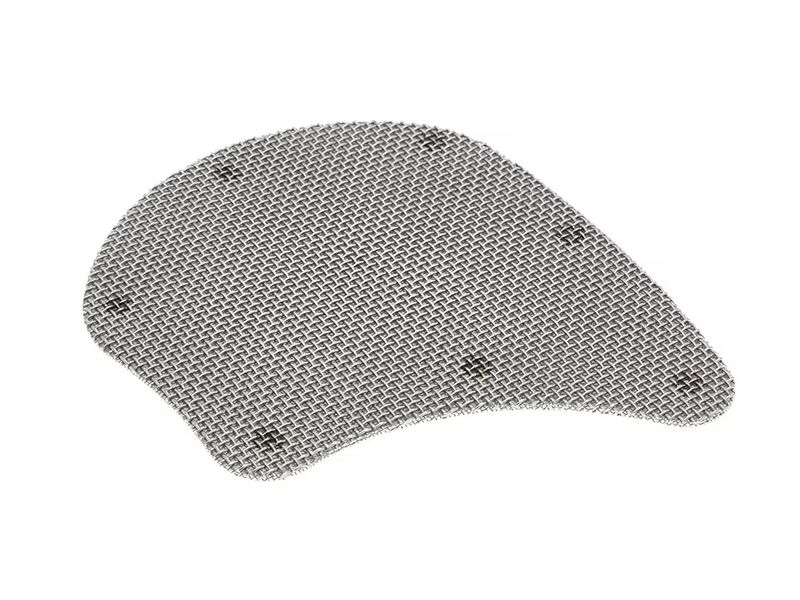
Irregular discs / custom mesh inserts / stamped shapes for non-standard filter seats and oem equipment interfaces, supplied to drawing with material, size and packing details confirmed at RFQ stage.
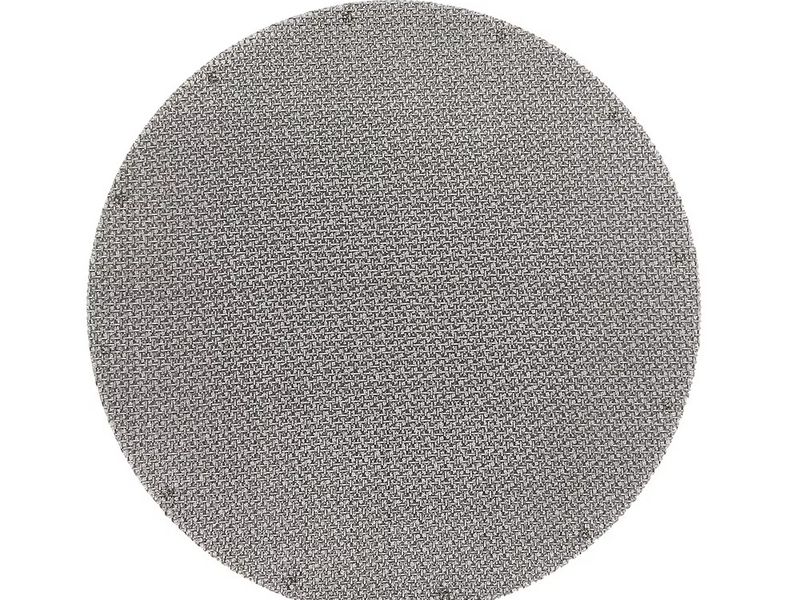
Plain discs / cut mesh pieces / custom shapes for economical mesh inserts and removable filter screens, supplied to drawing with material, size and packing details confirmed at RFQ stage.
Send drawings, dimensions, material, environment or operating conditions, and we will help confirm the right specification.
Uploaded reference files are included with the inquiry. For larger CAD packages, reply to the confirmation email or send them here:
Our team typically replies within 24 business hours.