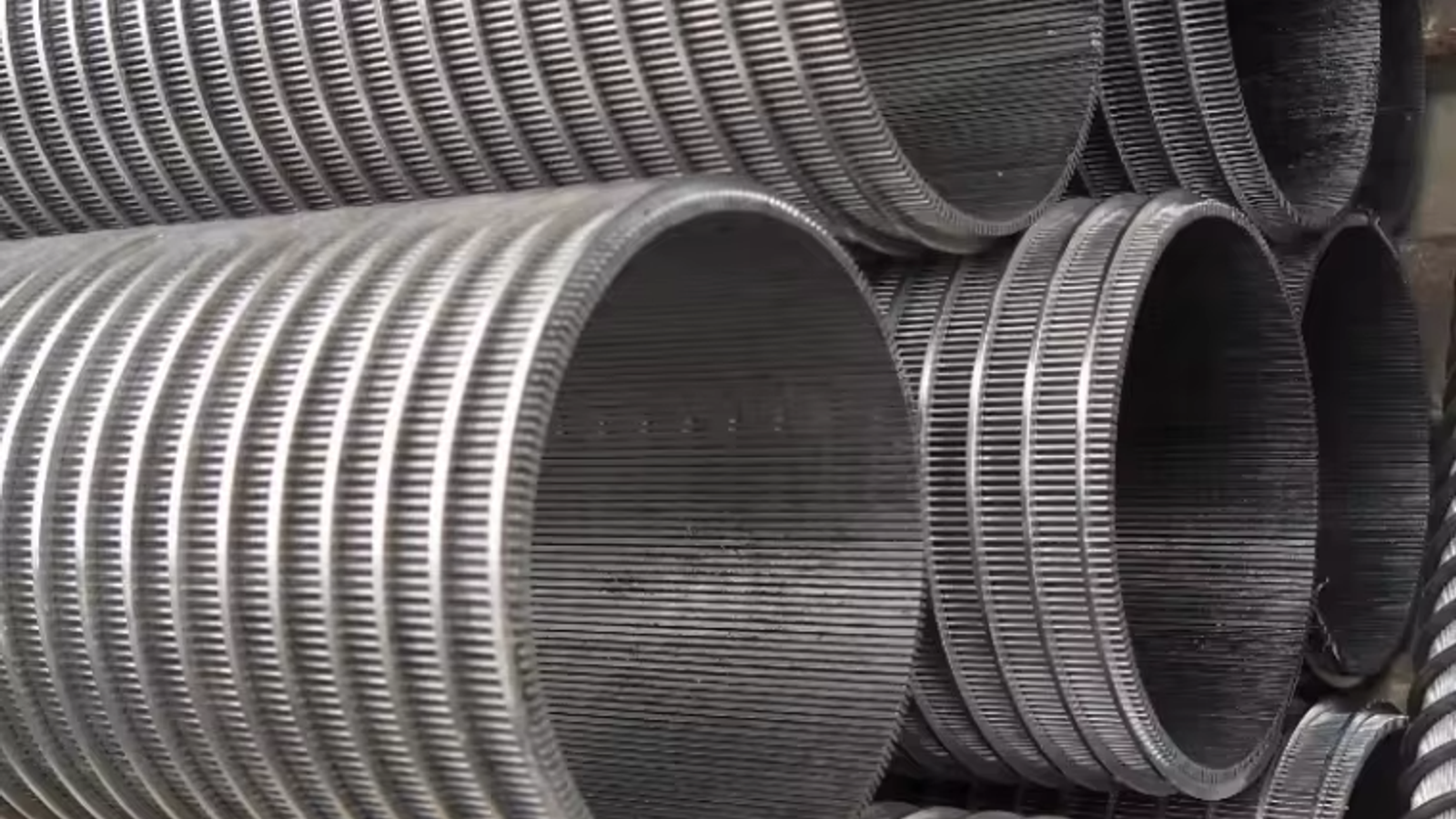
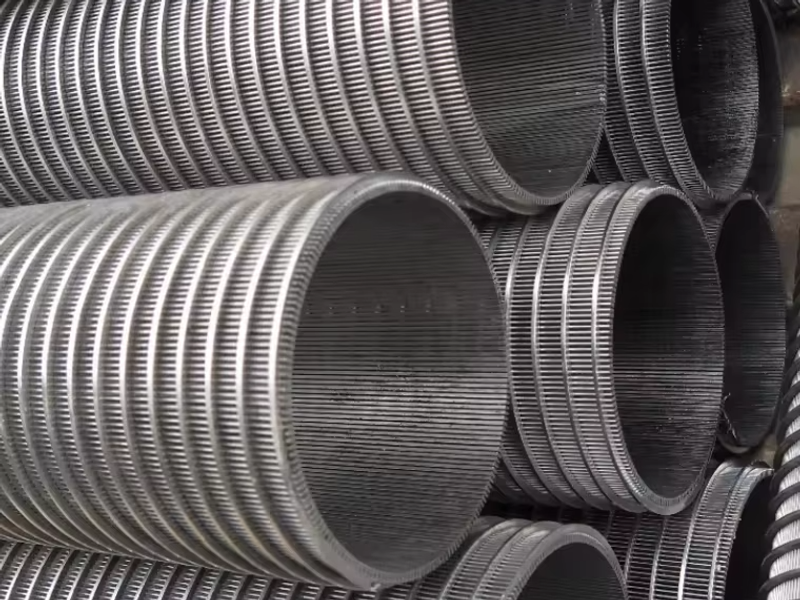
A resin trap (also called a resin catcher or resin retention screen) is a filtration element installed inside or directly downstream of an ion exchange vessel that prevents ion exchange resin beads from escaping into downstream equipment while allowing treated water to pass. For condensate polishing and demineralization service, resin traps are engineered around a narrow band of dimensions: typical slot openings of 0.2–0.5 mm for resin retention, sized against resin bead diameters of roughly 0.3–1.2 mm for standard gel-type resins and 0.5–1.0 mm for macroporous grades, and designed to operate at flow velocities of 20–60 m/h without excessive pressure drop. Getting these three numbers right — slot, bead, and velocity — is the entire job of selecting a resin trap. This guide walks through the geometry, materials, and configuration decisions that determine whether your polishing train holds its resin or sends it toward your boiler and turbine.
What a Resin Trap Does and Where It Is Installed
An ion exchange vessel is packed with resin beads that do the actual ion removal work. Over hundreds of cycles, those beads shed fines from osmotic shock, friction, and regeneration, and the beads themselves must never leave the vessel. If they do, the consequences are expensive: resin fouling of feedwater heaters and boilers, deposits on turbine blades, blocked instrument lines, and a steady loss of costly resin inventory. The resin trap is the barrier that holds the bed in place.
Resin traps appear at every point in a water treatment train where resin can migrate:
- Condensate polishing plants. Mixed-bed polishers and separate cation/anion polishers polishing steam condensate run at high flow, so they are the most demanding resin retention duty. These systems almost always use 0.25 mm or 0.20 mm slot collectors.
- Mixed-bed, cation, and anion exchangers. Each vessel needs a bottom collector that lets treated water out while retaining the bed, and a top distributor that spreads inlet water without channeling. Both are typically wedge wire or slotted pipe assemblies.
- Demineralization trains. Makeup water demineralizers (cation → anion → mixed bed) run at lower velocities than condensate polishers but still need robust collectors, especially on the anion units where caustic regeneration makes material selection important.
- Inline resin traps. Some condensate systems add a separate external resin catcher in the polisher outlet piping — a screen basket or cylinder that catches any resin that escaped the vessel, before it reaches the boiler feed pump.
In all of these positions, the screen must do three things simultaneously: retain the smallest resin fines, pass the full design flow, and survive the mechanical load of a waterlogged resin bed sitting on top of it. For water treatment and well screen applications, the same V-profile wedge wire geometry used in groundwater wells is adapted into vessel internals that meet these requirements.
Why Wedge Wire Geometry Beats Perforated Plate and Wire Mesh
Not every slotted screen is a good resin trap. The three common options — V-profile wedge wire, perforated plate, and woven wire mesh baskets — look interchangeable at a glance but behave very differently once a loaded resin bed is pressing on them.
Continuous slot geometry. A wedge wire screen is built by helically winding V-shaped (triangular) profile wire onto longitudinal support rods and resistance-welding every intersection. The result is a continuous slot that runs the entire length of the element, with a slot width that is held to a tight tolerance (±0.05 mm is typical on resin-grade screens) from one end to the other. Because the slot is formed by the two adjacent wire profiles, there are no drift points, no gaps at the weld, and no round holes where a particle can catch.
The V-shape is self-relieving. The triangular profile wire creates a slot that is narrowest at the outer face and widens toward the inside. A resin bead that is slightly smaller than the slot can enter but does not jam — the widening gap lets it pass through rather than wedging. Debris that would blind a straight-walled perforated plate hole washes through. This is why wedge wire retains its hydraulic capacity over years of service while a plate or mesh with the same nominal opening gradually plugs.
Strength under bed load. A mixed-bed polisher 3–4 m tall carries a full resin bed of perhaps 1.5–2 m, waterlogged and compacted during the service run. Wedge wire's support-rod structure carries that load with minimal deflection, keeping the slot width uniform. A woven mesh basket under the same load will bulge between supports, the weave will shift, and local openings can open up enough to pass resin. Perforated plate is stiff but heavy, and its round holes — usually punched at 1–3 mm — cannot hold resin fines at all without an additional fine-mesh liner.
Open area at fine openings. At the 0.2–0.5 mm range where resin retention operates, woven mesh offers the highest theoretical open area (30–40%) but sacrifices robustness; perforated plate offers the lowest practical open area because the plate must be thick enough to be rigid, and holes smaller than about 0.8 mm are difficult to punch economically. Wedge wire sits in between, with open areas of roughly 15–25% at resin-grade slots, and it holds that open area for the life of the element. The trade-offs are summarized in the table below.
| Criterion | V-profile wedge wire screen | Perforated plate | Woven wire mesh basket |
|---|
| Opening precision | Continuous slot; ±0.05 mm over full length | Punched holes; looser tolerance; edge burrs | Aperture varies with weave tension; mesh shifts in service |
| Practical open area at 0.25 mm retention | ~15% | ~8–12% for 0.3–0.5 mm holes | 30–40%; but not maintained under load |
| Clogging behavior | V-slot self-relieves; fines pass through | Round blind holes trap and block particles | Surface clogs; difficult to backwash clean |
| Mechanical strength | Welded V-wire on support rods; resists bed load | Stiff but heavy | Thin wires bulge and distort under bed weight |
| Typical service life in polishing | 10+ years in SS304/SS316L | Shorter; corrosion at hole edges | Shortest; fretting and weave shift |
| Best role | Resin retention; collectors; cup screens | Coarse support and non-critical duty | High-open-area screening with low mechanical load |
If your application is primarily about holding a moving, abrasive bed — not just screening clean water — the wedge wire screen vs woven mesh comparison is worth reading before you specify, because the failure modes differ sharply in resin service. And when a retrofit calls for a drop-in cylinder rather than a full vessel rebuild, perforated metal filter cylinders are an option for coarse guard duty, though they are rarely the right choice for primary resin retention.
Slot Size Selection vs Resin Bead Size Distribution
The cardinal rule of resin trap selection is simple: the slot opening must be smaller than the smallest resin bead that can realistically reach it. Because resin shrinks, swells, and sheds fines throughout its life, the slot is chosen against the minimum bead size in the distribution, not the nominal size printed on the resin spec sheet.
Standard gel-type resins used in mixed-bed condensate polishing have bead sizes of roughly 0.3–1.2 mm, with the bulk of the volume in the 0.4–0.8 mm range. Macroporous (MR) resins run slightly coarser, about 0.5–1.0 mm. A slot at the top of the 0.2–0.5 mm range will retain virtually the entire bed of either type, while a slot at the bottom of the range adds a safety margin against the fines that accumulate as the resin ages.
The practical guidance used across the power and water industries:
| Slot opening | Resin type | Typical application |
|---|
| 0.20 mm | Fine-mesh gel resins; aged beds with high fines fraction | Final resin trap; high-purity condensate polishing |
| 0.25 mm | Standard gel-type resins (0.3–1.2 mm) | Mixed-bed condensate polishers — the most common spec |
| 0.30–0.40 mm | Macroporous resins (0.5–1.0 mm) | Cation and anion exchangers; demineralization trains |
| 0.50 mm | Large-bead macroporous; no fine fraction in the bed | Large bottom collectors on deep-bed units |
Two cautions. First, never select the slot by the resin's nominal bead size alone — request the actual bead size distribution from the resin supplier, including the percentage below 0.5 mm, and choose the slot so that the smallest measurable fraction is still retained. Second, do not overslot to gain open area. A 0.5 mm slot on a standard gel bed may look fine until the bed ages, sheds fines, and the polisher starts shipping resin downstream. If you need more capacity, add screen surface area — longer laterals or more cup screens — rather than opening the slot. The engineering of that extra area is the subject of the next section.
Open Area and Pressure Drop Engineering
A resin trap has two hydraulic requirements that pull in opposite directions. It must let the full design flow pass with a pressure drop low enough not to starve the vessel or trigger a differential-pressure alarm, and it must do so at the fine slot openings required for resin retention. The lever that reconciles these is open area — the ratio of open slot to total screen surface.
For a V-profile screen, open area is set by the ratio of slot width to the combined slot-plus-wire-top width. A 0.25 mm slot on a profile wire with a 1.4 mm top face gives roughly 15% open area; widening the slot to 0.5 mm on a 1.5 mm wire gives roughly 25%. That may sound low, but because condensate polishers operate at velocities of 20–60 m/h — and high-rate designs up to 120 m/h — the total collector surface is sized so that the velocity through the slots stays well below the velocity that would carry resin or cause unacceptable head loss.
Two numbers matter in the sizing calculation:
- Approach velocity — the vessel flow divided by the vessel cross-section, typically 20–60 m/h in condensate polishing.
- Slot velocity — the flow divided by the open slot area of the collector. Good practice keeps this below roughly 0.3–0.6 m/s (about 1000–2000 m/h equivalent) so that the screen itself contributes only a small fraction of the total vessel pressure drop.
As a rule of thumb, a correctly sized wedge wire collector adds less than 0.2 bar of pressure drop at design flow, and most of the measurable ΔP across a polishing vessel is the resin bed, not the screen. Because slot velocity scales inversely with open area, every 0.1 mm reduction in slot width roughly doubles the localized velocity through the opening — which is exactly why a 0.20 mm final trap needs significantly more screen surface than a 0.30 mm collector on the same duty. If a supplier quotes a 0.25 mm trap with the same footprint as a 0.50 mm collector, ask for the open-area calculation. A screen that is undersized in surface area will show up as an unexplained pressure-drop penalty on the polisher's differential pressure gauge, and will have no slot-size margin left when the resin ages.
Materials and Fabrication: SS304 vs SS316L, V-Profile, Continuous Slot
Resin traps spend their working life in treated water, hot condensate, and regenerant chemicals — sulfuric acid on cation units, caustic on anion units — so material selection is straightforward but not optional.
- SS304 is the economic default for neutral to slightly alkaline water service with low chloride content. It covers the majority of demineralizer collectors in municipal and industrial plants.
- SS316L is specified where chlorides are present, where condensate quality upsets can drop pH, or where the utility runs aggressive regeneration regimes. The molybdenum content resists the pitting and crevice corrosion that shortens screen life in chloride-bearing service. For high-pressure condensate polishing in power plants, SS316L has become the de facto standard because a single corrosion failure inside a vessel is far more expensive than the material upgrade.
- Hastelloy and other alloys are reserved for extreme regenerant chemistry or offshore/geothermal duty, and are rarely needed for standard ion exchange.
Fabrication quality is where resin traps are won or lost. Look for the following in any candidate design:
- V-profile wire — the triangular wire section that produces the self-cleaning slot. Flat-topped round wire does not give the same gap geometry.
- Continuous resistance welding — each wire-to-support-rod intersection is welded, so the screen is a single rigid structure with no moving parts and no gaps that can open under load.
- Slot tolerance verification — resin-grade screens are gauged slot-by-slot during manufacture. A 0.25 mm spec should mean 0.25 mm at every point, not 0.25–0.40 mm depending on where you measure.
- Rounded or tapered end caps and clean weld seams — smooth transitions prevent resin hang-up and make backwashing more effective.
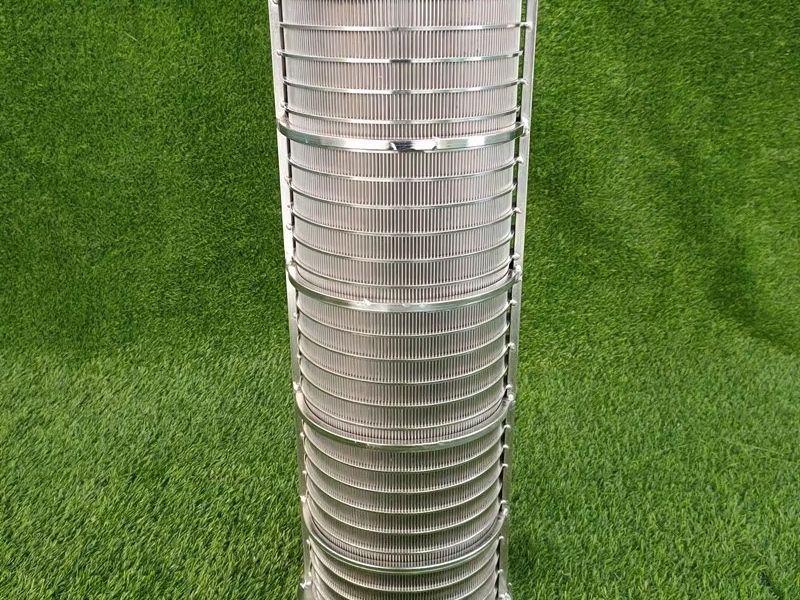
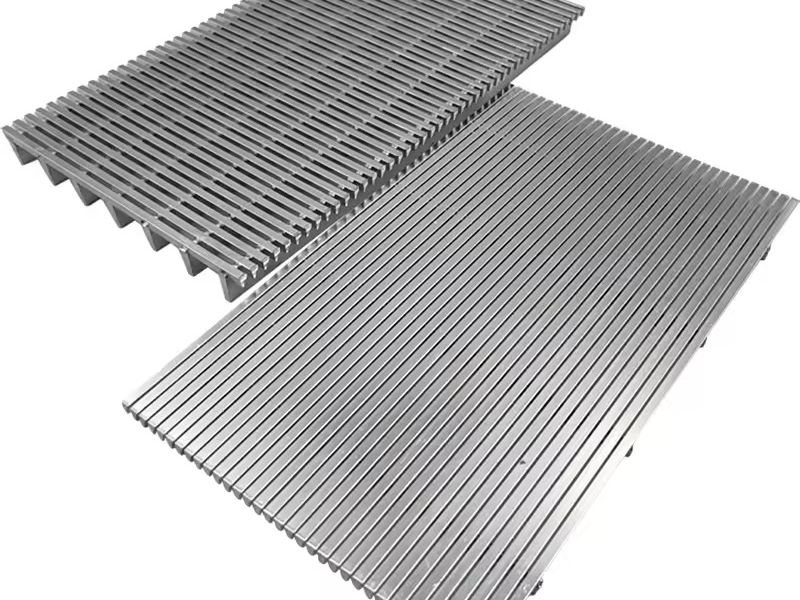
KAIFIL's custom wedge wire screen parts are manufactured to these requirements, and the same V-profile process is used for wedge wire screen panels and wedge wire screen cylinders when the collector needs to be supplied as a drop-in assembly rather than a bare lateral.
Typical Configurations: Laterals, Header-Lateral Systems, and Bottom Collectors
Resin traps are rarely sold as a single cylinder. In practice they are configured to suit the vessel, and the configuration is as important as the slot size.
Flat tube laterals. The simplest robust design: a series of wedge wire screen pipes laid across the vessel bottom, each connected to a common outlet header. Each lateral is a full-length screen tube, and the array spreads the flow evenly across the vessel cross-section. Flat tube laterals are the workhorse of demineralizers up to about 3 m diameter.
Header-lateral systems. A main header pipe runs across the vessel with lateral arms projecting from it, each lateral capped at the far end. This arrangement reaches the outer radius of large vessels and is common for both bottom collectors and top distributors. The header-lateral geometry gives the designer precise control over flow distribution and makes it possible to balance the pressure drop across the full bed.
Cup (chimney) screens. In deep-bed units, the bottom collector is often a header with multiple short cylindrical screen cups rising into the bed. The vertical cups give a large wetted surface in a small footprint and are easy to inspect. Cup screens are also used in the underdrain of some high-rate condensate polishers.
Bottom collectors and top distributors. The bottom collector is the primary resin trap and carries the full bed load. The top distributor is not a trap in the strict sense, but it must be built to the same standard so it does not channel flow and erode the bed. Both are typically wedge wire screen pipe assemblies.
External inline traps. Where the vessel internals are already fixed and resin has historically escaped, an external resin catcher — a screen cylinder or basket in the outlet piping — provides a second line of defense. These are simpler to retrofit and to inspect, and they protect the boiler feed pumps while a vessel is waiting for a planned outage.
Regardless of configuration, the collector must be designed for the full flow at the low end of the velocity range and the full bed load at the high end — and must be removable. Vessel internals that cannot be pulled for inspection will fail silently.
Maintenance and Replacement
A resin trap is a passive component, but it is not maintenance-free. A structured inspection and replacement program is the difference between a 15-year collector and a surprise resin leak.
- Inspect at every vessel overhaul. Pull the collector, check slot width with feeler gauges at multiple points along each lateral, and look for wire lift-off, weld cracks, and corrosion pitting — especially near the welds and at the ends of laterals, where galvanic couples and stagnant zones concentrate attack.
- Watch the pressure drop trend. A rising ΔP across a polisher with a clean bed points to a blinded screen — usually from resin fines, not debris. If backwashing does not restore the baseline, the screen needs cleaning or replacement. A sudden ΔP drop, by contrast, can mean a screen has failed and resin has escaped, so verify the downstream traps immediately.
- Backwash on the right schedule. Wedge wire's self-relieving slots clear most fines during normal backwashing. Screens that have been starved of flow for long periods can blind with compacted fines that need a dedicated flush.
- Replace on a condition basis, not a fixed calendar. In clean service with stable chemistry, SS316L collectors routinely last 10–15 years. Where the bed has shed heavy fines, or where regeneration chemistry has been aggressive, plan to replace the collector when slot wear exceeds the resin retention margin rather than running it to failure.
When replacement is needed, specify the same slot, material, and open area as the original — or upgrade the open area if the vessel's pressure drop budget allows. KAIFIL supplies custom stainless steel screen filter parts and stainless steel filter components for exactly this retrofit duty, manufactured to match existing vessel envelopes and flanges.
FAQ
What slot size should I use for a mixed-bed condensate polisher? For standard gel-type resins with beads in the 0.3–1.2 mm range, 0.25 mm is the industry default. If the bed is aged or has a high fines fraction, step down to 0.20 mm and add screen surface to compensate for the lower open area.
Can I use a perforated plate instead of a wedge wire screen for resin retention? Not for primary retention. Perforated plate at resin-retention openings has low open area, blinds with fines, and its round holes cannot hold the smallest beads without a fine-mesh liner. It is acceptable for coarse support duty or as a backing for a finer screen, but V-profile wedge wire is the standard for resin traps.
How do I calculate the screen area I need? Take the design flow in m³/h, divide by the open area fraction of the chosen slot, and size the collector so the velocity through the slots stays in a practical band (roughly 0.3–0.6 m/s). At condensate polishing velocities of 20–60 m/h, the collector should add well under 0.2 bar of pressure drop at design flow.
Is SS316L worth the extra cost over SS304 for a resin trap? In condensate polishing and any chloride-bearing or high-purity water service, yes. The molybdenum in SS316L resists the pitting and crevice corrosion that can end an SS304 collector early, and the cost of one in-service failure — resin loss, boiler deposits, forced outage — dwarfs the material premium.
What is the typical life of a wedge wire resin trap? In clean service with stable chemistry, 10–15 years is common. The practical limit is set by slot wear and corrosion rather than mechanical fatigue, so condition-based inspection at each vessel overhaul is the right way to manage replacement.
Get a Quote for Your Polishing Train
A resin trap is a small component with an outsized job: it sits between your resin bed and your boiler, and its slot size, open area, material, and configuration have to be right for your specific vessel. If you are selecting a collector for a new polishing plant, retrofitting an existing demineralizer, or replacing a collector that has already cost you resin, send KAIFIL your vessel diameter, design flow rate, and resin type — including the bead size distribution if you have it. We will recommend the slot opening, screen area, and configuration that keeps your bed where it belongs, and provide a quote on wedge wire collectors manufactured to your exact envelope. Contact KAIFIL today with your vessel diameter, flow rate, and resin type, and get a resin trap engineered for your condensate polishing or ion exchange system.