Selection Guide
Small Batch Custom Stainless Steel Filter Parts: MOQ Guide
Learn MOQ, lead times, and cost drivers for small batch custom stainless steel filter parts (5–200 pcs). Send your drawing to KAIFIL for a free quote.
Learn MOQ, lead times, and cost drivers for small batch custom stainless steel filter parts (5–200 pcs). Send your drawing to KAIFIL for a free quote.
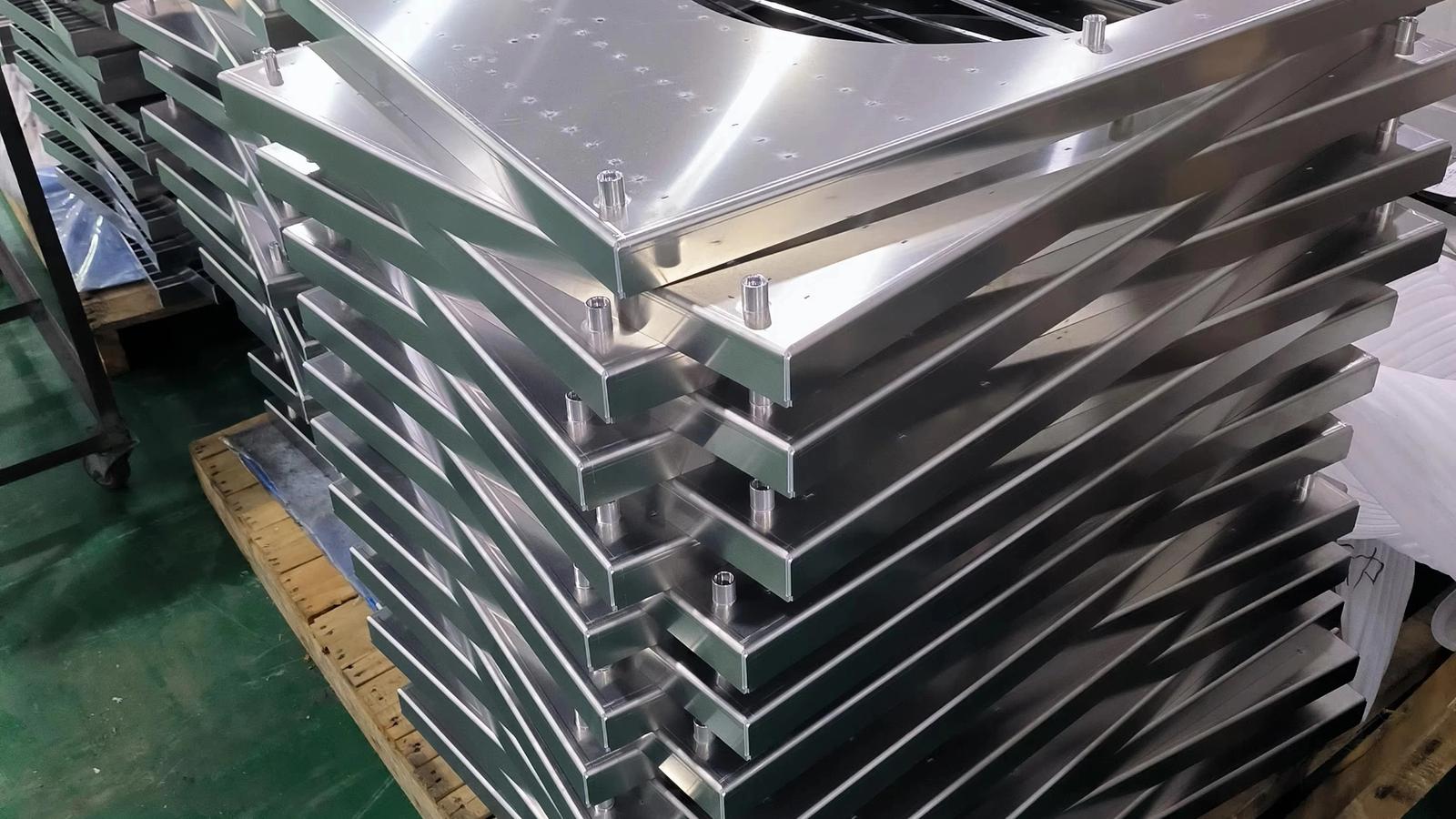
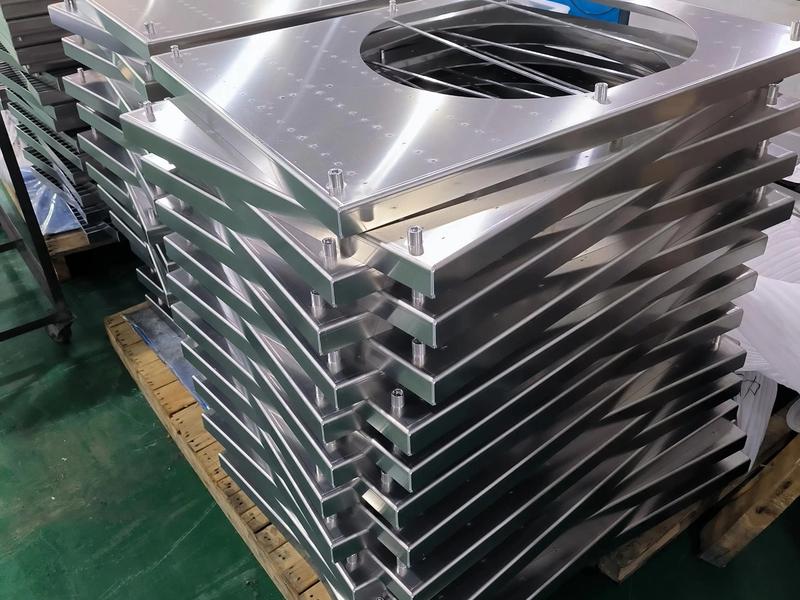
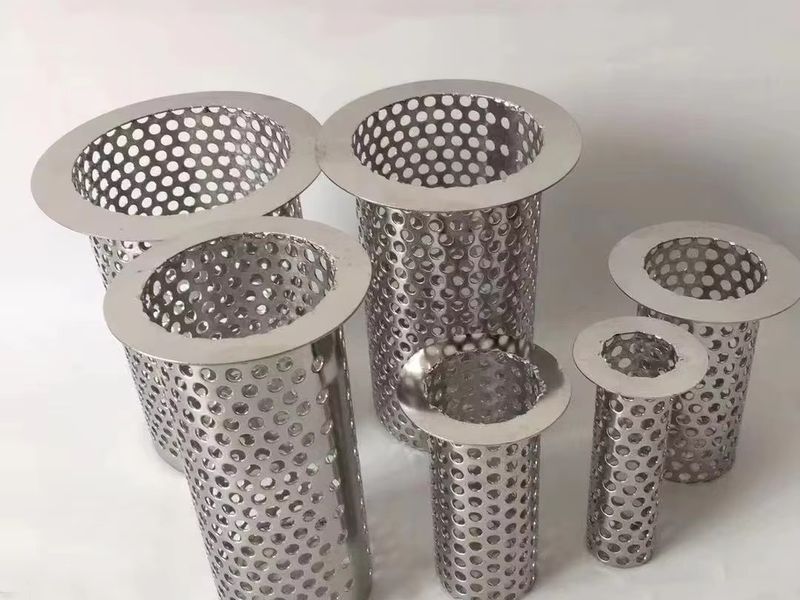
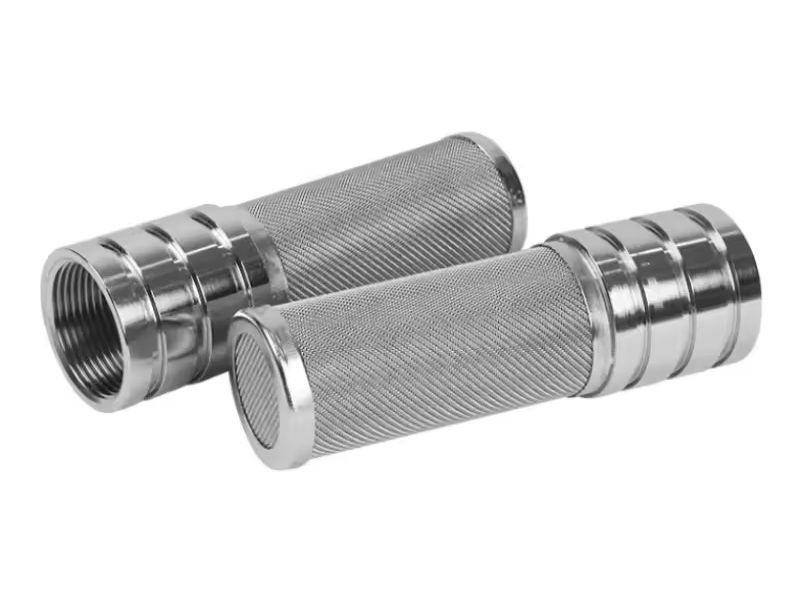
Custom stainless steel filter parts are filtration components manufactured to a buyer's drawing: flat filter discs, cylindrical screens, conical and capsule filters, baskets, caps, and welded filter assemblies cut, formed, and finished from stainless steel wire mesh, perforated sheet, or wedge wire to a specified micron rating and dimensional tolerance. Because these components are made to order rather than stocked, procurement managers often assume they require large volumes. In practice, a factory-direct manufacturer can accept orders as small as 5 pieces for prototypes and quote typical small-batch runs of 5–200 pieces, respond to a 2D drawing or 3D model within 2–3 working days, and ship laser-cut flat parts in roughly 10–15 working days after drawing approval. This article explains how minimum order quantities (MOQ), prototyping, lead time, tooling, and cost drivers actually work for small-batch custom stainless steel filter parts — and why buying directly from the factory, rather than through a trading company, is what keeps low-MOQ orders economically viable.
Small-batch ordering is rarely a compromise — for many buyers it is the only rational choice. These are the situations where ordering 5–200 pieces is the right call:
Small-batch fabrication is also the natural starting point for process validation in regulated industries. A food and beverage processor upgrading a filtration line, for example, typically runs qualification batches of 50–100 custom elements to verify sanitary design and cleaning behavior before scaling — exactly the kind of low-volume program a low MOQ filter manufacturer exists to support.
Trading companies are price takers: they buy from factories at volume, add a margin, and cannot absorb small-order overhead. A factory-direct manufacturer like KAIFIL controls its own laser cutting, forming, welding, and inspection in Shijiazhuang, so it can set up a small run the same day it is quoted and recover costs through efficiency rather than volume. That structural difference is why a direct manufacturer can say "yes" to 20 pieces where a trading company quotes a punitive price or simply refuses.
The practical answer to "why is your MOQ so low?" lies in how each part is actually made. MOQ is not a marketing decision — it is a function of the fabrication method and its setup economics:
When you are evaluating suppliers, ask what the MOQ is based on. If the answer is "because that is our policy," be wary. If the answer is "because the die has to be amortized," that is a real constraint you can engineer around — for example, by switching from a stamped to a laser-cut design. This is one of the key screening questions covered in our guide on how to choose a wire mesh filter manufacturer.
The quality of your small-batch order starts with the information you send. A complete drawing package lets the factory quote accurately on the first pass and avoids a 2–3 day round-trip of clarifying questions. For custom wire mesh filter components, the drawing should include:
Once the drawing arrives, the manufacturer's engineers perform a design-for-manufacturability (DFM) review. Expect feedback like: relaxing flatness on a welded ring to avoid rework; suggesting a laser-cut tab-and-slot arrangement instead of a costly weld fixture; or flagging that a very fine Dutch-weave mesh will not survive a tight bend radius without cracking — and proposing a formed support ring instead. A factory with real production engineers will also tell you when a specified tolerance is unnecessary, which is a direct way to lower your cost. Custom-shape wire mesh filter discs, for example, can be nested many per sheet to reduce material waste, but only if the drawing allows the engineer to optimize the layout.
Prototyping and production are two distinct stages with different economics. A prototype order is typically 1–10 pieces, priced to recover engineering review, laser programming, and setup, and produced in about 5–10 working days for laser-cut parts or 10–15 working days for simple welded items. The prototype's job is to prove fit, function, and manufacturability — not to be cheap.
The production order — 5–200 pieces — is where unit cost drops, because engineering and setup are already paid for and the factory can run the parts efficiently. The important rule is to keep the two stages on the same process. If the prototype was laser-cut, the production batch should also be laser-cut; if you switch to a stamping die between sample and volume, the sample no longer represents the production part. Design freeze is the discipline that makes this work: lock the drawing after prototype approval, record any approved deviations, and only then issue the production order.
For assemblies, it is wise to have the prototype inspected and signed off by the person who will install it. A welded wire mesh filter assembly that fits its housing in week one of prototyping will save you from discovering an interference fit after a 200-piece run.
Small-batch lead time is the sum of several short stages, most of which scale only weakly with quantity. A typical laser-cut flat part order breaks down as follows:
| Stage | Typical duration (working days) |
|---|---|
| Engineering review; quoting; and drawing approval | 2–3 |
| Material procurement (mesh; sheet; edge trim) | 2–5 |
| Laser cutting and forming | 3–5 |
| Welding (for assemblies only) | 3–8 |
| Finishing (deburring; passivation; polishing) | 2–4 |
| Inspection and documentation | 1–2 |
| Packing and dispatch | 1–2 |
Lead time scales differently by fabrication type, and MOQ behaves the same way. The table below summarizes typical factory lead times and minimums so you can plan your own schedule:
| Fabrication type | Typical lead time (after drawing approval) | Typical MOQ |
|---|---|---|
| Laser-cut flat parts (discs; rings; gaskets; plates) | 10–15 working days | from 5 pieces |
| Laser-cut plus formed parts (cones; cylinders; caps) | 15–20 working days | from 10 pieces |
| Welded wire mesh assemblies (baskets; housings; capsules) | 20–30 working days | from 10–20 pieces |
| Wedge wire screen panels and components | 15–25 working days | from 10 pieces |
| Stamped or die-cut parts (new tooling required) | 25–40 working days | higher — tooling amortization required |
The key insight for procurement managers: increasing the quantity from 5 to 200 pieces typically adds only a few days of fabrication time, not weeks. Most of the calendar is consumed by engineering approval, material, and finishing — the same regardless of whether you order 10 or 200 pieces. This is why consolidating several low-volume line items into a single release is one of the most effective scheduling moves you can make.
In small-batch fabrication, the cost picture is different from mass production. Unit cost in a 5–200 piece run is dominated by setup, engineering, and labor, not by material — and understanding that split tells you exactly where to cut cost.
| Cost driver | Small batch (5–200 pieces) | Mass production (1;000+ pieces) |
|---|---|---|
| Tooling | Laser program only; no physical die for flat parts | Stamping/forming dies amortized over large volume |
| Setup | One-time programming and fixture setup spread over few parts | Setup spread over thousands of parts |
| Material | Standard rolls/sheets; cut to width | Optimized nesting and dedicated material widths |
| Labor | More manual handling; welding; and finishing per piece | Automated or semi-automated production lines |
| Finishing | Batch pickling; passivation; polishing | In-line finishing integrated into the process |
| Dominant unit-cost driver | Labor + setup + engineering | Material + tooling amortization |
Five practical levers lower the unit cost of a small batch:
Small batches do not get a pass on traceability. Even a 10-piece order for a regulated process should come with the documentation your quality system requires:
Ask for the inspection plan when you place the order, not when the parts arrive. A factory that documents small batches properly is the same factory that documents large ones properly.
What is the minimum order quantity for custom stainless steel filter parts? KAIFIL accepts orders from 5 pieces for prototypes and typical small batches of 5–200 pieces for custom stainless steel filter parts. Laser-cut flat components have the lowest MOQ because they require no stamping die; welded assemblies typically start around 10–20 pieces.
How long does it take to make a prototype stainless steel filter? A laser-cut prototype usually ships in 5–10 working days after drawing approval; a simple welded assembly takes 10–15 working days. Quoting itself takes 2–3 working days.
What tolerance can you hold on custom wire mesh filter components? Laser-cut flat parts hold ±0.1 mm on profile dimensions. Welded assemblies are typically held to ±0.5–1.0 mm because weld heat and fixture deflection add variation.
Why is my MOQ so low — or so high? MOQ is driven by fabrication method, not policy. Laser cutting has near-zero tooling cost, so MOQ can be as low as 5 pieces. Stamped parts require a die that must be amortized, which raises MOQ. If a supplier's MOQ is unexplained, ask what it is based on.
Do you provide material certificates with small orders? Yes. Even small batches can be supplied with mill test certificates per EN 10204, including Type 3.1, plus dimensional inspection reports on request.
Small-batch custom filter fabrication should not be a sourcing headache. Whether you need 5 prototype discs to validate a new product or 200 welded filter assemblies for a pilot line, KAIFIL's factory-direct engineering team will review your drawing, give DFM feedback, and quote a realistic MOQ, lead time, and unit price — no trading-company markup and no minimum that exists only for policy's sake. We machine our own mesh, run our own laser cutters and welders, and document every batch from material certificate to final inspection. Send your 2D drawing or 3D model today, or browse our range of custom stainless steel screen filter parts to see what a dedicated manufacturer can do with your specification. Contact KAIFIL for a free quote and engineering support on your next small batch.
Cut, formed and welded wire mesh parts for custom equipment screens and fabricated filter inserts, supplied to drawing with material, size and packing details confirmed at RFQ stage.
Screen filter parts / cylinders / custom inserts for mixed stainless steel screen and filter part rfqs, supplied to drawing with material, size and packing details confirmed at RFQ stage.
Welded assemblies / framed filters / cartridges for oem filtration assemblies and replacement parts, supplied to drawing with material, size and packing details confirmed at RFQ stage.
Send drawings, dimensions, material, environment or operating conditions, and we will help confirm the right specification.
Uploaded reference files are included with the inquiry. For larger CAD packages, reply to the confirmation email or send them here:
Our team typically replies within 24 business hours.