Technical
High-Temperature Stainless Steel Filter Tube Material Selection
SS304 vs 316L vs Hastelloy vs Inconel vs Monel filter tube materials for service above 200°C — temperature limits, creep and cost. Ask our engineers.
SS304 vs 316L vs Hastelloy vs Inconel vs Monel filter tube materials for service above 200°C — temperature limits, creep and cost. Ask our engineers.
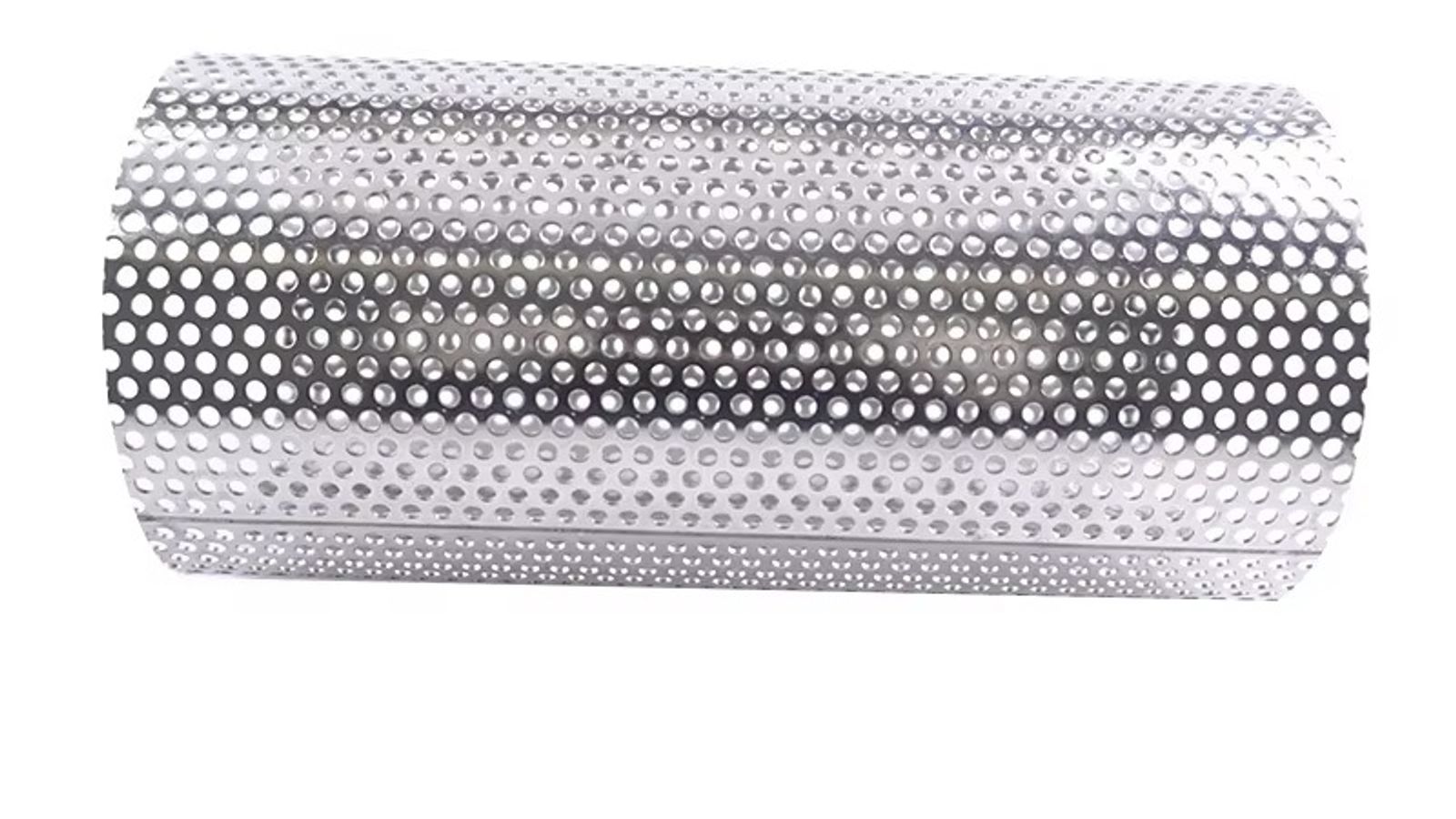
A high-temperature stainless steel filter tube is a cylindrical filtration element manufactured from austenitic stainless steel — typically SS304 or SS316/316L — or a nickel-based alloy such as Hastelloy C-276, Inconel 600 or Monel 400, engineered to separate solids from liquid and gas streams at operating temperatures above 200°C (392°F). The element typically combines a perforated core tube with a sintered wire mesh or sintered metal powder medium, rated from 0.5 µm to 200 µm nominal filtration, and is designed to withstand differential pressures in the range of 1-2 MPa before structural collapse. Material selection is the most consequential decision in the specification process, because above 200°C the life of the element is governed not by corrosion alone but by the interaction of oxidation, creep, sensitization and thermal expansion. This guide compares the engineering limits of SS304, SS316/316L and the principal nickel alloys so process engineers and procurement managers can specify the correct grade for filter tubes, filter cylinders and sintered filter elements operating in chemical, petrochemical, refining and thermal power service.
Choosing a material for a high temperature stainless steel filter tube requires understanding the four mechanisms that shorten element life at elevated temperature. All four act simultaneously, and the governing one depends on temperature, media chemistry and pressure.
Oxidation. All stainless steel grades form a protective chromium oxide scale. In dry oxidizing service, SS304 and 316L retain acceptable scaling resistance to roughly 870°C. This number is frequently quoted in supplier datasheets, but it describes unloaded oxidation, not an element under differential pressure. In a pressurized filter, the practical continuous limit is far lower because the oxide scale spalls under thermal and mechanical cycling while the load-bearing wire or powder structure loses section. For filter media, a defensible continuous limit for 304 is approximately 450°C, and for 316L approximately 550-600°C, with pressure derating applied above those temperatures.
Creep. Austenitic stainless steels begin to show measurable creep — time-dependent plastic deformation under sustained stress — above roughly 450-500°C, around 40% of the alloy's melting point on the homologous temperature scale. Filter tubes are pressure-retaining components: a sintered cylinder supporting a differential pressure of up to 1-2 MPa will slowly deform at temperature, opening pore channels, widening weld seams and eventually collapsing. The design stress for 316L at 600°C is a fraction of its room-temperature allowable, which is why pressure-rated elements are derated conservatively as temperature rises.
Sensitization. When austenitic stainless steel is held in the 425-815°C range, chromium carbides precipitate at the grain boundaries, depleting adjacent chromium and leaving the material vulnerable to intergranular corrosion. The low-carbon grade 316L (maximum 0.03% carbon) limits this precipitation and is therefore the default grade for welded and elevated-temperature filter elements, but even 316L requires control of heat input during fabrication.
Thermal expansion. The coefficient of thermal expansion of 304 and 316L is roughly 16-18 x 10⁻⁶/K. Nickel alloys such as Inconel 600 and Hastelloy C-276 run lower, near 13-14 x 10⁻⁶/K, and carbon steel housings lower still. In a multi-layer sintered element, expansion mismatch between the filter medium and the perforated support core, or between the element and the housing, creates shear stress at the sintered bonds and at seal locations. A design that ignores thermal expansion will leak or shed media after repeated thermal cycling, even when the alloy itself is perfectly adequate.
The majority of filter tubes and filter cylinders supplied into chemical and petrochemical plants are 304 or 316L, and for many services the decision between them is straightforward.
SS304 contains no molybdenum. It is the economical choice for dry gas filtration, clean steam and processes with low corrosivity where the maximum operating temperature stays below roughly 450°C and where chlorides are absent. Its weaknesses are chloride pitting and the sensitization window between 425°C and 815°C, which makes it a poor choice for welded elements in corrosive service. A detailed comparison of the two grades in wire mesh applications is covered in our earlier article on SS304 vs SS316 wire mesh corrosion resistance.
SS316L adds 2-3% molybdenum, which markedly improves resistance to pitting and crevice corrosion in chloride-bearing media and raises the practical service envelope to roughly 550-600°C for pressurized elements. The low-carbon chemistry also suppresses sensitization during welding and long-term exposure. For these reasons, 316L is the default specification for most sintered metal filter elements and five-layer sintered mesh used above 200°C. Most standard 316L stainless steel filter elements are rated to approximately 480°C continuous operation, with a documented derating curve for pressure above that.
The engineering guidance is simple. If the process is below roughly 450°C, non-chloride and dry, 304 is defensible on cost. If the temperature exceeds 450°C, chlorides are present, or the element is welded into a corrosive circuit, specify 316L and do not look back. The price premium for 316L over 304 is typically 40-100% depending on mesh count, micron rating and element geometry.
There comes a point in every high-temperature specification where 316L no longer delivers an economic or technically defensible service life. That point is reached when any one of three conditions is met.
Temperature. Above roughly 600°C in pressurized service, the creep-rupture strength of 316L collapses and the oxidation rate accelerates. An element that survives a year at 550°C may fail in weeks at 650°C under the same differential pressure.
Corrosive media at temperature. Temperature and corrosivity compound each other. Wet chlorine, hydrochloric and sulfuric acid at elevated temperature, molten sulfur, hydrogen sulfide in sour refining service, and halogen-containing process streams will attack 316L through pitting, stress corrosion cracking and intergranular attack even at temperatures where the alloy would otherwise appear acceptable.
Aggressive cleaning or thermal cycling. Caustic cleaning regimes, steam sterilization and frequent start-stop cycles all penalize the marginal oxide reserves of 316L.
When these conditions dominate, the specification must move to a nickel-based alloy. The crossover is not a single temperature; it is a function of temperature, media corrosivity and required design life. A useful rule of thumb for procurement teams is to evaluate nickel alloys whenever the operating temperature exceeds 600°C, the stream contains chlorides above roughly 200 ppm at temperature, or the required design life at temperature exceeds two years.
Three families of nickel alloys dominate high-temperature filter element construction: the Inconel (nickel-chromium) series, the Hastelloy (nickel-molybdenum-chromium) series and Monel (nickel-copper). The table below compares the grades most frequently specified for filter tubes and filter cylinders against the two stainless baselines.
| Grade | Max continuous service temperature | Practical filter element limit | Key corrosion resistance | Relative cost vs SS304 |
|---|---|---|---|---|
| SS304 | ~870°C (oxidation; unloaded) | ~450°C | General purpose; poor in chlorides | 1.0x (baseline) |
| SS316/316L | ~870°C (oxidation; unloaded) | ~480-600°C | Chloride pitting; organic acids | 1.5-2.0x |
| Inconel 600 | ~1093°C | ~700-800°C | Oxidation; carburization; high-temp gases | 5-8x |
| Hastelloy C-276 | ~1038°C | ~650-700°C | Wet chlorine; ferric/copper chloride; mixed acids | 8-15x |
| Monel 400 | ~593°C | ~450-500°C | Hydrofluoric acid; fluorides; seawater | 4-6x |
Inconel 600 (nickel 72%, chromium 15%, iron 8%) combines excellent oxidation resistance with resistance to carburization at high temperature, making it the standard choice for furnace off-gas, flue gas and other hot oxidizing streams where the element must survive 700-800°C. It is widely used in thermal power and refining applications. Its lower thermal expansion coefficient relative to 316L is an additional advantage in elements that must hold tight tolerances through thermal cycles.
Hastelloy C-276 is the most versatile high-alloy grade for corrosive service. Its nickel-molybdenum-chromium-tungsten chemistry resists wet chlorine, chlorine dioxide, ferric and cupric chlorides, sulfuric acid at intermediate concentration, and contaminated mineral acids — media that destroy 316L within weeks even at moderate temperature. The practical element limit of 650-700°C is set more by mechanical strength and oxide stability than by the alloy's own capability, and its thermal expansion coefficient (roughly 11-12 x 10⁻⁶/K) is the lowest of the grades considered, a real benefit in stainless steel perforated filter tubes that must remain dimensionally stable inside a rigid housing.
Monel 400 (nickel approximately 65%, copper 32%) is a specialty choice for hydrofluoric acid, fluorides and high-velocity seawater service. Its maximum service temperature of roughly 593°C is the lowest of the nickel grades, so it is selected for corrosivity rather than temperature. It appears in HF alkylation and fluoride-bearing chemical service, but is less common in filter element construction than the other two grades.
For most specifiers, the practical decision between these grades reduces to two questions: is the limiting factor temperature (choose Inconel 600) or corrosion (choose Hastelloy C-276)? Monel 400 is reserved for the narrow cases where fluorides or hydrofluoric acid dominate. All three are available as sintered mesh, sintered powder and multi-layer elements, and can be fabricated into tubes, cylinders and discs — see our custom stainless steel screen filter parts capability for geometry options.
For process engineers, the filter tube material selection for high-temperature service can be reduced to a four-step sequence.
Step 1 — Establish the design envelope. Record the maximum operating temperature, the peak excursion temperature and its duration, and the number of thermal cycles per year. Most premature element failures above 200°C are traceable to excursions and cycling, not steady-state operation.
Step 2 — Characterize the media. Identify pH, chloride content, halogen species, sulfur compounds, oxidizing or reducing character, and the presence of particulates that will abrade the medium. If the stream is wet and chloride-bearing at temperature, this alone pushes the specification toward 316L at minimum.
Step 3 — Define the pressure duty. Determine the operating differential pressure, the design pressure and the collapse pressure requirement for the element. A sintered element rated for 1-2 MPa collapse at room temperature must be derated for elevated temperature, because both the yield strength and the creep resistance of the medium fall as temperature rises. Confirm that the derated collapse pressure exceeds the worst-case blocked-filter differential.
Step 4 — Select the grade and verify. Choose the candidate grade from the table above, then verify creep-rupture and oxidation life at the peak temperature against the required design life. When in doubt between adjacent grades, the correct answer is usually the higher grade: the cost differential in the element is small relative to the cost of an unplanned shutdown.
For a worked example, a gas filter element operating at 500°C with a blocked-filter differential of 0.8 MPa and occasional steam cleaning should be specified in 316L with a sintered mesh medium. The same service at 700°C with hydrogen sulfide present should be specified in Inconel 600, because 316L will creep and the scale will sulfide within the first operating year. Applications such as oil, gas and petrochemical processing routinely encounter both regimes, which is why KAIFIL manufactures the full range of grades rather than a single default.
The grade selected at the specification stage is only as good as the fabrication that realizes it. Four details separate a filter element that lasts from one that fails prematurely in high-temperature service.
Matching alloys across the assembly. A high temperature stainless steel filter tube usually contains several components — the perforated core, the drainage mesh, the filter medium and the end caps — that must be joined. Each component should be specified in the same or a compatible alloy. Welding a 316L medium into an Inconel 600 core creates a galvanic and thermal-expansion mismatch that will fail in service. The perforated metal filter cylinders KAIFIL manufactures are available in the same alloy families as the media for exactly this reason.
Welding procedure control. For 316L, control heat input to limit carbide precipitation in the heat-affected zone. For nickel alloys, welding requires low-heat-input procedures, clean surfaces free of sulfur and lead contamination, and filler metals matched to the base alloy. Hastelloy C-276 in particular demands disciplined procedure qualification before production welding begins.
Sintered bond integrity. Sintered media depend on diffusion bonds between mesh layers or powder particles. These bonds are created at high temperature during manufacture and are then stressed by thermal expansion in service. Specifying a medium with a thermal expansion coefficient close to that of the support structure, and limiting the temperature ramp rate during start-up to reduce differential expansion stress, preserves the sintered pore structure over many cycles.
Sealing and support design. At elevated temperature, gasket creep and differential expansion between the element and the housing are the most common sources of bypass. Spring-loaded seals, expansion bellows or slip-fit arrangements accommodate the difference in thermal expansion between the stainless element (roughly 16-17 x 10⁻⁶/K) and a carbon steel housing (roughly 12 x 10⁻⁶/K). If the housing and element are fixed rigidly at both ends, the differential movement will either buckle the element or break the seal.
The sticker price of a filter element is a poor proxy for its cost of ownership. Across the grades discussed, relative material cost spans more than an order of magnitude — roughly 1.5-2x for 316L, 4-6x for Monel 400, 5-8x for Inconel 600 and 8-15x for Hastelloy C-276 compared with SS304 — yet the lifecycle comparison is governed by replacement frequency, differential pressure trend, cleaning interval and unplanned downtime.
A Hastelloy C-276 element that survives four times longer than a 316L element in a chloride-bearing stream, and doubles the interval between cleaning shutdowns, is usually the lower-cost solution despite a purchase premium of five to eight times. The reverse is also true: specifying an alloy for a benign dry-gas service at 300°C simply wastes capital. For procurement managers, the key metric is cost per tonne of product filtered over the design life, not the unit price of the element.
Equally important is traceability. Elements for service above 200°C in refining and chemical duty should be supplied with material certificates, heat numbers, weld procedure records and dimensional inspection reports. KAIFIL manufactures filter tubes, filter cylinders and sintered elements with full material traceability, so the grade stamped on the element is the grade in service.
What is the maximum operating temperature of a 316L stainless steel filter element? In dry, low-corrosivity service, a 316L sintered element can operate continuously at approximately 480-600°C, with many standard elements rated to 480°C. Above that, the element must be derated for pressure because creep and oxidation reduce the load-bearing capacity of the medium. For pressurized service above 600°C, a nickel alloy is recommended.
At what temperature should I switch from 316L to a nickel alloy? There is no single threshold; the crossover depends on temperature, media corrosivity and required design life. As a rule of thumb, evaluate nickel alloys when the operating temperature exceeds 600°C, when chlorides are present at temperature, or when hydrogen sulfide, wet chlorine or reducing acids are in the stream. Temperature alone pushes the crossover at roughly 600°C for pressurized elements.
Does thermal expansion affect sintered filter media? Yes, significantly. Austenitic stainless grades expand at roughly 16-18 x 10⁻⁶/K; nickel alloys expand less. Differential expansion between the filter medium and its support core, or between the element and the housing, generates shear stress at sintered bonds and seal faces. Elements for thermal-cycling service should use matched alloys and controlled temperature ramp rates.
Can Hastelloy filter elements be cleaned and reused? Yes. Hastelloy C-276 elements can be cleaned by backflushing, ultrasonic cleaning, or chemical cleaning with acids that do not attack the alloy, and reused over many cycles. Because Hastelloy resists the chloride-bearing and reducing media that destroy 316L, its cleanability is one of its principal economic advantages in corrosive high-temperature service.
How do I specify a filter tube for 500°C service? Provide the maximum operating temperature, the peak excursion temperature, the process chemistry including chloride and sulfur content, the operating and blocked-filter differential pressures, the required micron rating and the desired design life. With those inputs, a grade (typically 316L or Inconel 600 at this temperature), pore size and element geometry can be selected and verified against the derated collapse pressure.
High-temperature filter element selection is a materials engineering decision, and getting it wrong costs production uptime. KAIFIL manufactures stainless steel filter tubes, filter cylinders, sintered metal filter elements and custom fabricated filter components in SS304, SS316L, Inconel 600, Hastelloy C-276 and Monel 400, with micron ratings from 0.5 µm to 200 µm. We build elements to customer drawings and to process specifications under OEM and ODM arrangements, with full material certification and pressure-holding verification. Send your process conditions or dimension drawings to our engineers and we will confirm the correct grade, pore size and element design for your temperature, media and pressure duty — or discuss how our five-layer sintered mesh and custom fabrication capabilities can be configured for your specific high-temperature filtration application.
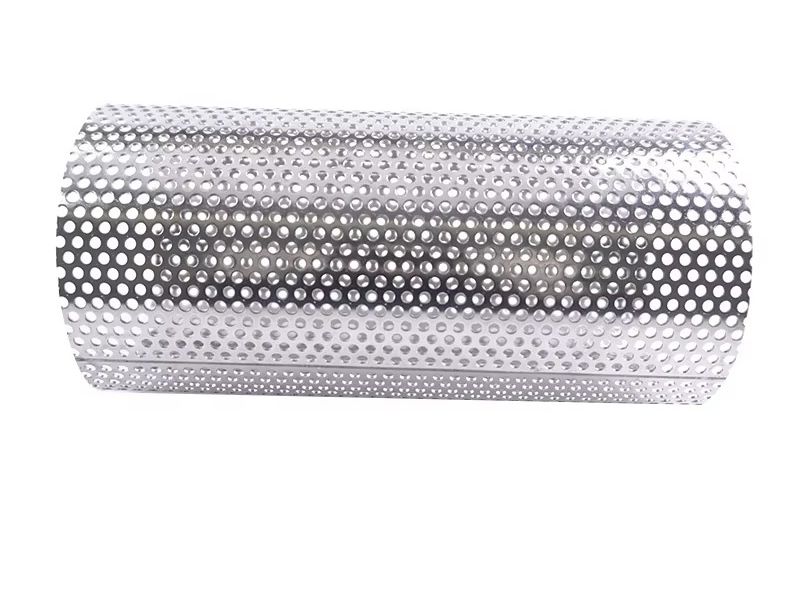
Perforated tubes / cylinders / sleeves for filter cores, protective sleeves and liquid strainer supports, supplied to drawing with material, size and packing details confirmed at RFQ stage.
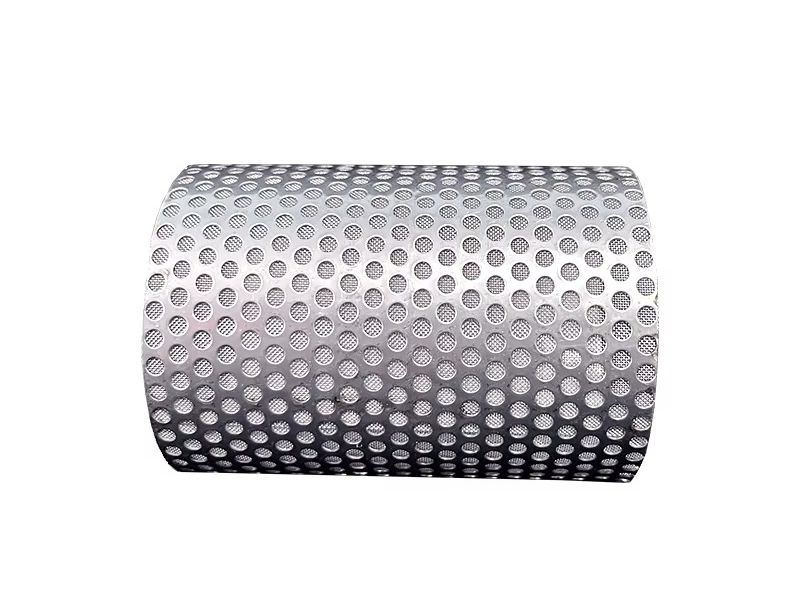
Cylinders / tubes / sleeves for filter support cores and protective sleeves, supplied to drawing with material, size and packing details confirmed at RFQ stage.
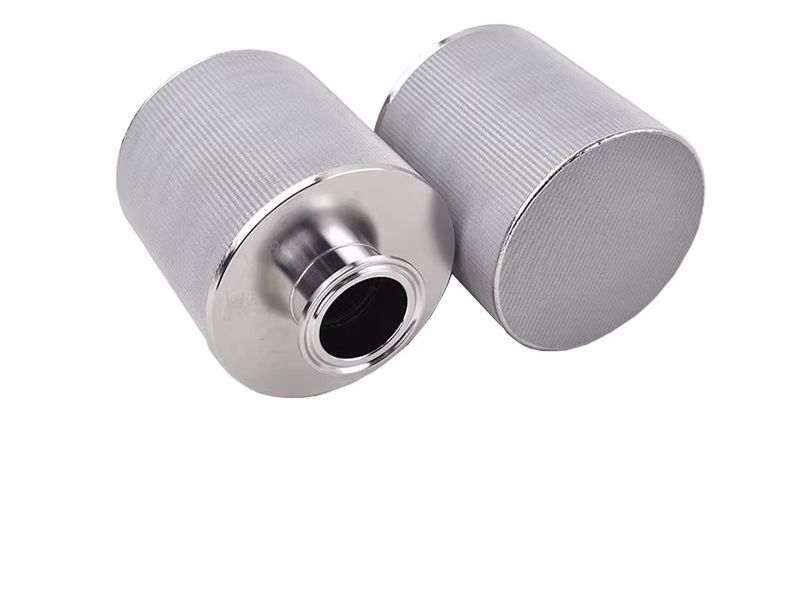
Cartridges / tubes / cylinders / cones for reusable high-strength filtration elements, supplied to drawing with material, size and packing details confirmed at RFQ stage.
Send drawings, dimensions, material, environment or operating conditions, and we will help confirm the right specification.
Uploaded reference files are included with the inquiry. For larger CAD packages, reply to the confirmation email or send them here:
Our team typically replies within 24 business hours.