Technical
Refinery Process Filtration per API Standards: Specifying Metal Filter Elements
Refinery process filtration per API standards — API 610 strainers, sintered metal cartridges for catalyst fines. Contact KAIFIL for certified elements.
Refinery process filtration per API standards — API 610 strainers, sintered metal cartridges for catalyst fines. Contact KAIFIL for certified elements.
Refinery process filtration is the controlled removal of particulate, catalyst fines, scale, and process debris from hydrocarbon and process streams between refinery units, carried out with pressure-rated metal filter elements and strainers specified against API machinery standards and ASME pressure-piping codes. The discipline is quantified rather than approximate: an FCC slurry-oil filter typically removes catalyst fines in the 1–25 micron range, an API 610 centrifugal pump is protected at start-up by a temporary stainless steel suction strainer, the lube and seal-oil systems of an API 617 compressor train run duplex filters at 10 micron nominal rating, and the elements themselves are engineered for process temperatures of 200°C to 450°C, pressure classes up to ASME Class 2500, and flange connections machined to ASME B16.5. Because each of those figures is anchored to a code requirement rather than a vendor claim, refinery process filtration is a specification discipline first and a hardware decision second — the governing standard drives the element choice, not the other way around.
A refinery is a collection of rotating machinery, reactors, and heat exchangers, and every filter exists to protect one of them. A single unplanned shutdown in a large crude or hydrocracking unit can cost well into seven figures per day in lost throughput, and the fastest way to cause one is to let fines, scale, or weld debris reach a pump seal, a compressor bearing, or an active catalyst bed. The American Petroleum Institute (API) writes the machinery standards that refiners, licensors, and EPC contractors use as the contractual baseline, and when a standard references a strainer or filter, that component inherits the package's pressure class, flange rating, materials, and cleanliness requirements. In refinery service, "the filter meets API..." is the opening line of every good specification.
There is no single "API filter standard"; filter and strainer requirements live inside the machinery and system standards, each addressing a different part of the plant:
Alongside the API machinery standards, ASME B31.3 (Process Piping) governs the piping around the filter and the design of the filter housing, while ASME B16.5 fixes the flange dimensions, pressure–temperature ratings, and facings used to connect the housing into the line. Housings built as pressure vessels may be designed to ASME Section VIII Division 1. Materials follow the plant's ASTM/EN grades — 304L and 316L stainless as the default, with 904L, duplex, and nickel alloys for hot or corrosive service.
The element is where the specification becomes hardware. Three metal element families cover the overwhelming majority of refinery process filtration duty, and each maps to a different combination of fines, temperature, and cleaning philosophy.
| Element type | Media structure | Typical micron range | Primary refinery duty | Differential-pressure tolerance | Cleaning / regeneration |
|---|---|---|---|---|---|
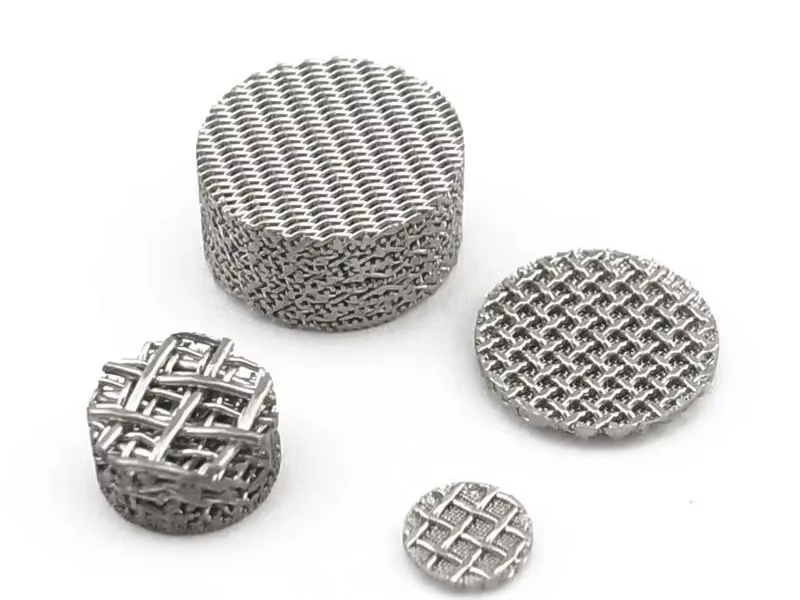
| Sintered metal (sintered wire mesh / sintered powder) | Multilayered wire mesh or metal powder fused at high temperature into a rigid; porous structure | 1–100 µm; catalyst-fines duty typically 1–25 µm | FCC slurry-oil fines; hydrotreater and hydrocracker feed; hot high-pressure services; catalyst recovery | High — the rigid pore structure resists collapse and frame bypass under high differential pressure | Excellent — back-flushable; backwashable; ultrasonic-cleanable; and reusable over many cycles |
| Woven wire mesh (plain; twill; and Dutch weaves) | Single- or multi-layer weave; flexible | 5–500 µm | Pump suction strainers; coarse guard filtration; temporary start-up screens | Moderate — the weave can deform or rupture if overloaded | Good — removable and cleanable; but a damaged weave must be replaced |
| Wedge wire / profile wire | Continuous V-shaped slots wound from shaped wire | 25–3;000 µm slot openings | Reactor effluent; high-solids and heavy-foulant services; guard screens ahead of finer elements | Very high — the V-profile resists blinding and collapse under load | Good for coarse duty; not intended for fine-solids removal |
Sintered elements are the default where fines are the problem because they offer absolute retention — a rigid pore structure that holds its rating through backwashing and thermal cycling. Woven mesh remains the workhorse of strainers and coarse protection, where economy and open area outweigh absolute rating. Wedge wire earns its place where solids loads are heavy enough to blind a mesh in hours; the V-slot profile lets particles pass rather than wedging into the opening. For a closer comparison of the two most common families, the KAIFIL guide to sintered metal filter vs wire mesh filter covers the trade-offs in detail.
The most common filtration spec in a refinery is also the most routine: the suction strainer on a centrifugal pump. API 610 requires that pump packages be capable of start-up with a temporary strainer fitted in the suction piping, and how that strainer is specified determines whether commissioning runs smoothly or stalls.
Three parameters matter. Screen mesh — start-up strainers are typically 60 mesh (about 250 micron openings), with 100 mesh (about 150 micron) where fine debris is expected and the pump's NPSH margin allows it. Open area — most project specs require the strainer's net free area to be two to three times the suction nozzle area so the screen does not starve the pump on start-up. Removal geometry — conical and basket strainers are preferred because they offer more area than a flat screen in the same line size and can be pulled and cleaned without cutting the piping.
Material and construction are still specified: 304L or 316L stainless mesh, a frame and outlet flange to the same ASME B16.5 class as the suction line, and access for inspection and cleaning. Where the process runs dirty for longer, the temporary strainer gives way to a permanent basket strainer or a duplex arrangement so one basket can be cleaned while the other stays in service. KAIFIL's conical and basket strainer line covers the conical and basket geometries used in this service.
The highest-value filtration duty in a modern refinery is catalyst fines removal. In a fluid catalytic cracking (FCC) unit, the catalyst circulates between reactor and regenerator and is continuously attrited; fines in the 1–25 micron range ride out with the slurry oil and must be removed before the stream is sold as fuel oil or routed to further processing. In hydroprocessing units, the same logic applies upstream: feed filters protect the catalyst beds, because a bed loaded with particulates loses activity and forces an expensive premature change-out.
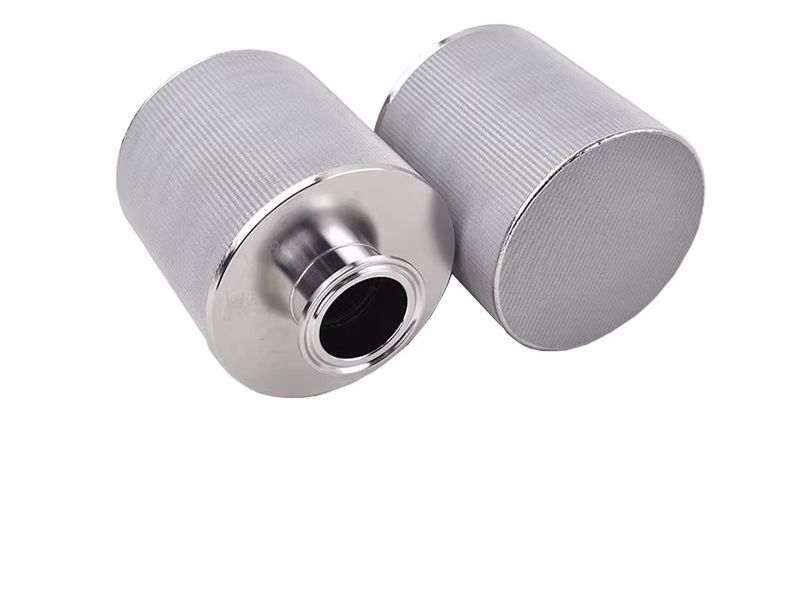
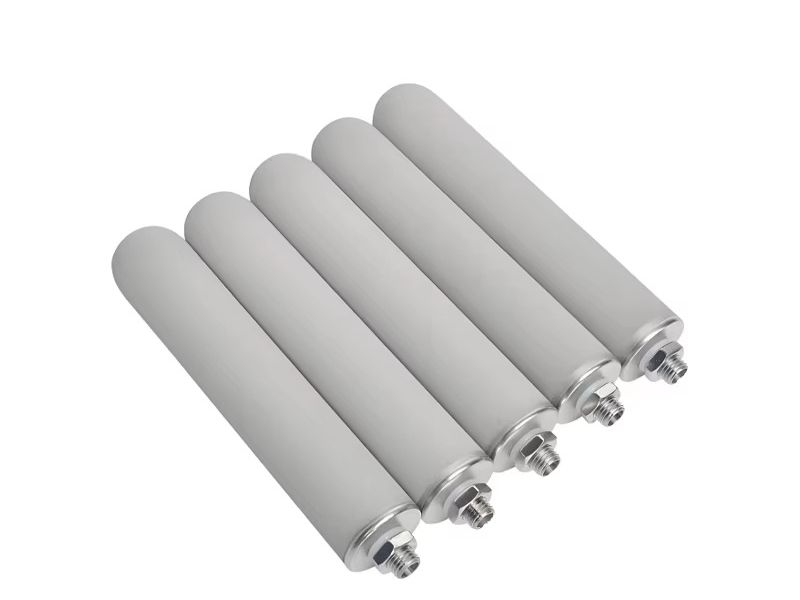
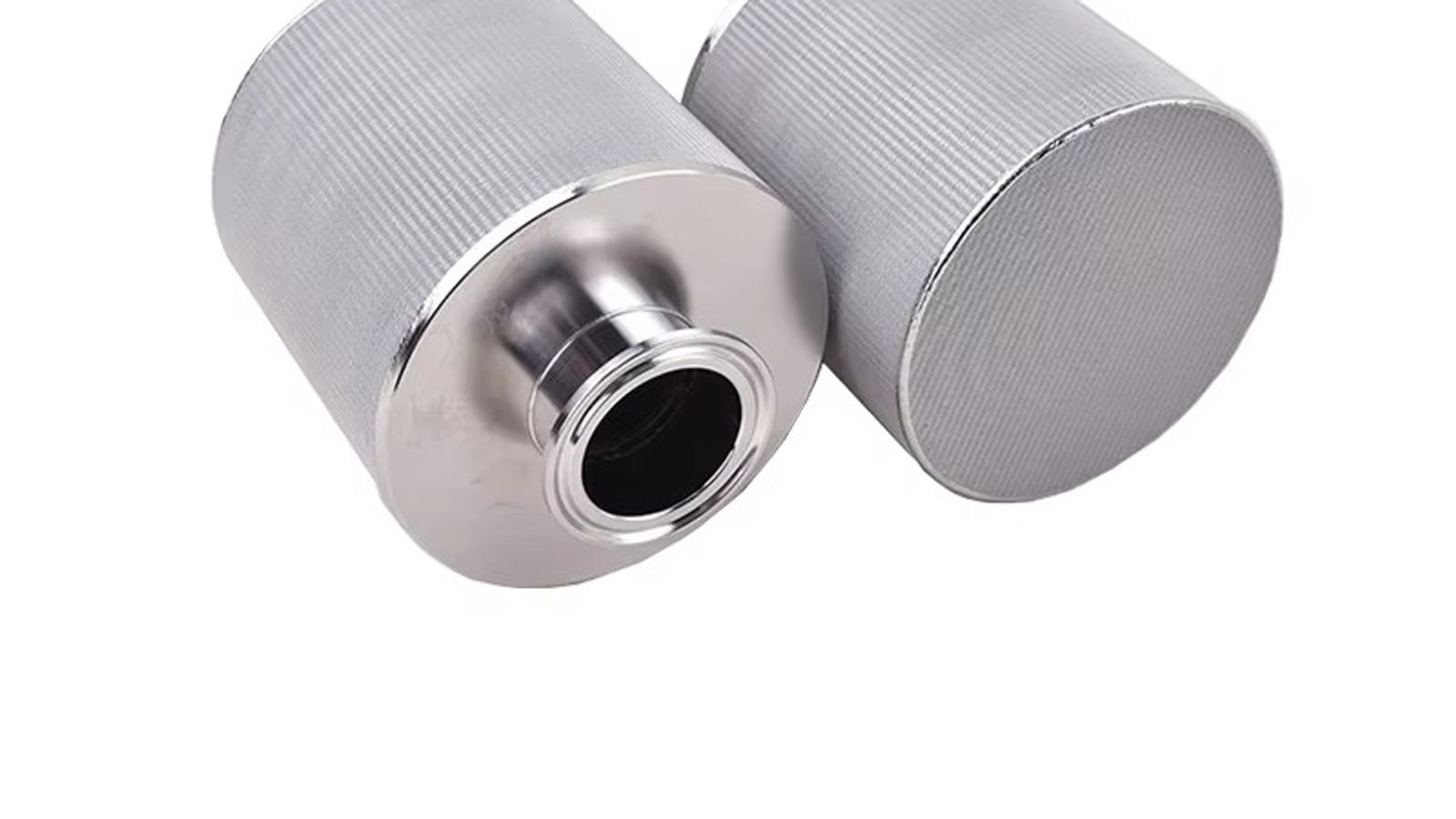
Sintered metal elements dominate this duty for three reasons. First, they hold an absolute rating in the 1–25 micron band, so downstream equipment is designed to a hard number. Second, they survive the temperature — FCC slurry leaves the main fractionator at 300°C and above, comfortably beyond polymer and cartridge media, and the sintered structure keeps its rating through thermal cycling. Third, they are cleanable in place: a back-flush or backwash cycle lifts the cake off the rigid media and the element returns to service, which is what makes fine-fines filtration economical at refinery flow rates. KAIFIL's five-layer sintered mesh is the media most commonly built into these elements, and the sintered metal filter elements line shows the cartridge formats used in slurry-oil, hydrotreater-feed, and amine-filtration service.
Refinery process filtration is rarely an ambient-temperature problem. Elements and housings are routinely specified for 200–450°C service, which is where metal media separates cleanly from everything else. The alloy follows the stream: 304L and 316L stainless cover most duties up to roughly 450°C continuous service before creep and sensitization become design drivers; 904L, duplex, and nickel alloys extend the envelope where temperature and corrosion combine. Sintered media keeps its pore geometry and strength at temperature because the structure is metallurgically bonded, not mechanically woven — an advantage no polymer seal can match at 400°C. The KAIFIL article on high-temperature stainless steel filter tube materials explains the alloy limits in more depth.
Pressure is specified in ASME classes, and the element must be rated for the differential pressure the process can impose, not just the line pressure. A typical refinery housing is built to ASME Class 150 through Class 2500 depending on the unit; hydroprocessing loops run at the top of that range. The element's collapse rating — its resistance to flattening under differential pressure when the cake blocks the flow — is a specification line item, and sintered media is chosen precisely because its rigid pore structure tolerates the high differential pressures a fouled element creates.
Every housing ties into the process piping through ASME B16.5 flanges, so flange size, class, and facing (raised face or ring-type joint) are part of the filter specification. A Class 900 RTJ flange is not interchangeable with a Class 600 RF flange, and the element's outlet — whether cartridge tube sheet or basket flange — must match the housing and the line. Given the service conditions, line class, and flange details, a manufacturer can quote a complete housing-and-element package. For complete units, KAIFIL's oil, gas, and petrochemical application page walks through deployment across refinery and gas-plant services.
When writing a requisition for a refinery filter or strainer, put the following on the datasheet before approaching any vendor:
A complete datasheet lets a manufacturer respond with an element already inside the API envelope rather than a generic product that has to be adapted — the difference between a filter that survives commissioning and one replaced in the first turn-around.
A strainer is a coarse protection device, usually a woven-mesh basket or cone that catches large debris — scale, weld spatter, pipe dross — that would damage rotating equipment; the classic example is the API 610 temporary suction strainer on a centrifugal pump. A filter is a rated separation device that removes fine solids, such as catalyst fines, to a defined micron specification. The line is drawn by duty: strainers protect equipment, filters protect product quality and catalyst beds, and both are commonly installed in the same unit.
API 610, Centrifugal Pumps for Petroleum, Petrochemical and Natural Gas Industries, governs pump suction strainers in refinery service. It establishes the requirement for temporary start-up strainers on centrifugal pumps, covering screen material and the open-area expectations that keep the pump from being starved. Permanent strainers, where used, are typically specified to the same flange and pressure classes.
Catalyst fines in FCC slurry oil typically range from about 1 to 25 microns, so filters for this service are specified in that band, with 1–5 micron absolute elements where the downstream application demands near-polish quality. Sintered metal elements are the standard choice because they hold an absolute rating at these sizes, survive the 300°C-plus slurry temperature, and can be back-flushed and reused.
Yes. Sintered stainless steel elements are routinely specified for refinery service at 200–450°C. The metallurgically bonded pore structure keeps its rating and mechanical strength at temperature, which is why sintered media — rather than polymer or mechanically woven media — is preferred in hot services such as FCC slurry and hydroprocessing loops. Above roughly 450°C continuous service, the alloy moves from 304L/316L to 904L, duplex, or nickel alloys to manage creep and corrosion.
Yes. Sintered metal filter elements are designed for repeated cleaning — back-flushing, backwashing, or ultrasonic cleaning — and return to service with their pore structure intact. Because the media is rigid and metallurgically bonded, it does not relax or shift as woven media can, which is what makes sintered elements economical for high-fines duties that would consume disposable cartridges quickly.
Every refinery process filtration spec comes down to the same question: does the element meet the standard before it meets the process? KAIFIL designs and manufactures sintered metal filter elements, sintered wire mesh filter cartridges, basket strainers, and wedge wire screens in stainless steel and high-temperature alloys, built to the API and ASME requirements covered in this guide. If you are specifying an API 610 suction strainer, a 1–25 micron catalyst-fines filter, or a high-temperature element for a hydroprocessing loop, send KAIFIL your service conditions and datasheet and receive a recommendation matched to the standard, not to the shelf. Contact KAIFIL today for certified, documented filter elements for your refinery process units.
Cartridges / tubes / cylinders / cones for reusable high-strength filtration elements, supplied to drawing with material, size and packing details confirmed at RFQ stage.
Cartridges / tubes / cylinders for reusable cartridge filtration with rigid sintered mesh media, supplied to drawing with material, size and packing details confirmed at RFQ stage.
Rigid five-layer sintered wire mesh laminate for cleanable precision filtration and custom elements.
Send drawings, dimensions, material, environment or operating conditions, and we will help confirm the right specification.
Uploaded reference files are included with the inquiry. For larger CAD packages, reply to the confirmation email or send them here:
Our team typically replies within 24 business hours.