Technical
Sintered Metal Filter Backwash: ΔP Triggers & Regeneration
Learn when to backwash sintered metal filter elements — ΔP triggers, reverse-flow, ultrasonic and chemical cleaning, and cycle life. Contact KAIFIL for a quote.
Learn when to backwash sintered metal filter elements — ΔP triggers, reverse-flow, ultrasonic and chemical cleaning, and cycle life. Contact KAIFIL for a quote.
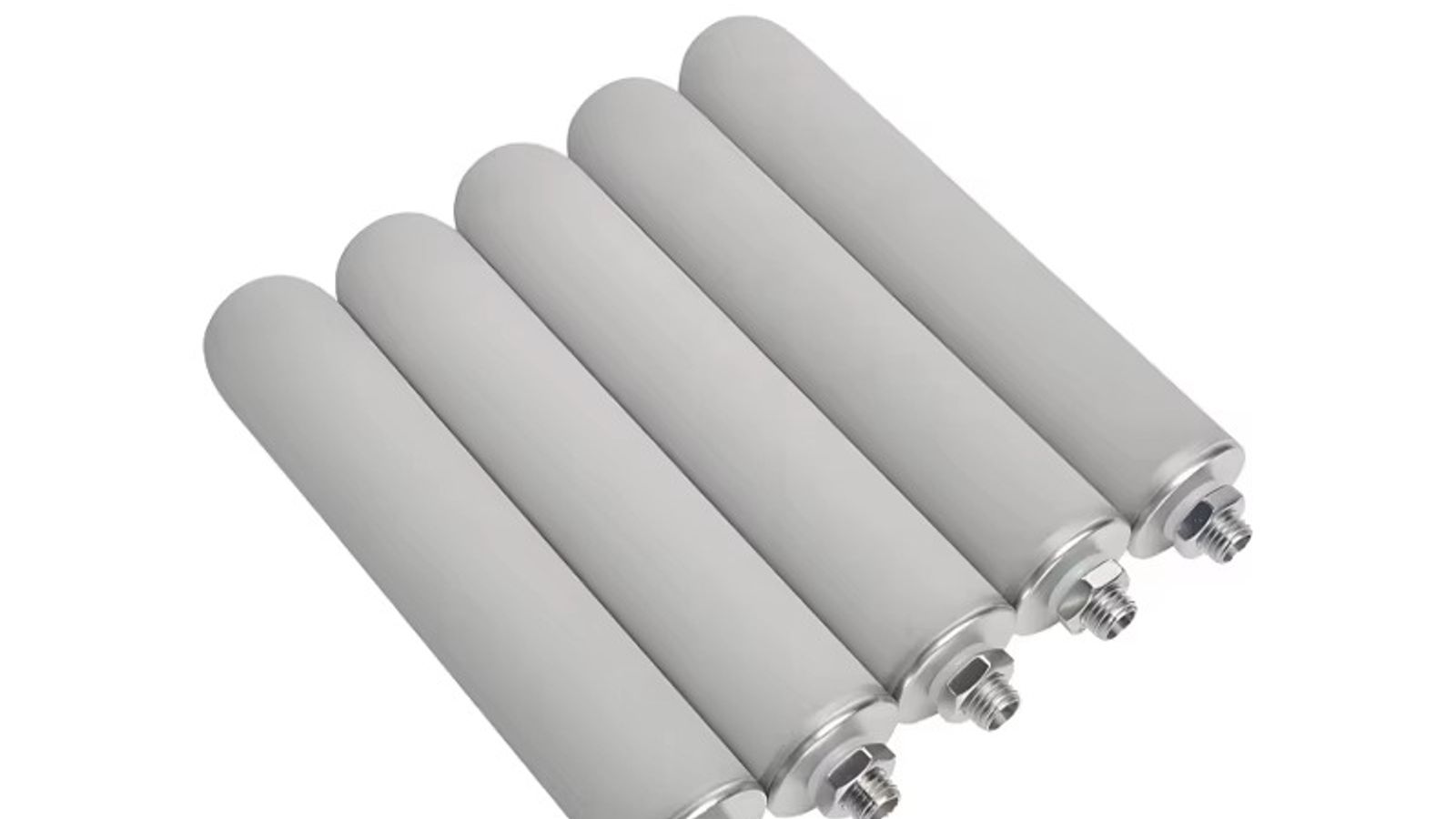
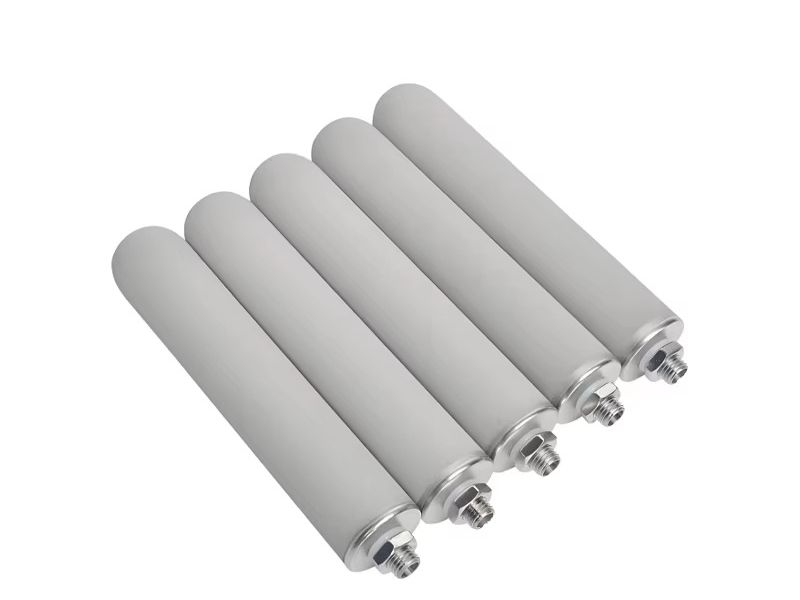
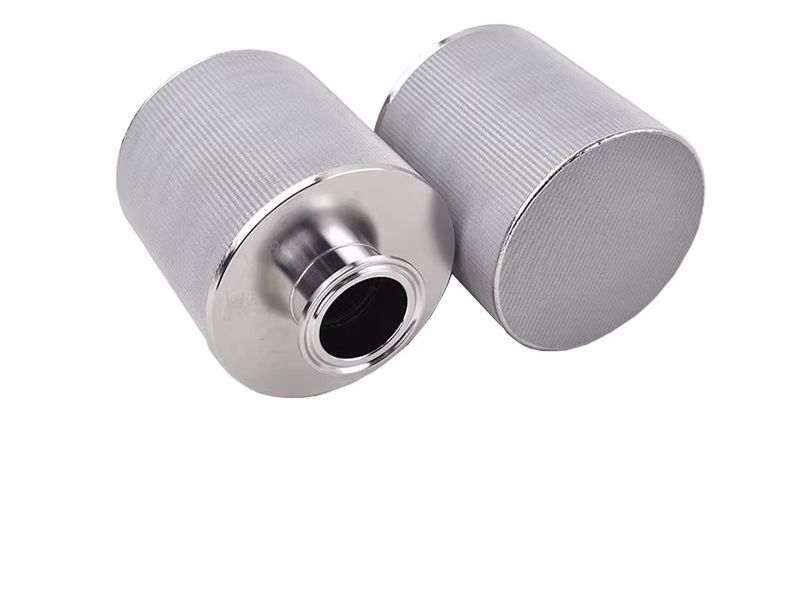
Backwashing is a cleaning method in which the flow through a filter element is reversed so that the fluid detaches retained solids and flushes them out of the media. For sintered metal filter elements, backwashing is the primary regeneration technique because the all-welded metal structure can be cleaned repeatedly without the pleat collapse or media shedding that ends the life of a disposable cartridge. In typical liquid service, a clean element runs at a differential pressure (ΔP) of only 0.05–0.2 bar; operators normally trigger a backwash when ΔP reaches 0.5–1.0 bar, well before the cake consolidates. A well-executed backwash returns the element to 90–100% of its original clean pressure drop, and a properly regenerated sintered stainless steel element can survive 20–100+ cleaning cycles before replacement. This article covers the whole regeneration process — fouling mechanisms, ΔP triggers, reverse-flow backwashing, ultrasonic and chemical regeneration, integrity monitoring, and the economics of cleaning versus replacing.
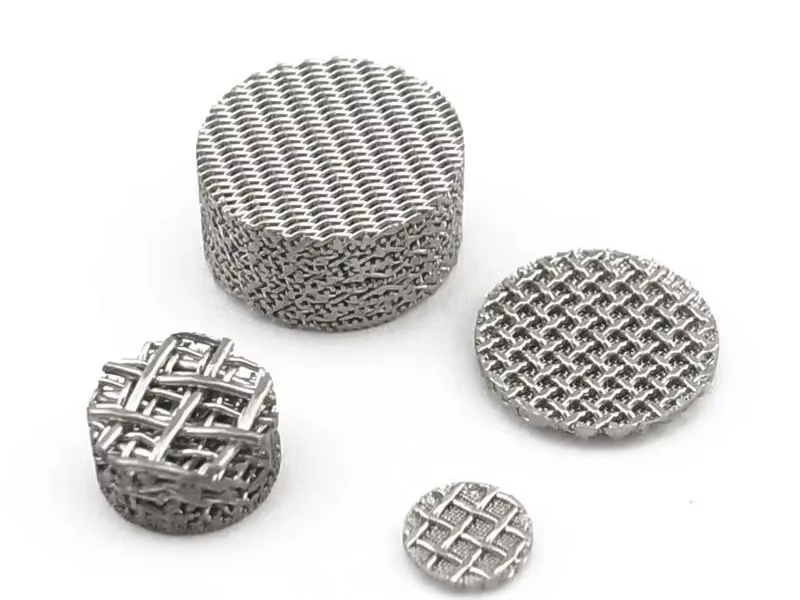
Sintered stainless steel mesh is a rigid, multi-layer composite: coarse protective layers on the outside, a precisely woven filter cloth in the middle, and a drainage or support layer on the clean side, all bonded by high-temperature sintering. Because the medium is porous in three dimensions rather than a single sieve plane, it fouls in two distinct ways — and the difference decides which cleaning method will work.
Surface cake fouling. When the contaminant is larger than the rated pore size, particles bridge across the inlet face and build an increasingly compact cake. The cake is the dominant source of rising ΔP, and it is the easiest thing to remove: reverse flow lifts the cake off the face and carries it away. Surface fouling is the normal case for elements rated at 10 μm and coarser.
Depth fouling. When fines are smaller than the rated pore size — or when a cake is allowed to compact under high ΔP — particles penetrate into the thickness of the media and lodge between the woven layers. Depth fouling cannot be flushed out by reverse flow alone; it requires ultrasonic cavitation or chemical dissolution, and a portion of it is usually irreversible. Over many cycles, depth residue accumulates until the clean baseline ΔP creeps upward and the element is retired.
The distinction is why the five-layer sintered mesh construction is chosen for demanding duties: its layered build stores cake on the surface, protects the fine filter cloth from mechanical damage, and leaves an open drainage layer that makes reverse-flow backwashing genuinely effective.
Differential pressure is the single most reliable signal that a sintered element needs attention. The discipline is to clean early and often rather than push the element to its limit:
Cleaning on a ΔP trigger (differential pressure filter cleaning) rather than on a fixed calendar extends element life substantially, because it removes the cake at the point where the foulant is still friable. The table below summarizes the four ways to restore a sintered element and when each is appropriate.
| Method | Typical conditions | What it removes | Filtration rating impact | Relative cost |
|---|---|---|---|---|
| Reverse-flow backwash | 1.5–2.5× forward flow; 2–3 bar above operating pressure; 30 s–5 min | Surface cake; loose fines | None; if media undamaged | Low |
| Ultrasonic cleaning | 20–40 kHz bath; 40–70°C; 10–30 min; mild detergent | Depth-lodged fines | None; if cavitation controlled | Medium |
| Chemical cleaning | Alkaline (NaOH 1–5%; 60–80°C) or acid (HNO₃ 5–15%; 40–60°C); 30–120 min soak | Oils; organics; scale; biofilms | None if chemistry matched | Medium |
| Replacement | — | — | Restored to new | High (element cost) |
Backwashing sintered filter elements is a short, repeatable operation. A typical manual sequence:
In continuous plants the same sequence is automated: a ΔP transmitter trips the backwash valve, reverse flow is applied for a set duration, and the element returns to service without stopping the process. The physics is identical whether the element is a disc, a candle, or a sintered wire mesh filter cartridge installed in a multi-cartridge vessel; what changes is the valve arrangement and how the reverse flow is distributed.
Backwashing can be performed in two very different contexts, and the choice trades downtime against how thoroughly the element is restored.
In-situ backwash. The element stays in the housing. It is fast (minutes), automatic, and costs almost nothing in labor — the right tool for routine cake removal. Its limits are that it cannot dissolve or dislodge depth-lodged fines, and it gives no chance to inspect the element or verify its integrity. In-situ backwash should be the first line of defense, run frequently, before ΔP builds.
Off-line regeneration. The element is removed and cleaned in a dedicated station. This allows chemical soaking, ultrasonic baths, hot rinsing, visual inspection, and a bubble-point integrity test before reinstallation. It takes hours to a day, but it is the only method that restores heavily fouled elements and catches damage early. Most plants run in-situ backwash regularly and send elements off-line on a set schedule — or whenever the in-situ baseline ΔP begins to creep.
When reverse flow stops restoring the pressure drop, the element is ready for off-line regeneration. Two techniques — usually combined — bring it back:
Ultrasonic cleaning. The element is immersed in a water bath (often with a mild alkaline detergent) and exposed to 20–40 kHz ultrasound at 40–70°C for 10–30 minutes. Cavitation bubbles collapse against the metal surfaces and pulverize fines lodged deep in the weave. Sintered mesh cleaning by ultrasonics is especially effective on the tight filtration ratings — 1–10 μm — where depth fouling dominates. Elements should be supported so they do not contact the tank floor, and the bath should be filtered so dislodged solids do not redeposit.
Chemical cleaning. The agent is matched to the foulant: caustic (1–5% NaOH, 60–80°C) dissolves oils, greases and organic polymers; nitric acid (5–15%, 40–60°C) removes scale, rust and mineral deposits and also repassivates the stainless steel; mild acids or chelating agents handle hard-water scale. Soak times run 30–120 minutes, usually followed by a hot rinse. One metallurgical warning matters more than any other: chloride-bearing cleaners must be avoided on 304L, and hypochlorite bleach should never be used on stainless, because both attack the passive film and lead to pitting or stress corrosion. This discipline is routine in the pharmaceutical & chemical industry, where the cleanability and traceability of filter media are audited as part of good manufacturing practice.
A full regeneration sequence is: reverse backwash → chemical soak → ultrasonic → hot rinse → dry → bubble-point test. Done properly, the element returns to service with its original filtration rating and a clean baseline ΔP within 10–20% of new.
A sintered element is a precision part, and regeneration only works if the media is not damaged. Two things must be checked every cycle:
Filtration rating. The pore structure of sintered mesh is fixed by the weave and the sintering process. Cleaning does not enlarge pores unless the media has been mechanically stretched or chemically etched. A rating of, say, 10 μm absolute remains 10 μm after 50 cleaning cycles — which is the core difference from depth cartridges whose rating migrates as fibers shift. The standard verification is a bubble-point test, which detects a change in the largest pore before the element goes back into service.
Integrity. The same bubble-point test catches hairline cracks, split welds, or blown-out seams. Watch the trend: if the residual clean ΔP after regeneration climbs more than 20–30% above the original baseline, or if the bubble point drifts, the element has reached the end of its useful life.
In practice, a well-maintained sintered element delivers 20–100+ regeneration cycles. The count depends on service severity: a polymer melt filter with aggressive fines may see tens of cycles; a clean-water guard filter can exceed a hundred. What is consistent is that cycle count is a management decision, not a fixed law — elements are retired when they fail to restore, not when they reach an arbitrary number.
Polymer filtration. In extrusion and spinning lines, extruder screens and candle filters are backwashed at melt temperature — reverse flow at 1.5–2× the melt flow rate, often gas-assisted — because shutting down and melting out would be uneconomic. Sintered discs handle the high pressure and temperature polymer melts demand, and their rigid structure survives the thermal cycling.
Chemicals and pharmaceuticals. Product purity is paramount, so filters are regenerated off-line with validated chemical and ultrasonic sequences, then integrity-tested before reuse. The all-metal, non-shedding structure is what makes reuse defensible under regulated manufacturing.
Oil and gas. Production and refining service uses sintered elements for amine, glycol and injection-water filtration. The solids load is abrasive and often includes scale and sand; reverse-flow backwash with periodic acid cleaning extends element life dramatically. Duty ranges for these services are covered on the oil, gas & petrochemical applications page.
Water and brine. Backwashable sintered screens handle well water, cooling water and process water where sand, silt and biofouling dominate. Reverse flow removes the bulk of the load, and an occasional biocide or acid clean controls slime and scale.
Most premature failures in the field are operator errors, not material defects. The ones that matter:
The business case for regeneration is simple arithmetic. For a reusable sintered filter, the element costs several times more than a disposable cartridge, but it survives 20–100+ cleaning cycles. Take a 20-μm sintered candle that costs 5× its disposable equivalent: if it survives even ten cleanings, the per-cycle media cost has fallen to half that of disposables — before counting the avoided downtime, disposal fees and replacement labor. Most plants break even within the first handful of regenerations.
| Factor | Cleanable sintered metal element | Disposable pleated cartridge |
|---|---|---|
| First cost | High (2–5× disposable) | Low |
| Cleaning cycles | 20–100+ | 1 |
| Per-cycle media cost | Falls with each reuse | Constant (full replacement) |
| Filtration rating stability | Fixed by weave; stable across cycles | Can shift as media fatigues |
| Downtime per change | Minutes in-situ; hours off-line | Hours (open housing; dispose; replace) |
| Waste | Cleaning fluids only; element scrapped at end of life | Cartridge to landfill every change |
| Integrity verification | Bubble-point test before reuse | Limited |
Two further points. First, retiring an element because the residual ΔP is 25% over baseline is usually cheaper than forcing another marginal cycle and risking downstream contamination. Second, the cost of cleaning — chemicals, water, energy, labor, and wastewater treatment of the cleaning solution — must be counted against the element's remaining value; when cleaning cost approaches replacement cost, replace. KAIFIL has compared sintered mesh against pleated cartridges on cleanability and lifetime cost in a dedicated analysis.
At what differential pressure should a sintered metal filter be backwashed? Backwash when ΔP reaches roughly 0.5–1.0 bar in liquid service, or when throughput drops 30–50%. Clean early and often — running to the element's 1.5–2.5 bar maximum compacts the cake and causes irreversible depth fouling.
Can sintered stainless steel elements be reused, and how many times? Yes. A properly cleaned and integrity-tested sintered element typically survives 20–100+ regeneration cycles depending on service. It is retired when cleaning no longer restores its baseline pressure drop.
What is the difference between backwashing, ultrasonic cleaning, and chemical cleaning? Backwashing reverses flow to remove surface cake; ultrasonic cleaning uses high-frequency cavitation (20–40 kHz) to dislodge fines lodged inside the media; chemical cleaning dissolves oils, scale or biofilms. For full regeneration they are normally combined in that order.
Does cleaning change the filtration rating of a sintered element? No. The pore size of sintered mesh is fixed by the weave and the sintering process; cleaning does not enlarge it unless the media is mechanically damaged. A bubble-point test before reuse verifies both rating and integrity.
When should I replace the element instead of cleaning it? Replace when the clean baseline ΔP stays more than 20–30% above original after regeneration, when the bubble-point test shows damage, or when the cost of cleaning approaches the cost of a new element.
Sintered stainless steel mesh elements are only economical when they are cleaned correctly — and the correct process depends on your service, foulant and metallurgy. KAIFIL manufactures sintered wire mesh filter elements, cartridges, discs and screens in Shijiazhuang, China, and exports worldwide. We can recommend a backwash and regeneration protocol for your duty, supply custom media and ratings from 1 to 300 μm, and build elements designed for decades of cyclic service. Contact KAIFIL with your application details to get a quote and cleaning guidance.
Cartridges / tubes / cylinders for reusable cartridge filtration with rigid sintered mesh media, supplied to drawing with material, size and packing details confirmed at RFQ stage.
Cartridges / tubes / cylinders / cones for reusable high-strength filtration elements, supplied to drawing with material, size and packing details confirmed at RFQ stage.
Rigid five-layer sintered wire mesh laminate for cleanable precision filtration and custom elements.
Send drawings, dimensions, material, environment or operating conditions, and we will help confirm the right specification.
Uploaded reference files are included with the inquiry. For larger CAD packages, reply to the confirmation email or send them here:
Our team typically replies within 24 business hours.