When a process engineer sizes a filter element, the technical specification typically drives the conversation: micron rating, flow rate, pressure drop, materials of construction. But when the purchasing department looks at the quote, the filter that costs half as much to buy often costs three times as much to own — because it can't be cleaned effectively, or because the cleaning cycle damages the media, or because the replacement interval is measured in weeks rather than months.
This article compares two reusable filter media — sintered wire mesh and pleated wire mesh cartridges — on the metric that matters most in operations: cleanability and lifetime cost. Both are metal-filter technologies suitable for high-temperature, chemically aggressive, and high-pressure service. But their cleaning behavior, flow recovery, and total cost trajectories are substantially different, and the wrong choice shows up in the maintenance budget within the first year.
What Each Technology Is
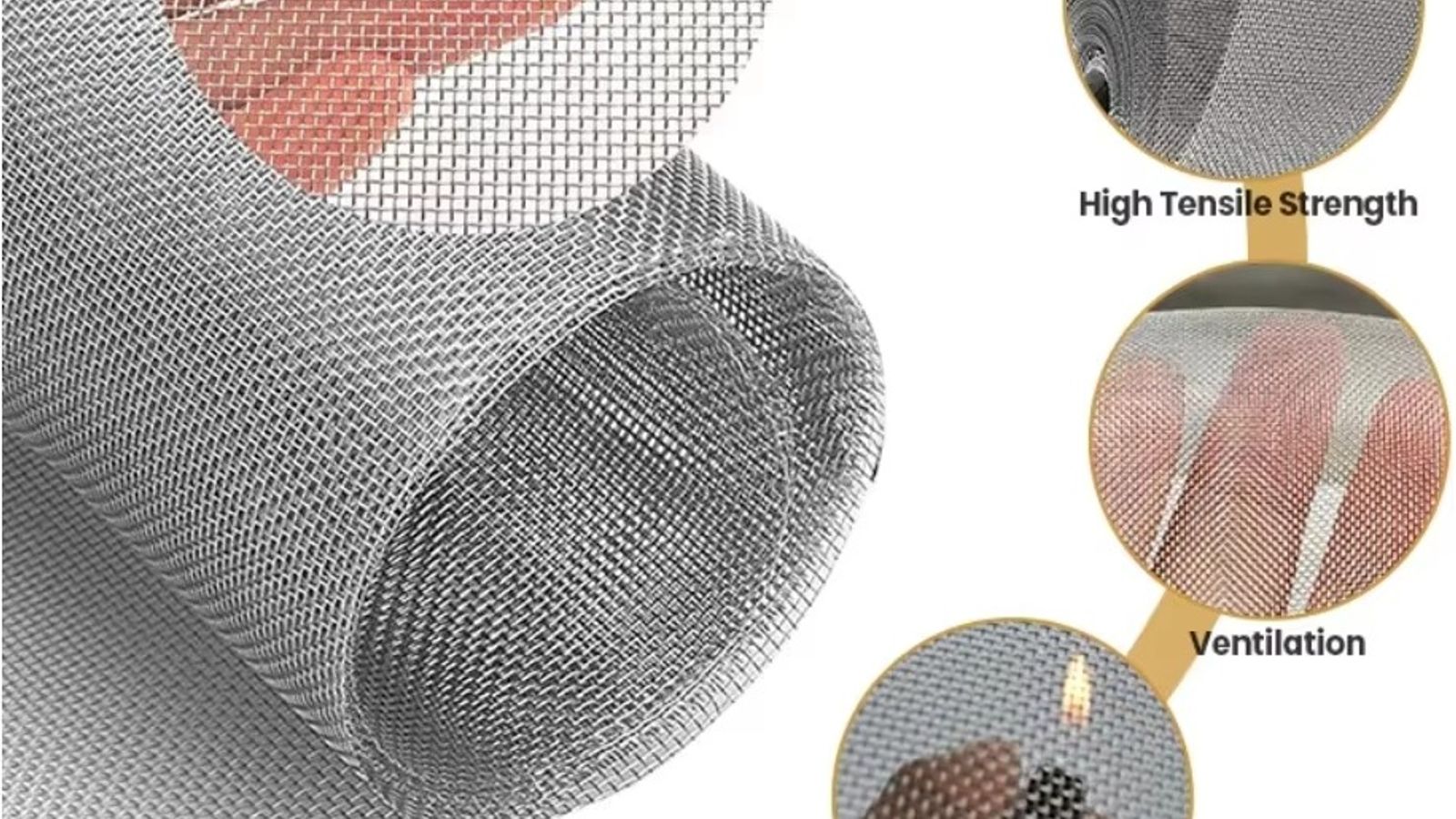
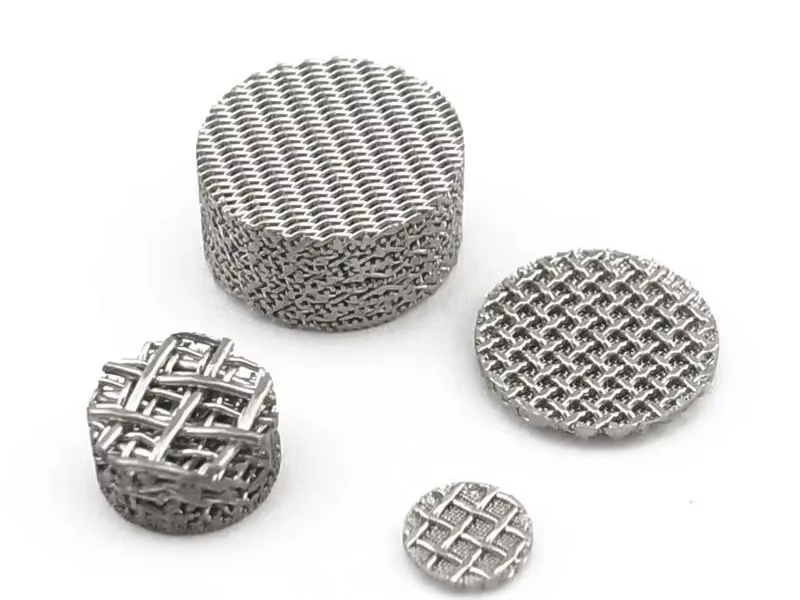
Sintered wire mesh is constructed by stacking multiple layers of woven wire mesh — typically five layers with progressively finer filtration grades — and vacuum-sintering them under heat and pressure in an inert atmosphere. The sintering process diffusion-bonds the wire intersections at every layer interface, creating a rigid, monolithic porous plate with precise pore-size control. Filtration ratings range from 1 µm to 200 µm absolute, and the finished element can be machined, welded, punched, or formed into discs, cylinders, cones, and custom shapes.
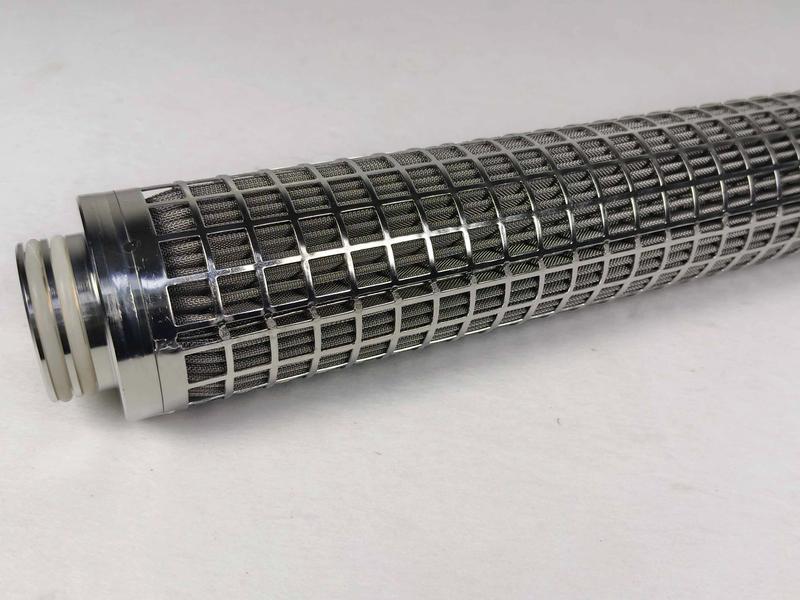
Pleated wire mesh cartridges are fabricated by folding a single or composite wire mesh layer into a pleated configuration to maximize surface area within a given cylindrical envelope, then attaching end caps via welding, epoxy bonding, or mechanical crimping. A standard 10-inch cartridge in a 2.5-inch diameter housing can contain 0.5–2.0 square feet of filter area in flat-disc form, but the pleated configuration increases that to 3–8 square feet in the same envelope — a 4–15× surface-area gain. Filtration ratings span 2 µm to 500 µm depending on the mesh layer.
The Cleanability Gap — Why It Dominates Lifetime Cost
Both media can be cleaned and reused, but the degree of flow recovery after cleaning is where they separate. This matters because every cleaning cycle that fails to restore rated flow accelerates the replacement schedule — and the replacement cost for a filter element includes not just the part itself, but process downtime, labor, and disposal costs for the fouled element.
Sintered mesh is the benchmark for cleanability among metal filter media. The rigid, monolithic structure can withstand: ultrasonic cleaning (typically 20–40 kHz, 10–30 minutes in aqueous or solvent baths) achieving 85–95% flow recovery; backflushing at up to the rated reverse pressure (typically 5–10 bar for disc elements); chemical cleaning with acids (nitric, phosphoric, citric), alkalis (NaOH 5–10%), and oxidizing agents for organic foulant removal; and even mechanical scraping or brushing of the smooth surface for heavy cake applications. Critically, the sintered bonds prevent wire movement during aggressive cleaning — the pore structure that went into the cleaning cycle is the same one that comes out. Kaifil's field data shows operators achieving
Pleated cartridges have a narrower cleaning envelope. The pleated geometry, while excellent for increasing surface area in a compact housing, creates cleaning shadow zones — the interior faces of deep pleats receive less flow during backflushing, and ultrasonic cavitation may not fully penetrate the pleat roots. More critically, pleat geometry depends on the structural integrity of the mesh layer and the end-cap attachment; aggressive chemical cleaning or repeated thermal cycling can relax the pleat, reduce the effective filtration area, and in the worst case, delaminate end caps. Flow recovery after cleaning typically ranges 60–85% — acceptable for many applications, but the cumulative effect of incomplete recovery means pleated cartridges reach end of life faster than sintered discs in the same service.
Surface Area: The Pleated Advantage
Pleated cartridges win decisively on surface area per unit volume. A 30-inch sintered mesh cartridge in a 2.5-inch housing might offer approximately 1.0–1.5 ft² of filtration area, while an equivalently sized pleated cartridge with 60–80 pleats provides 4–8 ft². This difference matters most in two scenarios:
- High solids loading — greater surface area distributes the cake load, extending the interval between cleanings. This can make a pleated cartridge the lower-labor-cost option even if its per-cleaning flow recovery is lower.
- Space-constrained installations — when the existing housing can't be upsized, the pleated geometry delivers more filtration area in the same form factor, reducing the frequency of element changes without capital modification.
Five-Year Lifetime Cost Comparison
The following is a representative comparison for a typical chemical-process filtration application — 10 µm nominal, stainless steel 316L, 20 bar differential-pressure service, clean-in-place every 2 weeks — based on a single filter housing with one 30-inch element. Actual costs vary with process conditions, but the relative proportions are instructive.
| Cost Component | Sintered Mesh 5-Layer | Pleated Wire Mesh | Notes |
|---|
| Initial element cost (one 30-inch) | $180–$350 | $60–$140 | Pleated: 2–3× cheaper to buy |
| Typical elements in service (year 1) | 1–2 | 2–3 | Pleated: faster fouling → more spares in rotation |
| Cleaning cycles before replacement | 15–30 | 5–12 | Sintered: deeper clean → more cycles before media fatigue |
| Replacement interval | 12–24 months | 4–8 months | Depends heavily on solids loading and cleaning protocol |
| Elements consumed per year | 0.5–1.0 | 1.5–3.0 | Sintered: fewer replacements = less downtime |
| 5-year total parts cost (approx.) | $360–$1050 | $600–$2100 | Pleated: lower unit cost but higher consumption |
| 5-year downtime cost (approx.) | Low — 1 change/year | Moderate — 2–3 changes/year | Downtime often dominates total cost |
| Disposal cost (per element) | Low — inert metal scrap | Low — inert metal scrap | Both are fully recyclable — equal |
All costs are approximate 2026 USD for SS316L construction. Downtime cost is application-specific and not included in the parts-cost totals — it often dominates the economic comparison in continuous-process industries.
The pattern is consistent across applications: sintered mesh costs more to buy but less to own — if the process allows effective cleaning. The break-even point typically falls at 12–18 months of service. For processes with multi-year equipment life, sintered mesh is the lower-cost choice. For short-term campaigns, pilot plants, or applications where the filter is a sacrificial element (e.g., catalyst recovery where the cake is the product and the filter is cleaned infrequently), pleated cartridges offer better capital efficiency.
Chemical Compatibility and Temperature Limits
Both media are inherently all-metal and compatible with temperatures and chemical environments that polymer filters cannot approach. In SS316L construction, the operating temperature ceiling for both is approximately 480°C (continuous) in oxidizing atmospheres, limited by the metal alloy, not the filter architecture. This makes both technologies suitable for hot-gas filtration, polymer melt service, and high-temperature solvent recovery — applications where disposable polymer or cellulose cartridges have no role.
The key difference in chemical service is end-cap compatibility. Epoxy-bonded pleated cartridge end caps are limited to approximately 150–200°C and may be attacked by ketone and ester solvents. Welded-end-cap construction eliminates this limitation but adds cost. Sintered mesh discs and cylinders have no end caps — the entire element is a single monolithic structure — making them chemically homogeneous and fully welded into housings when required. For aggressive solvent or high-temperature service, sintered mesh eliminates the end-cap failure mode entirely.
Differential Pressure Capacity
Sintered mesh plates can typically withstand differential pressures of 20–50 bar (300–700 psi) in the forward direction, depending on diameter and thickness. Pleated cartridges, with their folded geometry, are rated for 5–20 bar ΔP in the forward direction — adequate for most liquid filtration but a meaningful limitation in viscous polymer or high-viscosity oil service. In reverse-flow (backflush) service, both media are typically limited to 5–10 bar to avoid structural damage.
How to Choose
Choose sintered mesh when the filter is a permanent installed asset in a continuous process, when effective cleaning (backflush, ultrasonic, chemical) is part of the operating protocol, when differential pressure exceeds 20 bar, when the process fluid includes aggressive solvents or temperatures above 200°C, or when end-cap failure is an unacceptable risk. The higher purchase price is recovered through longer service life, fewer replacements, and less process downtime.
Choose pleated cartridge when maximum surface area per housing volume is the priority constraint, when cleaning frequency is low and replacement is part of a scheduled maintenance routine, when the housing already exists and cannot be modified, or when the application is a short-term campaign, pilot trial, or batch process where the discounted capital cost is the dominant decision factor.
Kaifil manufactures five-layer sintered mesh filter elements in SS316L and specialty alloys, in disc, cylinder, cone, and custom geometries, from 1 µm to 200 µm absolute. Pleated wire mesh cartridges in standard 10-inch, 20-inch, and 30-inch lengths are also available with welded end caps for high-temperature service. Our engineering team can evaluate your process data — fluid, temperature, pressure, solids loading, and cleaning protocol — and recommend the more cost-effective technology for your specific operating envelope.