Technical
Titanium Sintered Filter vs 316L Sintered Filter: How to Choose
Compare titanium sintered filter vs 316L sintered filter for corrosive service: corrosion rates, strength, cost. Contact KAIFIL for certified custom filters.
Compare titanium sintered filter vs 316L sintered filter for corrosive service: corrosion rates, strength, cost. Contact KAIFIL for certified custom filters.
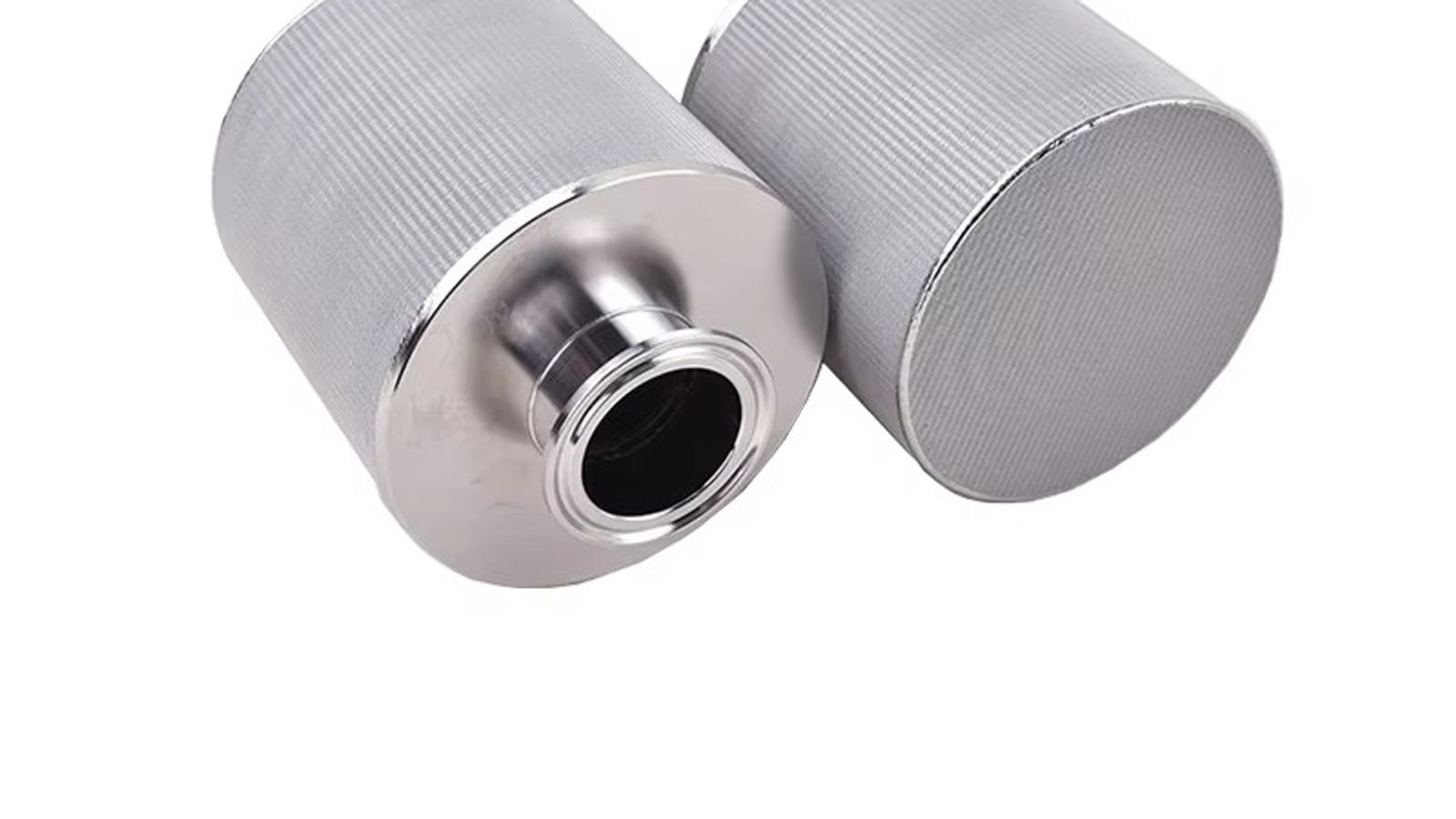
Titanium sintered filters are porous, rigid filter elements produced by compacting spherical titanium powder — normally Grade 1 or Grade 2 commercially pure titanium (≥99.2% Ti) — and vacuum-sintering it at roughly 1,200–1,400°C until the particles bond into a continuous, permeable matrix. A typical titanium sintered filter offers 30–45% open porosity, filtration ratings from 0.5 to 100 µm (the common working range is 5–40 µm), and a corrosion rate below 0.005 mm/year in seawater, wet chlorine, and most hot chloride brines. The 316L sintered filter is made by the identical powder-metallurgy route from 316L stainless steel powder (16–18% Cr, 10–14% Ni, 2–3% Mo), and delivers the same porosity and micron ratings at roughly one-third of the titanium raw-material cost — but its chloride tolerance is limited to dilute, low-temperature service before pitting, crevice attack, or stress-corrosion cracking appears. This guide compares the two materials across corrosion resistance, mechanical strength, temperature limits, and total cost so process and maintenance engineers can specify the correct filter element on the first pass.
Both titanium and 316L sintered filter elements are made by powder metallurgy. Spherical metal powder is sized and blended, filled into a die or mould, compacted under pressure to create a green body with the desired pore skeleton, then sintered in a vacuum or controlled-atmosphere furnace so the powder particles fuse at their contact points. The result is a self-supporting, rigid porous structure with no resin binders and no adhesives — the filtration performance is set entirely by the powder size distribution, the compaction pressure, and the sintering cycle.
That manufacturing route is why material choice matters more than element geometry. Sintered pores are tortuous, three-dimensional channels; the filtration rating is a function of the pore throat distribution, and the pressure drop is a function of open porosity and wall thickness. You can build sintered metal filter elements from nearly any powder — but the corrosion resistance, strength, and temperature ceiling of the finished element are inherited from the alloy itself. Two elements with identical micron ratings will behave completely differently in a chloride stream if one is titanium and the other 316L, which is why material selection precedes pore-size selection in most specifications. For a full treatment of how flow and pore structure interact, see our data on sintered metal filter pressure-drop and flow curves.
Corrosion is the single largest cause of premature sintered filter failure in chemical service, and it is the main reason engineers compare titanium against 316L. The table below summarises representative corrosion rates for commercially pure titanium (Grade 2) and 316L stainless steel in the media streams most often flagged during material selection. Rates are order-of-magnitude figures drawn from published corrosion charts; always confirm against coupon tests in your actual process stream.
| Media | Temperature | Titanium (Gr. 2) rate | 316L stainless rate | Typical selection |
|---|---|---|---|---|
| Seawater | 20°C | <0.005 mm/yr | ~0.05 mm/yr; pitting risk | Titanium |
| Hot brine (NaCl/CaCl₂) | 80°C | <0.005 mm/yr | Pitting and crevice attack | Titanium |
| Wet chlorine | 20–60°C | <0.005 mm/yr | Not suitable | Titanium |
| 3% NaCl; boiling | ~105°C | <0.005 mm/yr | SCC risk over time | Titanium |
| 10% HCl | 20°C | 0.1–0.5 mm/yr (marginal) | >1 mm/yr; not suitable | Neither ideal |
| 65% HNO₃; boiling | ~120°C | <0.1 mm/yr | 0.1–0.5 mm/yr; acceptable short-term | Titanium |
| Bleach / NaOCl | 25°C | <0.005 mm/yr | SCC in hot hypochlorite | Titanium |
| Neutral pH process water | 60°C | <0.005 mm/yr | <0.05 mm/yr | 316L (cost) |
The mechanism behind the difference matters as much as the numbers. Titanium's passive oxide film (TiO₂) is extremely stable and self-heals almost instantly in oxygenated and oxidizing environments, which is why titanium is effectively immune to seawater, wet chlorine, and chloride brines even at elevated temperature. 316L relies on a chromium oxide film that is damaged by chloride ions at localised sites; once pitting or crevice corrosion initiates in a porous element, the attack propagates rapidly through the tortuous pore network and the element becomes a preferential leak path rather than a barrier.
The exceptions are important. Titanium's resistance depends on oxidising conditions: in hot, reducing acids such as concentrated hydrochloric or sulphuric acid, the passive film breaks down and corrosion rates climb steeply with temperature and concentration. And titanium must never be used with dry chlorine gas — without roughly 0.5–1.5% moisture, titanium can ignite and burn, and this is a genuine safety hazard, not a corrosion concern. If your stream is a reducing acid or dry halogen, neither of these two materials may be right, and a broader filter material compatibility guide is the place to start.
A sintered filter must hold its pore structure under differential pressure, backwash cycles, and thermal cycling. Porous media are weaker than solid metal of the same grade because porosity reduces the load-bearing cross-section, so designers compare bulk mechanical properties and then derate for porosity.
| Property (bulk material) | 316L stainless steel | Titanium (Gr. 1 / Gr. 2) |
|---|---|---|
| Density | ~8.0 g/cm³ | ~4.5 g/cm³ |
| Tensile strength (annealed) | 485–620 MPa | 240 MPa (Gr. 1) / 345–450 MPa (Gr. 2) |
| Yield strength (annealed) | 170–310 MPa | 170 MPa (Gr. 1) / 275–410 MPa (Gr. 2) |
| Young's modulus | ~193 GPa | ~105–116 GPa |
| Max continuous service in air | ~450–600°C | ~300–400°C |
| Melting point | ~1;370–1;450°C | ~1;668°C |
| Coefficient of thermal expansion | ~16 µm/m·K | ~8.6 µm/m·K |
| Weight per unit volume | 100% (baseline) | ~56% of steel |
The practical temperature ceiling follows the oxidation and creep behaviour, not the melting point. 316L sintered filters are routinely specified for hot gas filtration, steam, and catalyst-recovery duty up to roughly 450–600°C, and retain useful strength well past that in inert or reducing atmospheres. Titanium oxidises progressively above about 400°C in air, so its continuous service temperature is capped around 300–400°C. Below that ceiling titanium is actually attractive in vibrating or cyclic-fatigue applications because its lower density reduces inertial loading on the housing and its moderate modulus reduces the stress transferred to pipework.
Two titanium-specific risks belong in every specification review. First, titanium absorbs hydrogen at elevated temperature or under cathodic conditions, forming brittle hydrides that can crack the sintered matrix; avoid titanium in hydrogen-bearing streams above ~70°C. Second, titanium machining and grinding produces fine chips that are pyrophoric — fabrication and in-plant rework must follow dust-control procedures that 316L does not require.
On unit price, 316L wins decisively. Titanium raw material is roughly 4–8× the price of 316L on a per-kilogram basis, and because titanium powder, vacuum sintering, and contamination control are all more expensive, a finished titanium sintered filter element typically costs 3–5× an equivalent 316L element. Lead time is also longer, commonly adding two to four weeks for powder procurement and sintering scheduling.
The total-cost comparison changes when you include service life. In seawater, wet chlorine, or hot brine duty, a 316L element may fail by pitting within months, while the equivalent titanium element can run for years with no measurable weight loss. When an unscheduled filter change forces a process shutdown, the replacement element price is a small fraction of the lost production cost. A useful rule of thumb from plant engineers: if the 316L element will survive the scheduled maintenance interval, it is almost always the cheaper choice; if corrosion forces mid-cycle failures, titanium pays for itself in one or two service lives.
There is a third cost lever that favours titanium in retrofit situations: weight. A titanium element weighs roughly 44% less than the same geometry in 316L (density 4.5 vs 8.0 g/cm³). For large elements, filter housings, and manually handled assemblies, that weight saving cuts handling time, simplifies support structures, and reduces shipping cost — all of which narrow the titanium premium on a project basis.
Choose titanium sintered filters when the process stream is chloride-dominated or oxidising and the element must survive long service intervals: chlor-alkali and wet-chlorine processes, seawater intake and heat-exchanger filtration, bleach and pulp-bleaching stages, hot calcium chloride and magnesium chloride brines, and nitric or oxidising acid service. Titanium is also specified in marine dosing and offshore water-treatment skids, and in demanding pharmaceutical processes where the corrosion product from a failing stainless element would contaminate the batch.
Choose 316L sintered filters for the large majority of chemical, food, beverage, and pharmaceutical duties where chlorides are absent or dilute: polymer melt filtration, catalyst and adsorbent recovery, steam and condensate polishing, compressed-air and gas filtration, beer and beverage clarification, and sterile-filter pre-filtration. 316L is also the rational choice wherever process temperature exceeds ~400°C, where hydrogen is present, or where installed cost dominates the decision. In food and pharma, the documented, validated surface finish and the mature body of process-validation guidance make 316L the default even where titanium would be technically acceptable. For cartridge-style elements in these services, many plants standardise on sintered wire mesh filter cartridges because the wire structure can be cleaned and reused more aggressively. If your project sits in the pharmaceutical or fine-chemical space, our pharmaceutical and chemical applications page shows how material choice integrates with validation and cleanability requirements.
When the decision is genuinely borderline — dilute chloride, moderate temperature, tight budget — run a simple coupon test in the actual stream before committing. Two 316L filter discs and two titanium filter discs suspended in a by-pass loop for four to six weeks will settle the material question with data rather than opinion.
Whatever material you choose, the specification must be complete enough that the supplier cannot substitute a different pore structure or grade. A proper specification includes:
On receipt, validate before installation. The bubble-point test (ASTM E128) measures the maximum pore diameter by the pressure at which the first gas bubble passes through a wetted element — this verifies that no oversized pore will let contaminant bleed through. The permeability test (ISO 4022) verifies that flow resistance matches the specified pressure-drop curve, which is your protection against a denser-than-specified element that silently throttles the process. Confirm the overall porosity and, for titanium, check the material certificate against the grade chemistry. Many plants order sintered metal filter discs as the validation coupon set precisely because discs are cheap to test destructively while the production element goes into service.
Which is better for seawater filtration: titanium or 316L sintered filter? Titanium, unambiguously. Commercially pure titanium corrodes at under 0.005 mm/year in seawater and resists the chloride pitting and crevice attack that quickly damages 316L porous elements, especially in warm or stagnant seawater.
What is the maximum operating temperature of a titanium sintered filter vs a 316L sintered filter? In air, a 316L sintered filter is serviceable to roughly 450–600°C, while titanium is limited to about 300–400°C because of progressive oxidation above that range. Below 300°C titanium is the more corrosion-resistant of the two.
How much more expensive is a titanium sintered filter element? Expect a finished titanium sintered filter element to cost roughly 3–5× an equivalent 316L element, with an additional two to four weeks of lead time. The premium is often recovered in chloride service where the titanium element lasts several maintenance cycles longer.
Can titanium sintered filters handle hydrochloric acid? Only in dilute, low-temperature conditions — and even then marginally. In 10% HCl at room temperature, Grade 2 titanium shows 0.1–0.5 mm/year corrosion, and rates climb sharply with temperature and concentration. 316L is worse. Neither is a good fit for hot concentrated HCl; consider alloyed titanium or non-metallic media instead.
What tests prove a sintered filter meets its micron rating? The bubble-point test per ASTM E128 verifies the maximum pore diameter, and the permeability test per ISO 4022 verifies flow resistance. Both should be part of the factory test certificate, and many buyers repeat them on receipt to confirm the as-delivered element matches the specification.
Titanium and 316L sintered filters are manufactured identically but serve different halves of the chemical plant. Use titanium where chlorides and oxidising media dominate and where corrosion failures cost more than the element itself; use 316L where the stream is benign, the temperature is high, or the budget is tight. KAIFIL manufactures custom sintered filter elements in both titanium and 316L, with filtration ratings from 0.5 to 100 µm, porosity engineered to your flow target, and EN 10204 3.1 material certification on every batch. Send us your process media, temperature, and differential-pressure requirement, and our engineers will recommend the material, grade, and pore structure — request a quote for custom sintered filter elements, or start from our sintered metal filter elements range.
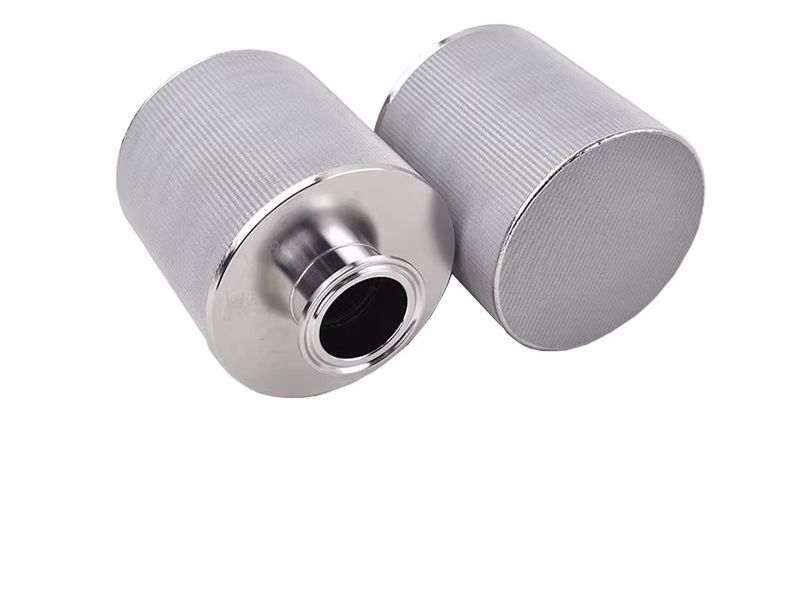
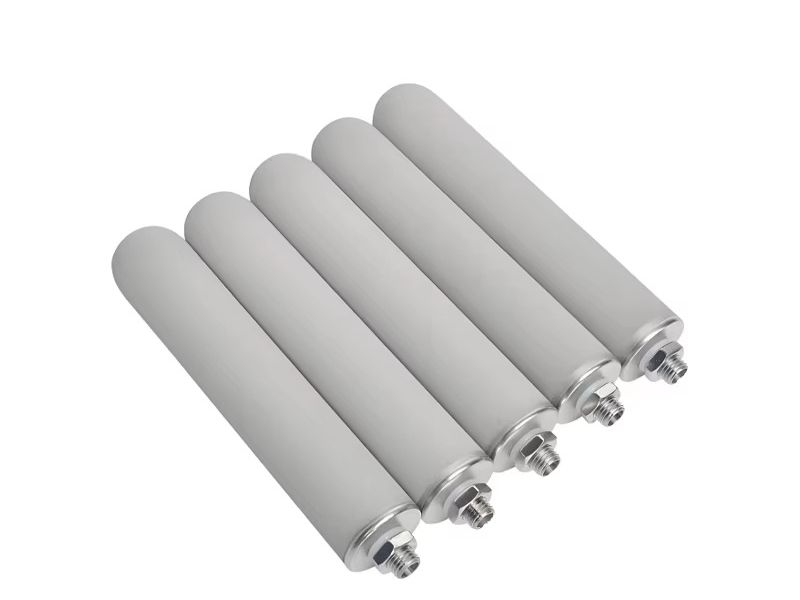
Cartridges / tubes / cylinders / cones for reusable high-strength filtration elements, supplied to drawing with material, size and packing details confirmed at RFQ stage.
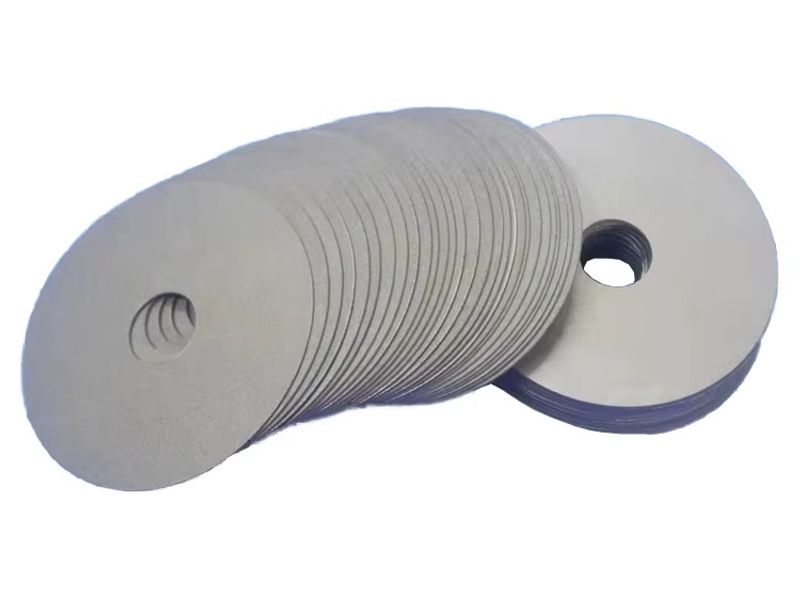
Discs / plates / custom cut parts for cleanable precision filtration, supplied to drawing with material, size and packing details confirmed at RFQ stage.
Cartridges / tubes / cylinders for reusable cartridge filtration with rigid sintered mesh media, supplied to drawing with material, size and packing details confirmed at RFQ stage.
Send drawings, dimensions, material, environment or operating conditions, and we will help confirm the right specification.
Uploaded reference files are included with the inquiry. For larger CAD packages, reply to the confirmation email or send them here:
Our team typically replies within 24 business hours.