Technical
API Crystallization Filtration: Sintered Metal Filter Discs Explained
API crystallization filtration with sintered metal filter discs: 0.5-50 µm retention, Ra 0.4-0.8 µm finish, EN 10204 3.1. Get a quote from KAIFIL.
API crystallization filtration with sintered metal filter discs: 0.5-50 µm retention, Ra 0.4-0.8 µm finish, EN 10204 3.1. Get a quote from KAIFIL.
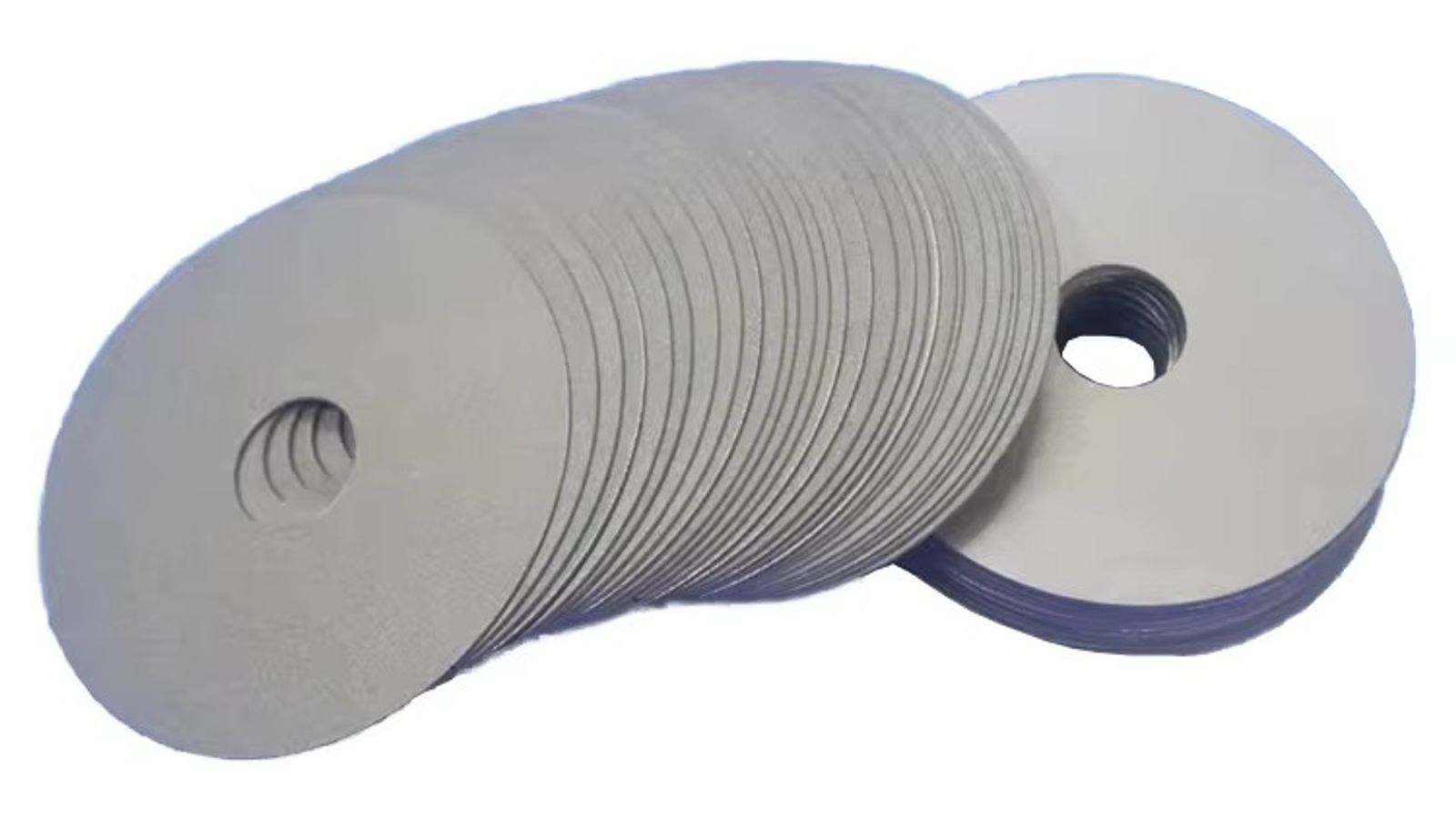
API crystallization filtration is the separation of active pharmaceutical ingredient (API) crystals from the mother liquor after the crystallization step, and it is where product yield, purity, and batch-to-batch consistency are most often decided. In an agitated filter dryer — commonly called a Nutsche filter — the crystallization slurry is filtered through a horizontal sintered metal filter disc, the cake is washed in place, and the same media then supports drying under vacuum or nitrogen sweep without ever transferring the product. Sintered stainless steel filter discs are the standard media for this duty because they deliver particle retention from 0.5 µm to 50 µm, cleanable surfaces finished to Ra 0.4-0.8 µm, and the thermal and chemical stability to survive aggressive API solvents and drying temperatures above 400°C in 316L construction.
This guide explains how sintered metal filter discs are applied in API crystallization and isolation — slurry filtration, product recovery, washing, and drying — and what to specify when you source them for pharmaceutical production.
API isolation is a demanding service. The filter media must retain a crystalline product that can range from coarse 50 µm platelets to sub-micron fines, must tolerate repeated contact with organic solvents, acids, and bases, and must survive drying cycles that often run hot. Woven mesh and polymer media fail on at least one of these fronts:
For a crystallization step where the product is the most valuable stream in the plant, the media choice is a risk decision — and sintered metal removes the failure modes that woven mesh and polymer introduce.
The most common API isolation configuration is the agitated filter dryer: a pressure vessel with a horizontal filter plate, a mechanical agitator that can plough and knead the cake, and heating through the vessel jacket and the filter base. The sintered metal filter disc (or a set of disc segments) forms the filter bottom. The sequence is:
In larger vessels, the filter bottom is often built from segmented sintered metal elements rather than a single disc, so that each segment can be removed for inspection and replacement. Sintered metal filter elements are the modular building blocks for these designs, and they are produced to the same retention, surface finish, and material-certification standards as full discs.
Two families of sintered metal filter discs dominate API crystallization service, and the distinction matters for retention and cleanability:
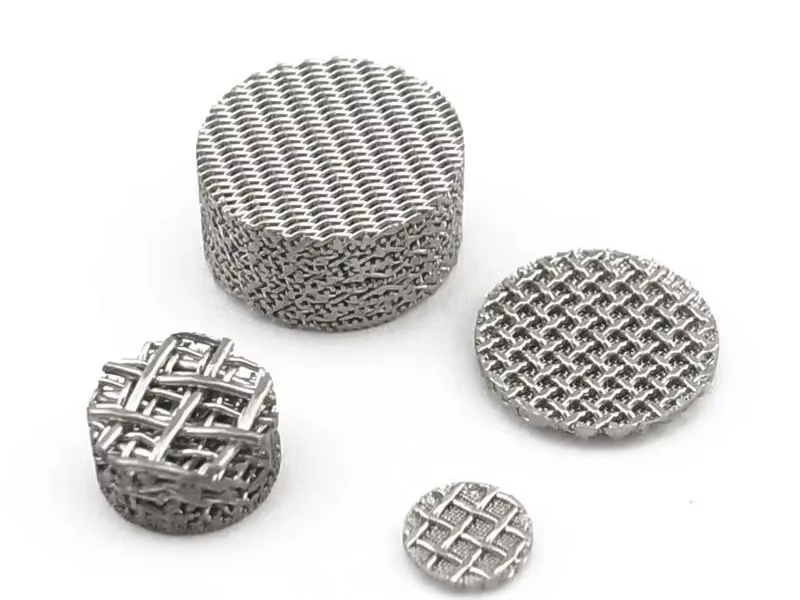
Multilayer sintered mesh (wire-mesh laminate). Several Dutch-weave or square-weave stainless steel meshes are stacked and diffusion-bonded into a rigid sheet. The fine filtration layer sits on the cake side; coarser mesh layers beneath provide mechanical strength and drainage. The construction gives high open area and low pressure drop for a given retention rating, and it is extremely robust against pressure spikes and agitator contact. KAIFIL's five-layer sintered mesh is the classic example: the fine top layer sets the retention rating, the inner layers distribute flow, and the heavy support layer carries the load. The laminate is then cut, formed, and edge-sealed into a disc.
Powder-sintered (porous metal) discs. Stainless steel powder is sintered into a uniform porous structure. Powder-sintered media offers a more tortuous pore path and generally finer retention (down to 0.5 µm and below), which suits APIs that generate fine crystals or where the process wants depth filtration behavior. Powder-sintered discs are typically slightly higher in clean pressure drop than multilayer mesh at the same rating, but they can capture sub-micron material that open-weave constructions cannot hold reliably.
Both constructions are available in 316L as standard, with higher alloys on request for corrosive solvent systems. The disc is usually laminated or welded to a support grid or drainage layer on the underside so that the thin filtration media does not deflect under full slurry head and cake weight. Thickness is typically 1.0-3.0 mm for the media itself, and the assembled disc with support grid can be substantially thicker depending on the vessel design.
The exact mix of layers, alloy, and edge treatment is what separates a disc that survives years of API service from one that fails after a few batches — which is why disc specification is usually done with the manufacturer rather than off a datasheet. KAIFIL engineers support this custom engineering for sintered metal filter discs and five-layer sintered mesh, including non-standard diameters and drilled-edge sealing.
Cake filtration is fundamentally different from clarifying a dilute suspension. The pressure drop across the disc has two components:
For API crystallization duty, the design goal is not minimum clean ΔP but a controlled relationship between flux, ΔP, and cake growth, so that the filtrate stays clear and the cake does not blind.
Typical clean pressure drop data for sintered metal filter discs (water at ~20°C, 316L) shows the trade-off between retention and flow:
| Retention rating (µm) | Clean ΔP at 20 m³/m²/h (bar) | Clean ΔP at 50 m³/m²/h (bar) | Typical API duty |
|---|---|---|---|
| 0.5 (powder sintered) | 0.10-0.20 | 0.25-0.45 | Fine crystals; high-value APIs |
| 5 (multilayer mesh) | 0.04-0.08 | 0.10-0.18 | Standard crystallization isolation |
| 20 (multilayer mesh) | 0.02-0.05 | 0.06-0.12 | Coarse crystalline products |
| 50 (multilayer mesh) | 0.01-0.03 | 0.04-0.08 | Large crystals; high throughput |
Values are indicative clean-water data; actual numbers depend on alloy, layer count, and media thickness.
The most important design rule in API isolation is to size the disc for the end-of-filtration condition, not the clean condition. Because the cake dominates the total resistance, a disc rated one micron too fine can cut throughput in half on a sticky API. Conversely, a disc rated too coarse passes fines that downgrade the batch. The correct approach is to correlate the crystal size distribution to the retention rating, then verify with a lab-scale or pilot-scale filtration test before committing to vessel dimensions.
Designers also need to account for the pressure rating of the vessel. A sintered metal disc is a rigid plate, so it must be supported against the full differential pressure — typically 3-6 bar in agitated filter dryers, with some vessels rated higher. A perforated support grid or drainage layer beneath the media is standard so the media itself never sees a ΔP that could flex or crack it.
For a full worked example of how pressure drop scales with flow and media rating, KAIFIL's pressure drop and flow curve guide walks through the calculation method used for real vessel sizing.
Each media format has a legitimate place in pharmaceutical filtration, but for the slurry-cake-wash-dry cycle of a Nutsche filter dryer, the comparison is one-sided:
| Criterion | Sintered metal filter disc | Pleated sintered metal cartridge | Woven mesh filter disc |
|---|---|---|---|
| Typical retention | 0.5-50 µm | 0.5-100 µm | 5-500 µm (mesh opening) |
| Media migration risk | None (bonded structure) | Low (pleats can trap; bonded) | Moderate (filaments/wires at edges) |
| Cake discharge | Excellent — flat plate; full-face agitator access | Poor — pleats hold product | Good |
| Washing efficiency | High — uniform cake depth | Low — pleat geometry disturbs cake | Moderate |
| Cleanability / steam | Excellent — back-flush + Ra 0.4-0.8 µm finish | Good but pleats hard to inspect | Moderate — single-layer |
| Pressure drop | Low-to-moderate | Low (high surface area) | Low but retention-limited |
| Mechanical strength | Very high (rigid plate) | Moderate (cartridge cage needed) | Low-to-moderate (needs support) |
| Cost per area | Moderate-to-high | High | Low |
| Best role | API crystallization & isolation (Nutsche/AFD) | Clarifying filtrate polishing; solvent recovery | Non-critical coarse pre-filtration |
The takeaway: pleated cartridges are excellent for polishing the filtrate downstream or for clarifying solvent loops, but their geometry is wrong for cake building, washing, and discharge. Woven mesh discs are cheap but cannot hold fine API crystals reliably or meet cleanability and media-migration expectations in regulated API service. The sintered metal disc is the only format that does all four steps — filter, wash, dry, discharge — on one surface. For polishing applications in the same plant, KAIFIL's sintered wire mesh filter cartridges cover the downstream side of the process.
Two things make API filtration media audit-ready: the surface finish and the material documentation.
Surface finish. The active (cake side) face of a sintered metal filter disc should be finished to Ra 0.4-0.8 µm. This is not cosmetic. A smooth, pore-free face prevents product incrustation, makes cleaning validation predictable, and ensures that the disc can be returned to a known state after CIP/SIP cycles. Interior and edge surfaces should be deburred and passivated so there are no crevices where product can hide. The roughness value should be verified with a profilometer and recorded in the batch documentation.
Material certificates. Every disc supplied for API service should ship with an EN 10204 type 3.1 material certificate — an inspection certificate that traces the material from mill heat to finished part and confirms chemical composition and mechanical properties. Beyond the base certificate, responsible suppliers provide:
Integrity testing. In pharmaceutical filtration, the media is often integrity-tested before and after each batch. For sintered metal discs, the relevant test is usually a bubble-point test correlated to the retention rating, or a pressure-hold test on the installed disc. The disc design — rigid, edge-sealed, no moving parts — makes these tests repeatable, which is exactly what validation documentation needs.
The discipline around documentation and test evidence is the same discipline applied to other pharma filter components. KAIFIL's pharmaceutical filter validation guide details the documentation package and test protocol expected for media used in API and finished-dose manufacture.
When you source sintered metal filter discs for a Nutsche or agitated filter dryer, work through this checklist so the media matches the vessel, the process, and the quality system:
Because every vessel and every API is different, the practical shortcut is to send the vessel drawing and the process data to the manufacturer and let engineers size the disc, the layer construction, and the seal together.
What retention rating do I need for API crystallization filtration? Sintered metal filter discs are available from 0.5 µm to 50 µm. The right rating depends on the crystal size distribution: coarse APIs may need only 20-50 µm, while fine or sub-micron crystals require 0.5-5 µm powder-sintered media. Confirm with a pilot-scale filtration test before full-scale design.
Can a sintered metal filter disc handle the drying step in a Nutsche filter dryer? Yes. Sintered SS316L discs operate at temperatures above 400°C, far beyond the 60-120°C typical of API drying cycles. The rigid, bonded structure also withstands the mechanical abrasion of the agitator plough as it turns and discharges the dry cake.
How is a sintered metal filter disc cleaned between API batches? The disc is back-flushed, chemically cleaned, and steam-sterilizable in place. A cake-face surface finish of Ra 0.4-0.8 µm prevents product from baking into the surface, which keeps cleaning validation repeatable and supports rapid product changeover.
What documentation should a pharmaceutical filter disc supplier provide? For regulated API service, the supplier should provide an EN 10204 type 3.1 material certificate (chemical composition and mechanical properties traced to the mill heat), retention-rating verification, surface-finish measurements, dimensional inspection reports, and weld documentation where applicable.
Why not use a pleated cartridge instead of a filter disc in an agitated filter dryer? Pleated cartridges are ideal for polishing filtrate but poor at building, washing, and discharging a cake — the pleats trap product and disrupt cake uniformity. The flat sintered metal disc provides a uniform cake surface, efficient washing, full-face agitator access, and clean discharge, which is why it is the standard for API crystallization and isolation.
Every API crystallization train is a custom combination of vessel, media, and process. KAIFIL manufactures sintered stainless steel filter discs and sintered metal filter elements in Shijiazhuang, China, and exports worldwide — with diameters up to ~1200 mm, retention ratings from 0.5 µm to 50 µm, surface finishes to Ra 0.4-0.8 µm, and full EN 10204 3.1 documentation on every part. Send us your vessel drawing and process parameters, and our engineers will recommend the disc construction, alloy, seal design, and retention rating — or run the sizing calculation for you. Contact KAIFIL for a quote and engineering support today.
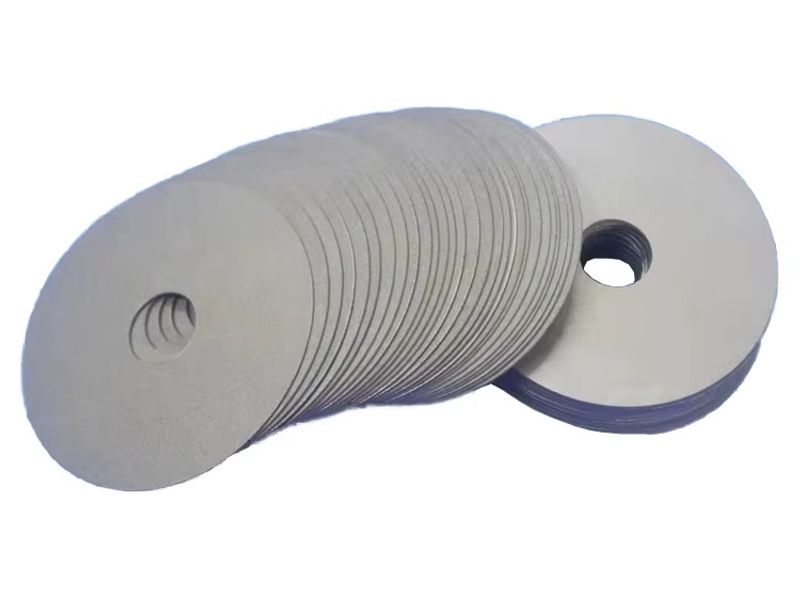
Discs / plates / custom cut parts for cleanable precision filtration, supplied to drawing with material, size and packing details confirmed at RFQ stage.
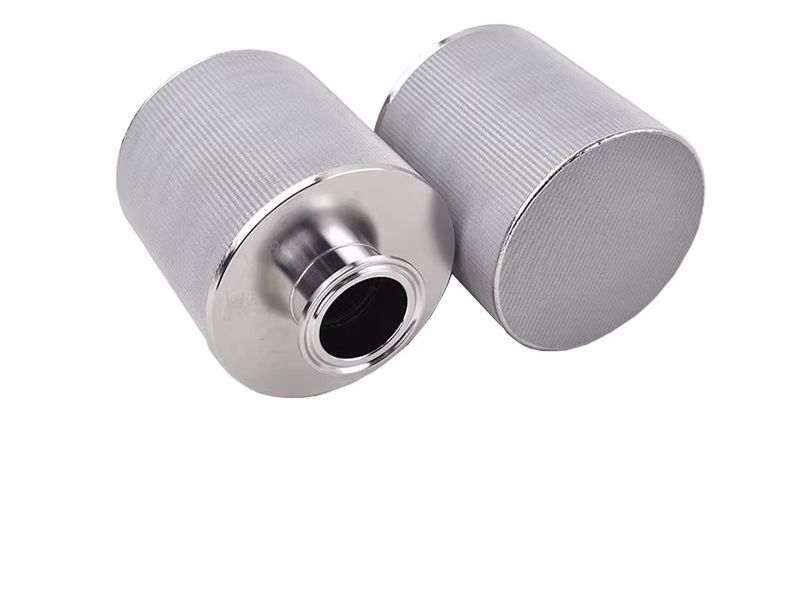
Cartridges / tubes / cylinders / cones for reusable high-strength filtration elements, supplied to drawing with material, size and packing details confirmed at RFQ stage.
Rigid five-layer sintered wire mesh laminate for cleanable precision filtration and custom elements.
Send drawings, dimensions, material, environment or operating conditions, and we will help confirm the right specification.
Uploaded reference files are included with the inquiry. For larger CAD packages, reply to the confirmation email or send them here:
Our team typically replies within 24 business hours.