Selection Guide
Coal Preparation Vibrating Screen Mesh: Count, Wire & Alloy
Select coal preparation vibrating screen mesh: mesh count, wire diameter, alloy for desliming, draining, classifying. Request custom panels from KAIFIL.
Select coal preparation vibrating screen mesh: mesh count, wire diameter, alloy for desliming, draining, classifying. Request custom panels from KAIFIL.
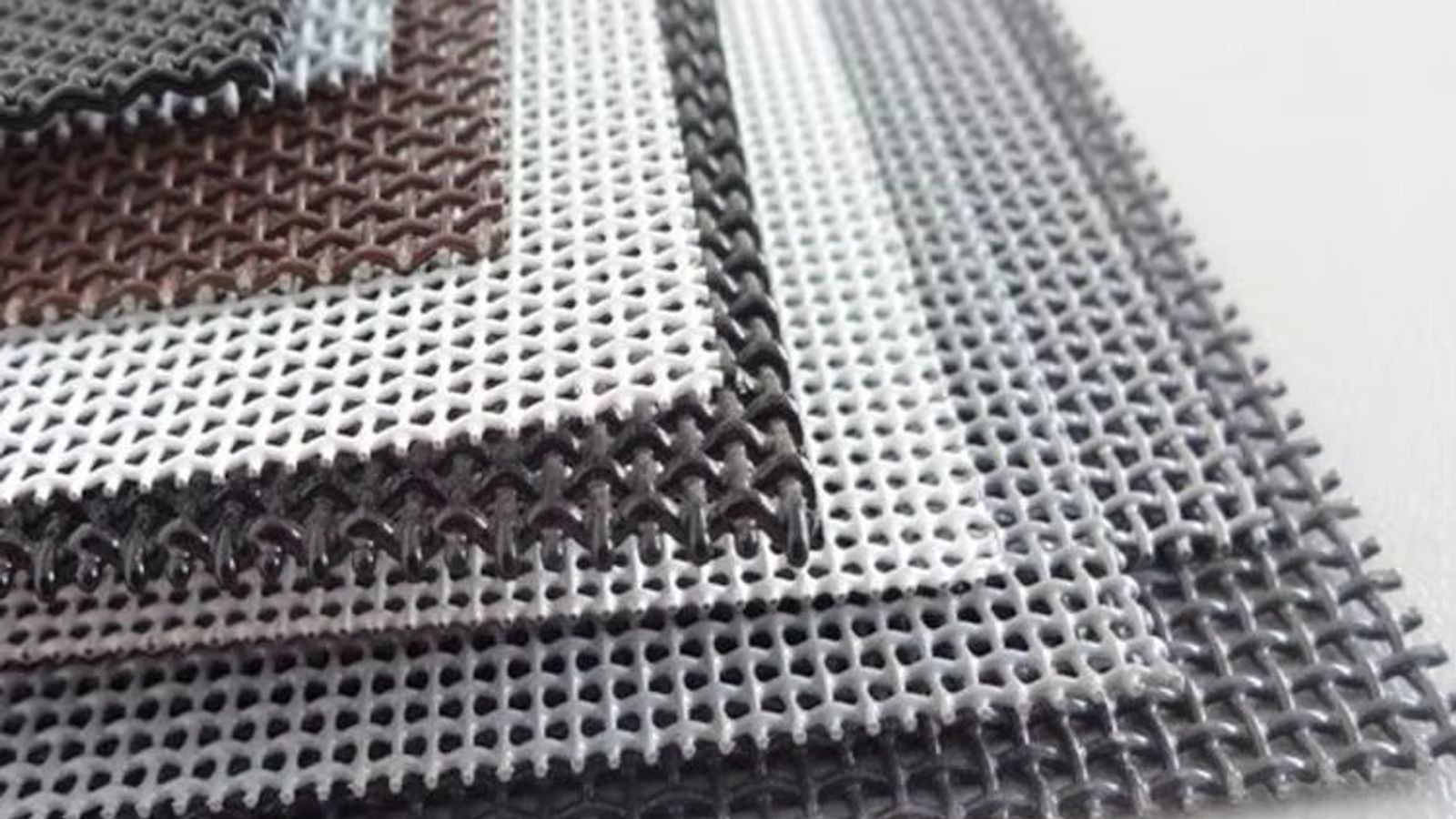
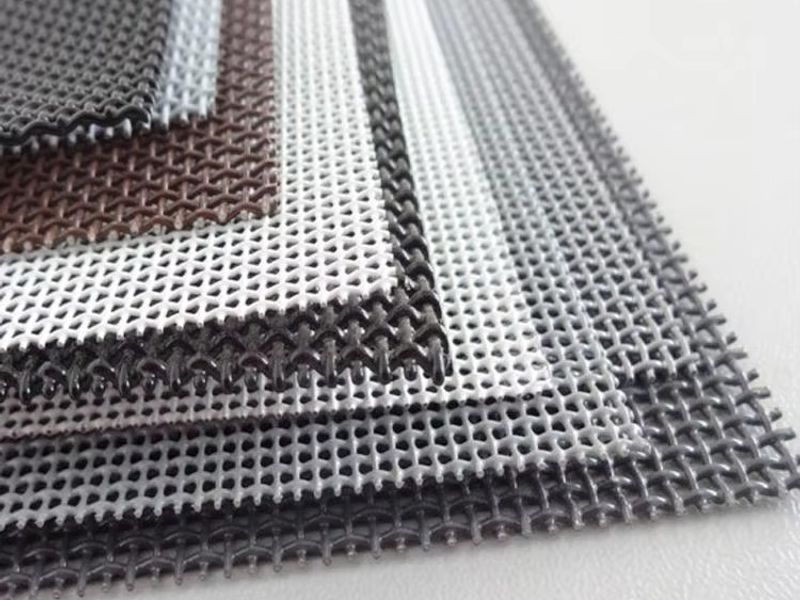
Vibrating screen mesh is a woven wire cloth that serves as the replaceable separating medium on vibrating screens in coal preparation plants, where it sizes raw coal, drains dense-medium slurry, classifies clean coal, and recovers fine coal from tailings. The cloth is defined by three numbers: mesh count (openings per linear inch, or 25.4 mm), wire diameter, and the alloy of the drawn wire. Coal-duty panels typically range from 3 to 100 mesh, covering square apertures from about 5 mm down to 0.15 mm, with wire diameters from 6.3 mm on coarse pre-crimped panels down to 0.10 mm on fine dewatering cloth. Because aperture (mm) = 25.4 ÷ mesh − wire diameter, the mesh number alone does not fix the cut size: a 20-mesh cloth separates at 0.87 mm with 0.40 mm wire but at only 0.57 mm with 0.70 mm wire. Open area, the fraction of the panel surface that is open, typically runs 30–60% for the medium and fine woven cloth used in coal washing, and lower for heavy coarse panels.
Key takeaways
A coal preparation plant (wash plant) is a sequence of sizing and gravity-concentration steps, and woven mesh is the workhorse separating surface at several points in the flowsheet.
The duty dictates the mesh: coarse scalping needs thick wire and large apertures; fine recovery needs fine mesh with enough open area to dewater. The selection rules below apply across these duties and across the wider coal and aggregate screening applications that use the same panels.
Mesh count is the number of openings per linear inch. A 30-mesh cloth has 30 openings across 25.4 mm; an 8-mesh cloth has 8. Because each opening shares its wires with its neighbours, the clear aperture is:
Aperture (mm) = 25.4 ÷ mesh count − wire diameter (mm)
Worked examples:
Mesh numbering is most useful between about 4 and 100 mesh (apertures roughly 5 mm down to 0.15 mm). Above that — coarse scalping at 13–50 mm — panels are normally specified directly by aperture in millimetres, because the equivalent mesh numbers fall below 2–4 and the wire is thick enough that the mesh convention becomes misleading.
The cut size — the particle size that splits between oversize and undersize — tracks the aperture but is not identical to it. A particle passes a square opening when two of its dimensions are smaller than the clear opening, so angular near-square particles pass at roughly 85–95% of nominal aperture while elongated particles pass only when their minor dimension fits the opening. For specification and QC purposes the nominal square aperture is the sizing reference, and the cloth is declared against that value (see our mesh count vs micron rating conversion guide).
When you compare quotes for "30-mesh" cloth, always confirm the wire diameter: 30 mesh with 0.30 mm wire cuts at 0.55 mm; 30 mesh with 0.45 mm wire cuts at 0.40 mm. That 0.15 mm difference decides whether magnetite is lost to rejects or medium carries into product.
Open area is the percentage of the screen surface that is open space:
Open area % = [aperture ÷ (aperture + wire)]² × 100
Wire diameter pulls open area two ways. A thicker wire shrinks each aperture (lowering the cut) while occupying more surface; a thinner wire opens the cloth up but wears faster and carries less load. Standard medium- and fine-grade cloth used on coal screens falls in the 30–60% open area band; heavy pre-crimped panels with thick wire run at 15–35% because wire area dominates the weave.
Practical rule: select the heaviest wire that still delivers the required open area and throughput. If throughput is the binding constraint, thin the wire and add support; if panel life is the binding constraint, thicken the wire and accept lower open area. At a fixed aperture you can only gain open area by using a finer wire that can still survive the duty.
Three woven constructions cover coal screening, and each maps to a different duty.
| Weave | Construction | Usable aperture range | Typical open area | Best coal duty |
|---|---|---|---|---|
| Plain weave | 1-over-1; flat surface | 0.15–6 mm | 30–55% | Desliming; medium draining; fine coal recovery |
| Pre-crimped single/double | Interlocked crimps at crossovers | 1.5–12 mm | 15–35% (heavy) | Raw coal scalping; clean coal classification |
| Dutch weave | Coarse warp; tight fine weft | 5–300 µm (filtration) | 10–35% | Not for coal sizing — filtration only |
For a fuller comparison of plain, twill, and dutch constructions, see plain vs twill vs dutch weave, and for heavy coarse-duty panels read crimped wire mesh for heavy-duty screening.
The alloy decides how the panel fails — by abrasion, by corrosion, or by fatigue — and the cost follows.
Our full comparison of SS304 vs SS316 wire mesh corrosion resistance covers the metallurgy in more depth.
The table below is a practical starting point; verify against your feed size distribution, tonnage, and water chemistry.
| Screening duty | Cut size | Mesh / aperture | Wire diameter | Weave | Alloy |
|---|---|---|---|---|---|
| Raw coal scalping | 13–50 mm | Aperture 13–50 mm (≈1–4 mesh equiv.) | 4.0–8.0 mm | Pre-crimped | 65Mn / 304 |
| Clean coal classification | 6–13 mm | Aperture 6–13 mm (≈2–4 mesh equiv.) | 2.5–4.0 mm | Pre-crimped | 65Mn / 304 |
| Coarse medium draining | 1.0–2.0 mm | 10–16 mesh | 0.6–1.0 mm | Plain / double crimp | 304 / 316L |
| Desliming (pre-DM) | ~0.5 mm | 24–30 mesh | 0.35–0.50 mm | Plain | 304 / 316L |
| Fines recovery | 0.25–0.5 mm | 30–60 mesh | 0.20–0.45 mm | Plain | 304 / 316L |
| Fine coal wet screening | 0.15–0.25 mm | 60–100 mesh | 0.10–0.20 mm | Plain | 304 / 316L |
A 0.5 mm desliming panel is typically 24–30 mesh plain weave with 0.35–0.50 mm wire in 304 or 316L; a 13 mm classifying panel is pre-crimped cloth specified by aperture — roughly 13 mm opening with 4–6 mm wire. Where drain-and-rinse duty needs a slotted, non-blinding profile, many plants substitute wedge wire panels, which behave differently from woven cloth and deserve their own selection process.
Most coal screen mesh panel failures are one of four things, and each has a spec-level solution.
Blinding and plugging. Near-size particles wedge in the apertures and wet fines cake across the cloth, cutting open area and starving the circuit. Fixes: open the aperture one step; switch from flat plain weave to crimped or self-cleaning cloth; add a ball-tray (bouncing-ball) deck, water sprays, or screen heating; increase vibration amplitude at a slightly lower frequency.
Abrasive wear and aperture growth. Wire erodes preferentially at crimp intersections, apertures enlarge, and oversize contaminates the product. This is the dominant failure in dry coarse screening of abrasive coal and rock. Fixes: step up wire diameter, use interlocked double crimp, move to high-carbon spring steel, reduce feed velocity and drop height, and rotate panels so wear stays even.
Fatigue cracking. Cyclic vibration fractures wire at the tensioned edges and at crimp intersections — visible as hairline breaks long before the panel looks worn. Fixes: tension to the manufacturer's spec (neither slack nor drum-tight), support panel edges on rubber or polyurethane strips rather than bare steel, use spring-tempered wire, and avoid sharp-edge hooks that notch the wire.
Corrosion and corrosion fatigue. Pitting from acidic or saline water concentrates stress and accelerates cracking. Fixes: move from 304 to 316L, and re-check the water chemistry when failures cluster at the wet end.
Slackening after installation is not a failure but a behaviour: new cloth relaxes in the first hours, so re-tension after the first shift and then on the normal maintenance cycle.
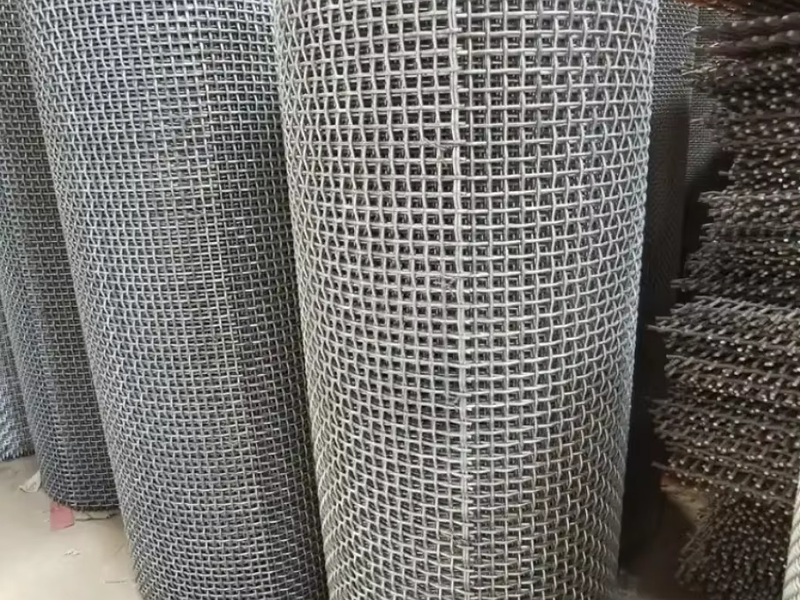
Most replacement woven mesh is supplied as rectangular panels with hook-strip (hook) edges — the cloth is folded and clamped around a rod or flat strip for side tensioning on the deck. The hook profile should match the deck's tension rails. Alternatively, panels are supplied pre-tensioned on a rubber or polyurethane frame that bolts down onto cross members — easier and faster to change, at higher initial cost.
For very coarse heavy duty, panels may be ordered with folded or rolled edges, sometimes with a heavier selvedge wire to stop edge wires pulling out. When you specify a panel, give the overall length and width, the aperture, hook type and profile, wire diameter, weave, and alloy.
Whatever the tensioning method, tension evenly across the panel, work from the centre outward, and re-tension after break-in. A properly tensioned panel sits flat with no drum spots and no ripples; both over- and under-tension cause premature failure.
What mesh is best for 13 mm clean coal classification? Specify pre-crimped cloth by aperture — roughly 13 mm opening with 4–6 mm wire. The crimped interlock keeps the coarse panel stable under load; 304 stainless or 65Mn spring steel both work, with 65Mn preferred for dry abrasive duty.
How do I convert mesh count to aperture in mm? Aperture (mm) = 25.4 ÷ mesh − wire diameter (mm). For 30 mesh with 0.45 mm wire: 25.4 ÷ 30 − 0.45 = 0.40 mm. Always quote the wire diameter with the mesh number — "30 mesh" alone is under-specified.
Should I use 304 or 316L for coal screen mesh? Start from water chemistry. 304 handles neutral to mildly acidic water and is the cost default. Move to 316L when the water is acidic, chloride-rich, or the coal is high-sulphur — the molybdenum content resists the pitting that shortens 304 panels.
Why does my fine screen blind, and what fixes it? Blinding is near-size wedging plus wet fines caking. Open the aperture a step, fit a bouncing-ball deck or water sprays, use self-cleaning crimped cloth, or heat the screen. If blinding is severe, consider whether a slotted wedge wire profile is a better fit for the duty.
Is dutch weave suitable for coal screening? No. Dutch weave is a filtration construction with a tortuous, tightly packed weft that offers micron-range retention but no clean sizing aperture. On a vibrating coal screen it blinds immediately. Use plain or crimped square mesh for sizing; keep dutch weave for slurry or dust filtration.
Every coal plant screens a different feed, so standard rolls rarely fit well. KAIFIL manufactures custom stainless steel and spring-steel vibrating screen mesh panels cut to your deck dimensions, with the aperture, wire diameter, weave, and alloy you specify — including hook-strip, folded, and pre-tensioned edge options. Send your screen size and duty (cut size, tonnage, water chemistry) or a drawing, and our engineers will recommend the construction and deliver custom-cut panels on short lead times. Contact KAIFIL for custom wire mesh fabrication or start from our woven wire mesh range to match a standard cloth.
Square-opening woven wire mesh for screening, support layers and custom fabricated filter parts.
Panels / sheets / custom screens for heavy-duty screening and protective mesh, supplied to drawing with material, size and packing details confirmed at RFQ stage.
Dense woven wire mesh for fine filtration and custom screen packs in demanding process lines.
Send drawings, dimensions, material, environment or operating conditions, and we will help confirm the right specification.
Uploaded reference files are included with the inquiry. For larger CAD packages, reply to the confirmation email or send them here:
Our team typically replies within 24 business hours.