Technical
Crimped Wire Mesh for Heavy-Duty Screening: The Complete Guide
Crimped wire mesh explained: double-crimp & lock-crimp apertures, wire diameters, open area, and heavy-duty screening specs. Get a quote from KAIFIL.
Crimped wire mesh explained: double-crimp & lock-crimp apertures, wire diameters, open area, and heavy-duty screening specs. Get a quote from KAIFIL.
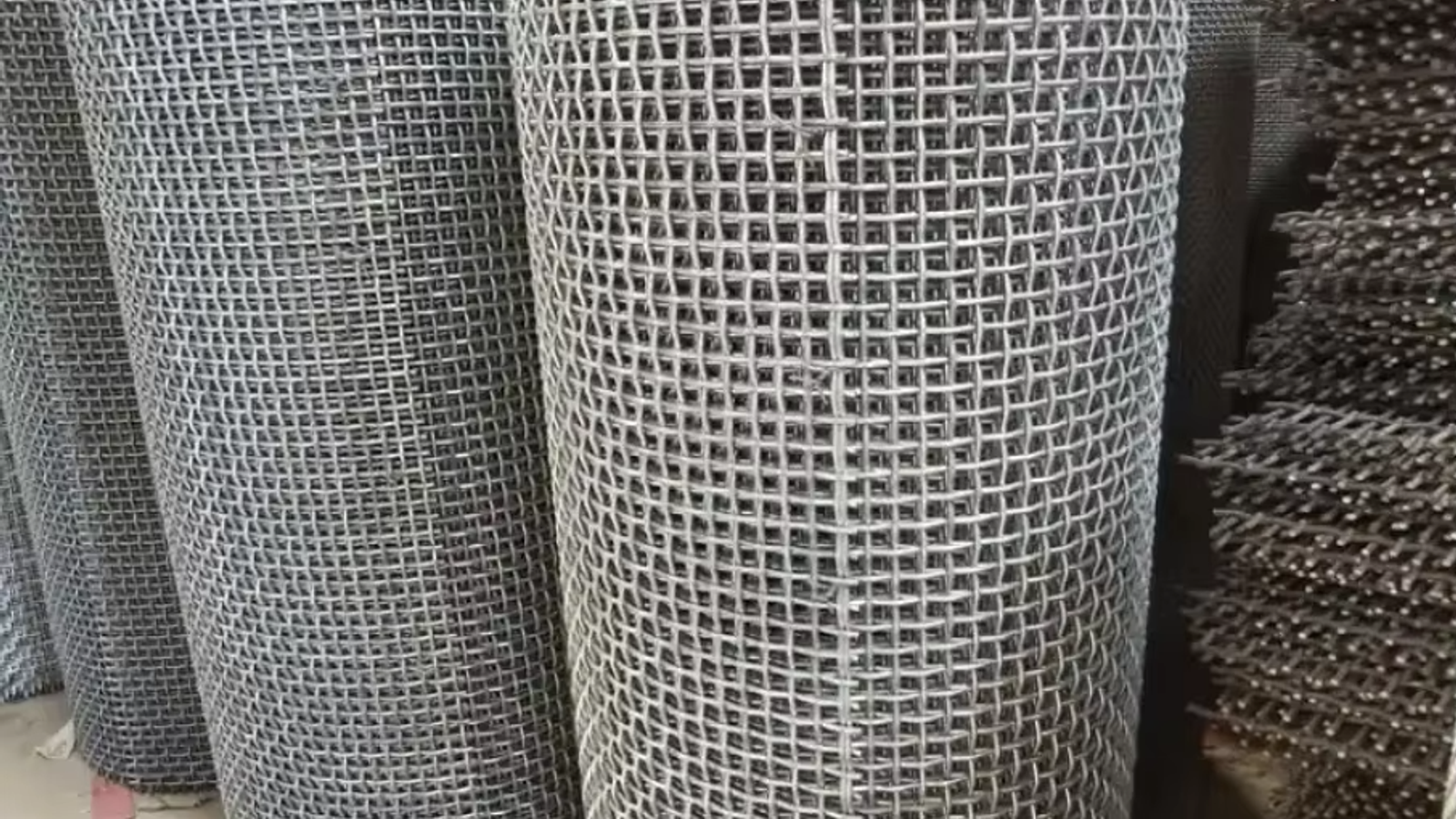
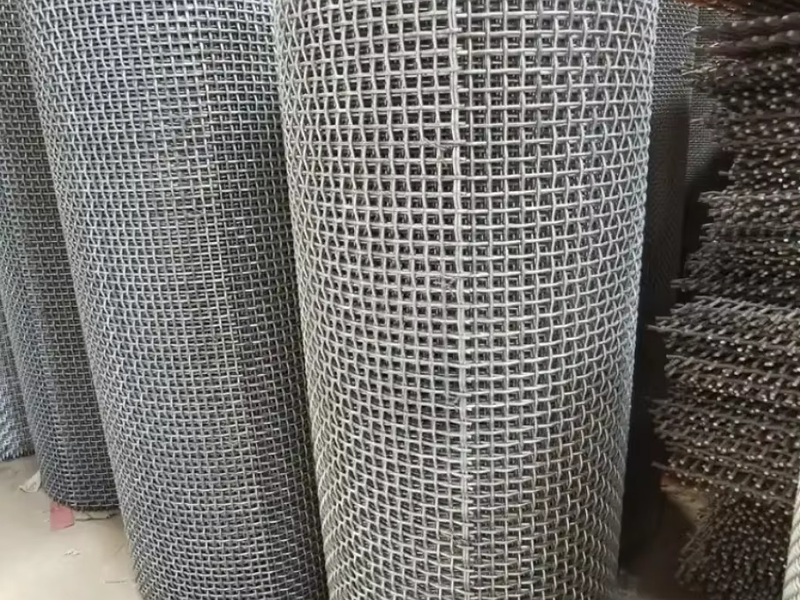
Crimped wire mesh is a woven screening medium in which every wire is pre-formed with corrugations, or crimps, before weaving, so that the warp and weft wires lock together at each intersection instead of simply lying across one another. In double-crimp construction the wires are crimped on both faces of the weave, producing a rigid, self-supporting panel with dimensionally stable apertures. Crimped stainless steel mesh is manufactured across an aperture range of roughly 1 mm to 100 mm (with the most common heavy-duty sizes falling between 3 mm and 50 mm), using wire diameters from about 0.5 mm to 12 mm, and it is the dominant screening medium on vibrating screens in mining, aggregate, coal and recycling plants because the interlocked crimps resist the shifting, vibration and impact that pull plain-woven mesh out of square. If you are new to the terminology used in this article, our wire mesh terminology glossary defines the key terms, and the full specification range is summarized on our crimped woven wire mesh product page.
The mechanical story behind crimped mesh is simple: a plain-woven wire sits on top of a perpendicular wire and can slide or pivot at the crossing point. On a vibrating screen running at 600–2,400 RPM with a stroke amplitude of 2–8 mm and accelerations of 2.5–6 g, those nodes are subjected to tens of millions of load cycles. Plain-woven nodes rotate slightly on each cycle, and over time the apertures "walk" — they grow unevenly, warp out of square, and the panel loses its flatness. On a sizing screen, that aperture drift directly changes the product gradation and can send an entire batch out of spec.
Crimping fixes the node. Each wire is passed through a crimping machine that presses a precise corrugation pattern into it — a crimp pitch that usually matches the wire diameter and a crimp depth of roughly 0.5× to 0.8× the wire diameter. When the pre-crimped warp and weft wires are woven, each wire nests into the mating corrugation of the perpendicular wire. The result is a mechanical interlock at every intersection that prevents rotation and lateral movement, even under heavy, sustained vibration.
Two crimp configurations dominate heavy screening:
Because the crimp locks the node, crimped mesh also resists the "pivot point" wear that occurs on plain weave: the contact area at each node is a formed nest rather than a single tangent point, distributing bearing stress across a larger surface. For panels handling blasted rock and run-of-mine feed, that difference in node design translates directly into fatigue life.
The right question is not "which weave is generally better" but "which weave holds aperture under this screen's vibration and loading." For a light-duty application such as a guard, a filter or a decorative screen, plain weave is cheaper and perfectly adequate. For a heavy-duty screening deck, the plain weave's free-pivoting nodes become a liability. The table below compares the two — plus Dutch weave, which is a filter weave rather than a sizing medium — on the criteria that matter to a screening plant.
| Characteristic | Crimped weave | Plain weave | Dutch weave |
|---|---|---|---|
| Typical aperture range | 1–100 mm | 0.05–10 mm (finer typical) | 5–400 µm (filtration) |
| Wire diameter range | 0.5–12 mm | 0.025–6 mm | 0.03–1.6 mm |
| Aperture stability under vibration | High — interlocked nodes hold size | Low — nodes pivot; aperture drifts | High — but used for filtration; not sizing |
| Open area | 40–70% depending on construction | 30–65% | 10–30% (low) |
| Suitability for heavy-duty screening | Excellent | Poor to fair | Not for screening |
| Blinding tendency | Moderate | Moderate to high | High (fine apertures) |
Dutch weave is a filter cloth, not a sizing screen — it belongs in process filtration, which is why our Dutch weave wire mesh range is built around micron-scale filtration rather than screening panels. Plain weave, by contrast, has its own place in lighter wire mesh duty, as covered on our plain weave wire mesh page. But when the specification calls for a vibrating screen deck separating aggregate or ore at 5–50 mm, crimped construction is the medium selected for the job — the interlock holds the crimped mesh aperture, and the panel stays flat in the screen frame.
Open area is the single most important efficiency number for a sizing screen: it is the percentage of the panel surface through which undersize material can pass. For square mesh it is calculated as:
Open area % = [aperture ÷ (aperture + wire diameter)]² × 100
That formula shows why the ratio of wire diameter to aperture drives both throughput and cost. A heavy wire in a small aperture wastes open area; a too-light wire in a large aperture saves material but risks fatigue failure. Practical constructions sit in a narrow, well-proven band.
| Construction | Aperture (mm) | Wire dia. (mm) | Open area % |
|---|---|---|---|
| Double crimp; fine duty | 3 × 3 | 1.6 | ~42 |
| Double crimp; medium | 10 × 10 | 2.5 | ~59 |
| Double crimp; coarse | 25 × 25 | 5.0 | ~69 |
| Lock crimp; heavy scalping | 50 × 50 | 8.0 | ~74 |
| Lock crimp; extra heavy | 75 × 75 | 10.0 | ~76 |
Two observations from this table. First, crimped mesh keeps open area high even at coarse apertures — a 50 mm lock crimp panel can pass roughly three-quarters of the feed through the deck, which is why a well-specified crimped screen can match the throughput of heavier media at a fraction of the installed weight. Second, open area and wire strength trade off against each other: at a given aperture, the smallest acceptable wire diameter maximizes throughput, while the largest acceptable wire maximizes panel life. A good supplier will show you both numbers on every construction so you can make the trade-off consciously rather than discovering it after the panel fails.
Within the crimped family, choose the crimp type by aperture and wire size. Double crimp wire mesh is the correct choice for the 1–25 mm sizing band. Lock crimp is preferred at apertures above roughly 20 mm, where the wire is heavy enough (4 mm and up) that a positive mechanical lock is required to stop the wires from rotating under impact. For all of these constructions the apertures are held to screening tolerances — typically ±0.5 mm to ±1.0 mm on coarse apertures, which is what makes crimped mesh a gradation tool rather than a crude separator.
Both 304 and 316 are austenitic stainless steels, and both make excellent crimped wire mesh. The choice is driven by the environment the screen operates in:
For extremely abrasive dry service, note that stainless is not always the best wear choice — high-carbon spring steel (such as 65Mn) has superior abrasion resistance for dry aggregate and ore, at the price of corrosion resistance. Many plants run spring steel where abrasion dominates and switch to 304 or 316 where moisture or wash water is present. Because crimped stainless steel mesh is often fabricated into complex panel shapes, edge treatments and hook strips, it is worth discussing both material and form with a manufacturer that can supply custom configurations — our custom stainless steel screen filter parts range covers exactly this kind of made-to-order screening hardware.
A complete crimped mesh specification has four parts, and missing any one of them is the most common reason a panel fails early:
Beyond the four spec points, understand the three classic failure modes and how crimped construction answers them:
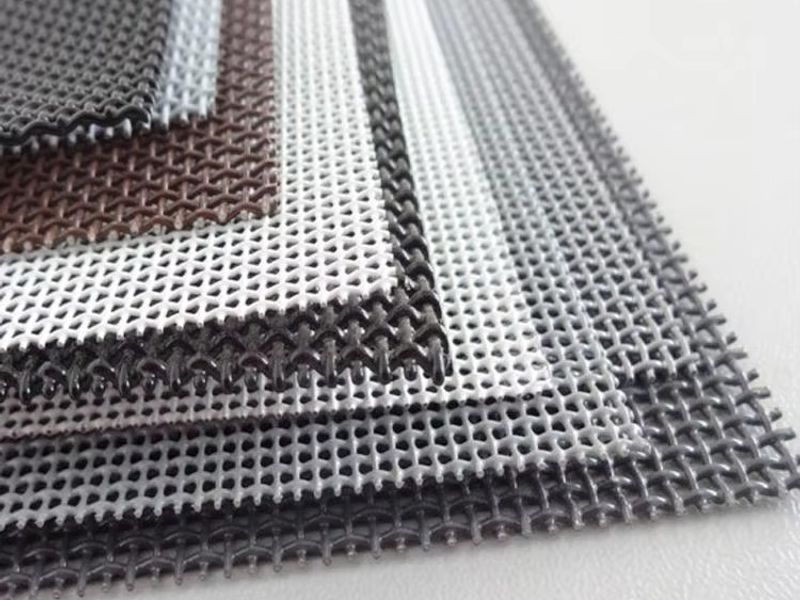
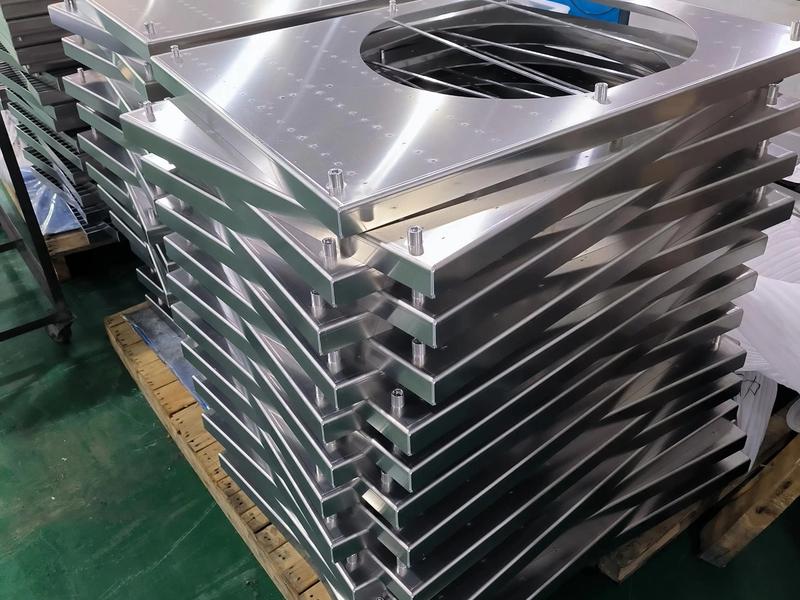
For demanding deck layouts, panels are commonly supplied as custom-welded or edge-stiffened assemblies rather than raw sheets. KAIFIL manufactures crimped mesh panels, hook strips and frame-mounted assemblies to a plant's exact drawing, so the screening surface drops into the deck without field modification — see our custom wire mesh fabricated parts capability for edge treatments, tensioning hardware and structural reinforcements.
Crimped stainless steel mesh is the standard deck medium wherever material must be classified by size on a vibrating screen. In quarries and aggregate plants it sizes crushed stone into commercial fractions — the familiar 5–20 mm, 20–40 mm and 40–80 mm splits are typically cut with double crimp and lock crimp panels, with open areas in the 55–75% range keeping throughput high. In coal preparation it scalps and sizes ROM coal before washing, and in mineral processing it classifies ore feed ahead of crushing and milling. Recycled aggregate, slag, and sand-and-gravel plants use the same panels. The common thread in all of these is the same: vibration, heavy bed loads, and an absolute requirement that the aperture stays where the plant set it, hour after hour. For an overview of the industries and deck types these panels serve, see KAIFIL's mining and aggregate screening applications page.
It is worth being precise about where crimped mesh fits versus other media. Crimped woven mesh is a dry and wet sizing medium — it classifies material by size. Where the job is dewatering or fines recovery on wedge wire profile bars, the correct medium is a wedge wire screen panel, which is a different product family for a different duty. Keep the two separate in your specification: crimped woven mesh for size classification, wedge wire for liquid–solid separation.
What is the difference between double crimp and lock crimp wire mesh? Double crimp wire mesh has wires crimped on both faces at every intersection, giving a flat, symmetric panel best for 1–25 mm apertures. Lock crimp uses deeper, specially formed crimps that positively lock the wires against each other, and is specified for large apertures (typically 20–100 mm) and heavy wire where impact loads would otherwise rotate the wires.
What is the aperture range of crimped wire mesh? Crimped wire mesh is manufactured from roughly 1 mm to 100 mm apertures, with wire diameters from about 0.5 mm to 12 mm. Heavy-duty screening constructions typically fall between 3 mm and 50 mm, with lock crimp used at the top of the range.
Why does crimped mesh hold its aperture under vibration? Because each wire is pre-crimped so that warp and weft wires nest into mating corrugations at every intersection. This mechanical interlock prevents the node rotation and sliding that cause plain-woven apertures to drift, keeping the crimped mesh aperture stable under vibrating-screen accelerations of 2.5–6 g.
What open area can I expect from crimped stainless steel mesh? Depending on the aperture-to-wire-diameter ratio, open area ranges from about 40% for fine double crimp constructions up to roughly 70–75% for coarse lock crimp. At a 25 mm aperture with 5 mm wire, for example, open area is about 69%.
304 or 316 stainless steel — which is better for a vibrating screen deck? 304 is the economical default for dry and most wet screening of aggregate, coal and ore. Choose 316 when the feed is chloride-laden, acidic or saltwater-exposed, since its molybdenum content gives markedly better corrosion resistance in those conditions.
Crimped woven wire mesh earns its place on a heavy-duty screen deck through one mechanism: a mechanical interlock that holds aperture size under vibration and impact, at open areas plain weave cannot match in coarse sizing. If you are specifying a new deck, replacing a failing screen, or trying to lift throughput on an existing plant, send KAIFIL your aperture size, wire diameter, panel dimensions and edge requirements, and we will supply double-crimp or lock-crimp stainless steel mesh manufactured to your exact drawing. Contact KAIFIL today for engineering support and a quote on custom-manufactured crimped wire mesh panels.
Panels / sheets / custom screens for heavy-duty screening and protective mesh, supplied to drawing with material, size and packing details confirmed at RFQ stage.
Square-opening woven wire mesh for screening, support layers and custom fabricated filter parts.
Cut, formed and welded wire mesh parts for custom equipment screens and fabricated filter inserts, supplied to drawing with material, size and packing details confirmed at RFQ stage.
Send drawings, dimensions, material, environment or operating conditions, and we will help confirm the right specification.
Uploaded reference files are included with the inquiry. For larger CAD packages, reply to the confirmation email or send them here:
Our team typically replies within 24 business hours.