Selection Guide
How to Measure and Replace a Y-Type Strainer Filter Element
Learn how to measure a Y-strainer filter element—pipe size, element length, mesh count, micron rating—match the weave and material. Get a quote from KAIFIL.
Learn how to measure a Y-strainer filter element—pipe size, element length, mesh count, micron rating—match the weave and material. Get a quote from KAIFIL.
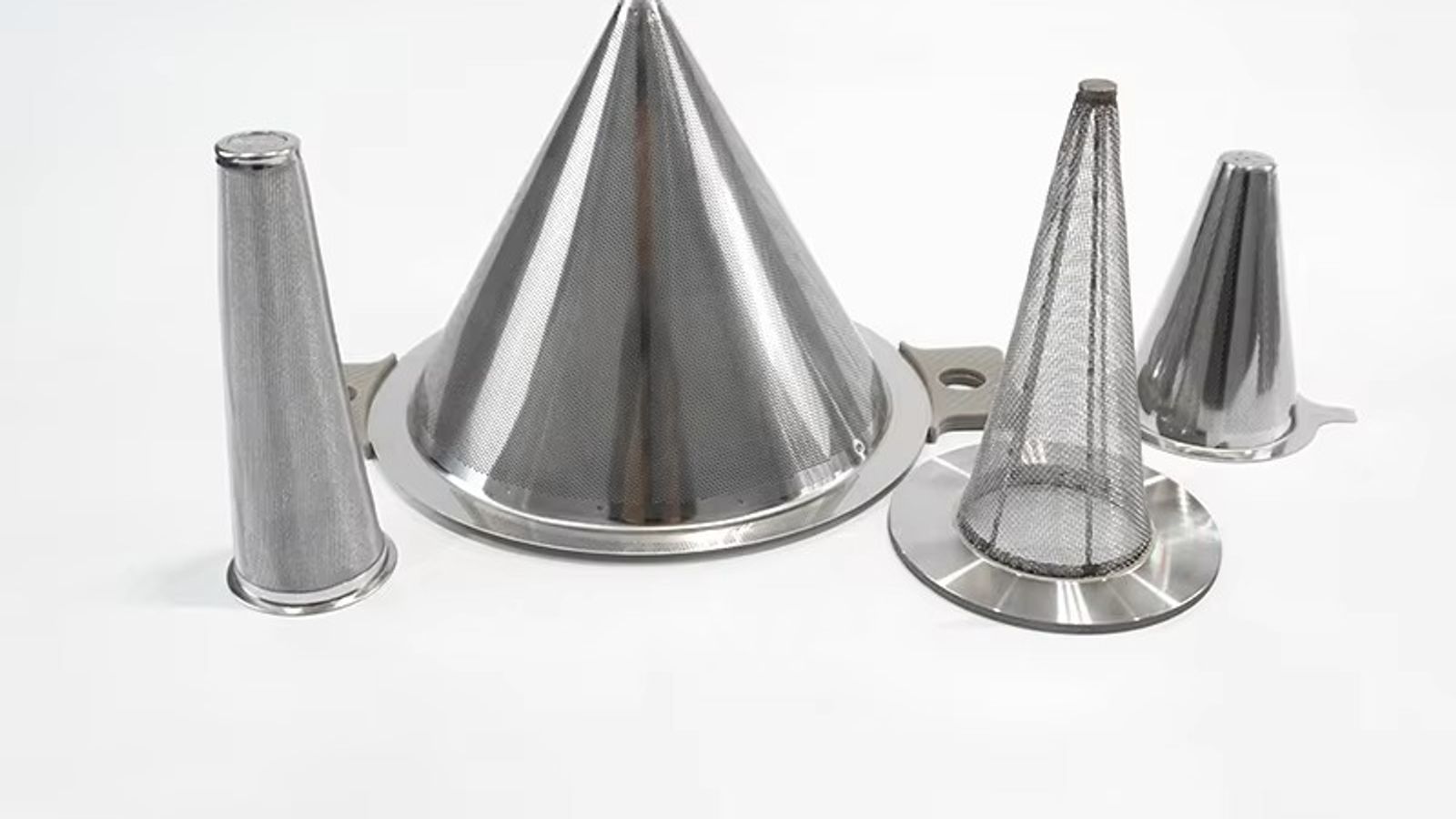
A Y-type strainer is a pipeline filter that removes solid contaminants — pipe scale, weld slag, sand, and process debris — with a removable wire-mesh element, protecting downstream pumps, control valves, flow meters, and nozzles from damage and plugging. The strainer is named for its Y-shaped body: the diagonal branch holds the filter element at an angle to the flow path so the screen can be withdrawn and cleaned without breaking the line. Y-strainers are the most commonly specified in-line strainers in water, steam, and hydrocarbon service, manufactured to ASME pressure classes from Class 150 to Class 600, with stainless steel screens available from coarse 20-mesh (approximately 850 microns) down to 100-mesh (150 microns) and finer. When the original screen corrodes, wears, or is mechanically damaged, the replacement element must match the original in nominal pipe size, element length, mesh count or micron rating, weave pattern, and material grade. A correct match keeps pressure drop low and protects the system for years; a mismatched element is a recurring source of leaks, pressure-drop problems, and premature downstream failures. This guide walks maintenance and procurement engineers through measuring a Y-strainer filter element and selecting a stainless steel replacement that fits and filters correctly.
The Y-strainer element — sometimes called the screen, basket, or strainer cartridge — is a cylindrical assembly that sits inside the strainer's diagonal branch. In a typical design, process fluid enters the inlet nozzle, passes through the screen, and leaves through the outlet nozzle; contaminants are held on the screen surface while clean fluid continues downstream.
A standard element is built from three or four parts:
The mesh layers do the filtering; the perforated core carries the structural load and limits how far the mesh can flex under differential pressure. Because the mesh is the filter medium, its weave and opening size — not the core's perforations — define the Y-strainer's filtration rating. Some elements use two mesh layers: a coarse outer wrap that protects the finer inner mesh from mechanical damage, or a fine inner layer that does the filtering. This is why two Y-strainer screens that look similar can have very different ratings, and why counting the visible weave on the outside is not enough to identify a multilayer element.
A clean Y-strainer element typically provides three to six times the open area of the pipe cross-section, which is why a properly sized screen adds only about 0.1 to 0.5 psi (0.007 to 0.035 bar) of pressure drop in clean service. As debris accumulates, the effective open area shrinks and differential pressure rises. This predictable relationship is the basis of every maintenance check: monitor ΔP, and clean or replace the element when it exceeds the system's budget.
Before ordering a replacement Y-strainer filter element, record the measurements that define the part. If the element is still installed, the strainer body itself will give you some of these values.
The strainer body is specified by its nominal pipe size (NPS in inches, DN in millimeters), usually cast or stamped on the body together with the pressure class and material grade. In most ranges:
The connection type does not change the element's filtration rating, but it does affect element geometry: a threaded strainer's element is usually smaller than a flanged strainer's element at the same nominal size, so do not assume the element from a 2" flanged strainer fits a 2" threaded strainer.
The element must slide fully into the strainer branch and seat against the cover. Measure:
Use digital calipers for diameters and a steel rule or depth gauge for length, and record readings to the nearest 0.5 mm (0.02 in). If the old element is damaged or deformed, take the measurements from the strainer branch instead and compare against the manufacturer's datasheet when one is available.
The filtration rating is defined by the mesh weave, not the body. Inspect the mesh under magnification or use a mesh gauge to count openings per linear inch. A rating stamped on the element ("100 mesh", "250 micron", or "SS304 60×60") is useful but should be verified, because elements are sometimes relabeled during service life or fitted with a different screen than the body label suggests.
Identify whether the mesh is plain weave, twill weave, or Dutch weave, and confirm the grade of stainless steel. A wrong weave at the right mesh count will filter differently; a wrong material grade can corrode in service. These points are covered in the mesh and material sections below.
| Measurement | Where to measure | Tool | Notes |
|---|---|---|---|
| Nominal pipe size | Strainer body casting | Tape / body stamp | NPS or DN; matches piping spec |
| Connection type | Body ends | Visual | Threaded; flanged; socket/butt weld |
| Element overall length | End cap to seal face | Calipers / depth gauge | Governs fit in branch |
| Mesh wrap length | Seam to seam of mesh | Steel rule | Filtering portion only |
| Element outside diameter | Across mesh wrap | Calipers | Compare to branch bore |
| Mesh count | Mesh surface | Mesh gauge / magnifier | Openings per linear inch |
| Micron rating | Mesh or body stamping | Manufacturer data | Convert mesh to micron |
| Weave pattern | Mesh surface | Magnifier | Plain; twill; or Dutch |
| Material grade | Stamping / spark test | Visual | SS304 vs SS316/316L |
Mesh count is the number of openings per linear inch. Micron rating is the approximate largest particle that passes through the opening, in micrometers. The two are related, but the conversion depends on wire diameter as well as opening count, so always confirm the micron rating rather than assuming a mesh number equals a fixed micron value.
For a Y-type strainer replacement, the mesh must match the original specification unless the system's filtration requirement has changed. Common selections:
| Mesh count | Approx. opening (micron) | Typical service |
|---|---|---|
| 20 mesh | 850 µm | Coarse debris; sand; weld slag |
| 40 mesh | 400 µm | General water and cooling service |
| 60 mesh | 250 µm | Fine particulate protection |
| 80 mesh | 180 µm | Tighter equipment protection |
| 100 mesh | 150 µm | Nozzle and small-orifice protection |
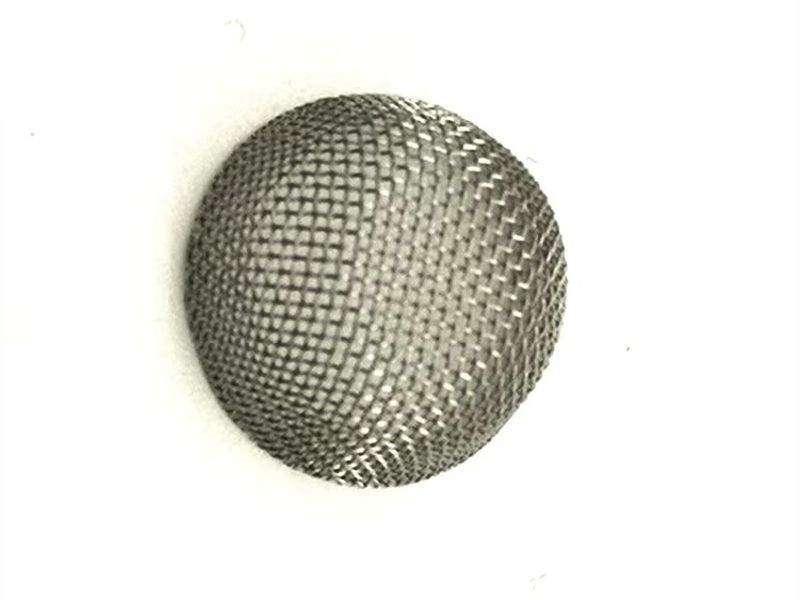
For filtration finer than about 100 mesh, a standard square-mesh screen becomes fragile and pressure drop rises sharply. Dutch weave — a dense pattern in which the openings are small and the weave interlocks tightly — is the standard choice for finer Y-strainer duty and for services where the screen must hold its shape under high differential pressure. KAIFIL supplies both plain weave wire mesh and Dutch weave wire mesh, so a replacement element can be built with exactly the weave the system needs.
The rule for Y strainer mesh size selection is simple: use the finest screen the system's pressure-drop budget allows, and never go finer than the original unless a process engineer has verified the pump can deliver the extra head. Going finer than necessary invites rapid blinding and frequent cleaning; going coarser lets damaging particles through to the equipment the strainer protects.
The replacement element's material grade should match or upgrade the original — never downgrade. Stainless steel Y strainer screens are almost always SS304 or SS316/316L, and the choice mirrors the strainer body and the piping system.
SS304 is the economical general-purpose grade. It handles clean water, air, steam, and mildly corrosive process streams, and offers good oxidation resistance at high temperature; the wire itself is usable in continuous service to roughly 800–870°C depending on atmosphere. For most water and utility services, SS304 is sufficient.
SS316 and SS316L add molybdenum, which materially improves resistance to chlorides and pitting. This grade is the standard recommendation for brackish or seawater service, chemical plants, food and pharmaceutical lines, and any system where the strainer body or pipework is already 316. In oil, gas, and petrochemical service, where a strainer often protects a pump or control valve around the clock and the process stream may be sour or chloride-bearing, 316L is the safe default.
A practical rule: the replacement element should be at least as corrosion-resistant as the body. A 316 body fitted with an SS304 screen is a weak point that will corrode first, and in chloride service that means a premature failure in the exact component you replaced.
Seal materials matter as much as the metal. The element's gasket or O-ring must survive the fluid and the maximum temperature: Buna-N (NBR) suits water, oil, and air to about 100°C; Viton (FKM) handles higher temperatures and many chemicals; EPDM resists water, steam, and some chemicals but not oils; PTFE resists nearly everything but is stiffer and needs careful installation. When you order a replacement element, specify the gasket material explicitly rather than accepting a generic one.
| Property | SS304 | SS316 / 316L |
|---|---|---|
| Molybdenum content | None | 2–3% (added) |
| Chloride / pitting resistance | Moderate | Excellent |
| Typical services | Water; air; steam; general | Seawater; chemical; food; pharma |
| Relative cost | Lower | Higher |
| Common body match | SS304 strainer bodies | SS316 / 316L bodies |
| Maximum continuous wire temperature | ~870°C | ~870°C |
A new element is only as good as its installation. The most common failure after a Y-type strainer replacement is a leak at the cover or cap, caused by a misaligned element, a reused or wrong gasket, or uneven bolt torque.
Follow this sequence:
After start-up, record the clean differential pressure as the new baseline. In most installations a healthy clean Y-strainer shows less than 0.5 psi (0.03 bar) across the element. Maintenance practice is to inspect or clean when ΔP rises about 5 to 10 psi (0.35 to 0.7 bar) above that clean baseline, or when the manufacturer's stated maximum — often 20 to 30 psi (1.4 to 2.1 bar) for standard screens — is approached. If the strainer has a blowdown valve, purge it before removing the cover; in hydrocarbon or hazardous service, verify the line is fully isolated before opening.
Woven mesh elements are designed to be cleaned and reused, but cleaning has a limit. The decision is straightforward once you know what to look at.
Clean the element when the weave is intact and the blockage is loose particulate. Back-flushing with the flow reversed, soaking in a suitable solvent, or low-pressure washing with water or air is usually enough to restore the open area, and the clean element can go back in with a fresh gasket.
Replace the element when:
| Condition | Clean and reuse | Replace |
|---|---|---|
| Loose surface debris | ✓ | |
| Torn or broken mesh wires | ✓ | |
| Collapsed or dented core | ✓ | |
| Corrosion or pitting | ✓ | |
| Embedded; non-removable particles | ✓ | |
| Failed welds or end cap | ✓ | |
| ΔP does not return to baseline after cleaning | ✓ | |
| Gasket hardened or damaged | Replace gasket |
How do I identify the micron rating of my Y-strainer screen? Look for a stamp on the element or strainer body giving a mesh count or micron value (for example, "100 mesh" or "150 µm"). If nothing is stamped, count openings per linear inch with a mesh gauge and confirm the weave pattern. If you are unsure, KAIFIL can identify the weave and micron rating from a photo and a few measurements.
What is the difference between mesh and micron? Mesh is the number of openings per linear inch; micron is the approximate opening size in micrometers. Because opening size also depends on wire diameter, the same mesh number can have slightly different micron ratings across weaves. Always specify the micron rating when ordering a replacement.
Can I install a finer mesh in my Y-strainer? Only if the pump can supply the extra pressure drop. A finer screen catches more but loads faster and raises ΔP. Match the original rating unless a process engineer has verified the new rating against the system's pressure budget.
How often should I replace the Y-strainer element? There is no fixed calendar interval. Replace when ΔP rises 5–10 psi above the clean baseline and cleaning no longer restores it, or when inspection shows torn mesh, a collapsed core, or corrosion. Many plants inspect elements at scheduled maintenance windows and replace on condition.
SS304 or SS316 for my replacement screen? Use SS316/316L for chloride, seawater, chemical, or food service, and whenever the strainer body is 316. Use SS304 for clean water, air, steam, and general utility service. Never downgrade the material below the original element.
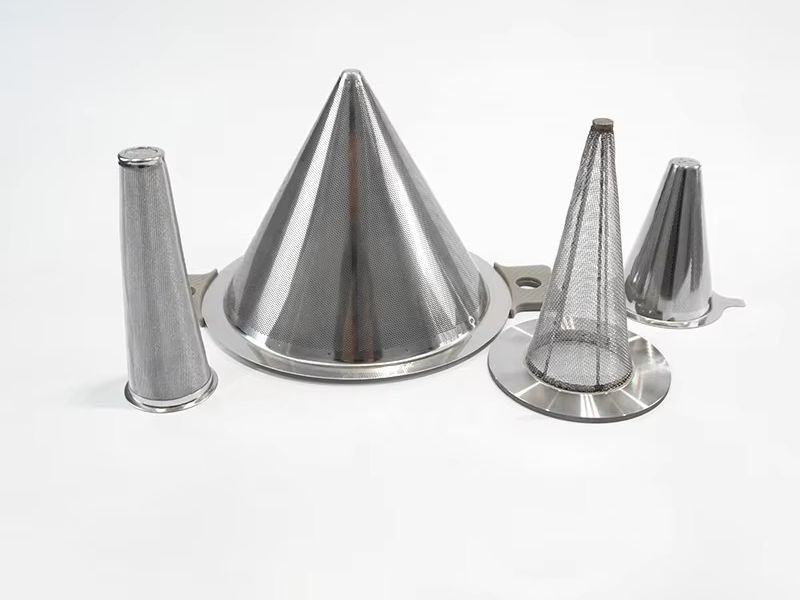
Matching a Y-type strainer replacement does not have to mean buying an OEM element at OEM prices. KAIFIL manufactures stainless steel Y strainer screens and complete filter elements to the customer's measurements — element length, diameter, mesh count or micron rating, weave, and material grade — for strainers of any brand, in sizes from NPS 1/2" to 24" and above. Our stainless steel filter components page shows the range of custom-built screens, baskets, and elements we produce, and our custom wire mesh fabricated parts capability covers one-off and production quantities with full traceability of mesh and material. If you are replacing an imported cartridge rather than a Y-strainer screen, our guide to replacing imported filter cartridges walks through the same measurement-first approach for cartridge-type filters. And for temporary start-up filtration — catching construction debris for the first weeks of operation rather than protecting in line for years — see our conical strainer product range.
For a replacement Y strainer filter that fits and filters exactly, send KAIFIL the four data points from this guide — nominal pipe size, element length, mesh count or micron rating, and material grade — together with a photo of the original element. We will confirm the weave and provide a quotation with drawing approval before manufacturing. Contact KAIFIL for engineering support, gasket and seal options, and samples; we ship strainer elements worldwide from our Shijiazhuang plant, and our engineers will work with your team to verify every dimension before production.
Temporary cone strainers and startup screens made to pipeline size, flange fit and debris load.
Cut, formed and welded wire mesh parts for custom equipment screens and fabricated filter inserts, supplied to drawing with material, size and packing details confirmed at RFQ stage.
Custom components / inserts / strainers for replacement filter parts and oem stainless assemblies, supplied to drawing with material, size and packing details confirmed at RFQ stage.
Send drawings, dimensions, material, environment or operating conditions, and we will help confirm the right specification.
Uploaded reference files are included with the inquiry. For larger CAD packages, reply to the confirmation email or send them here:
Our team typically replies within 24 business hours.