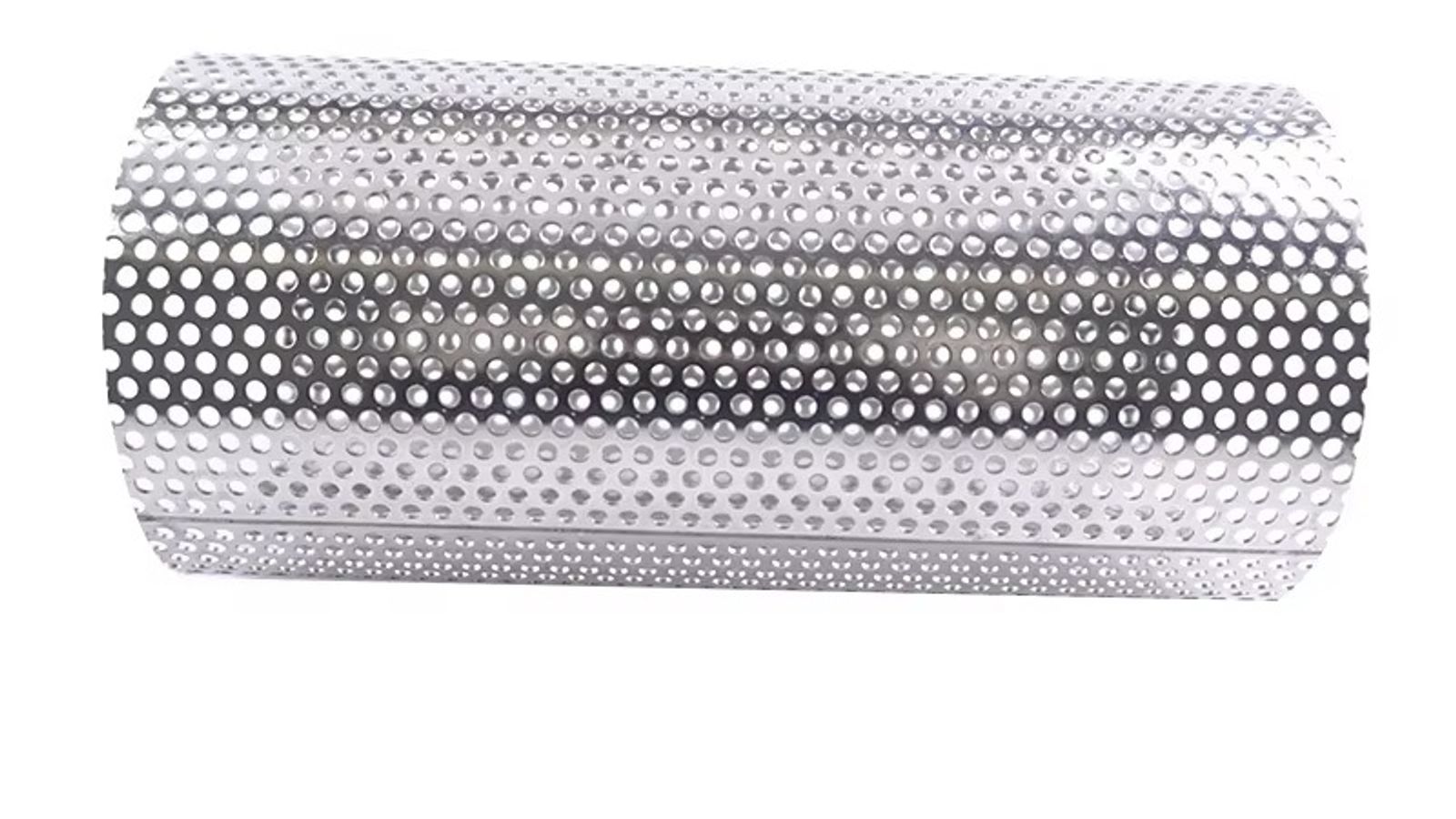
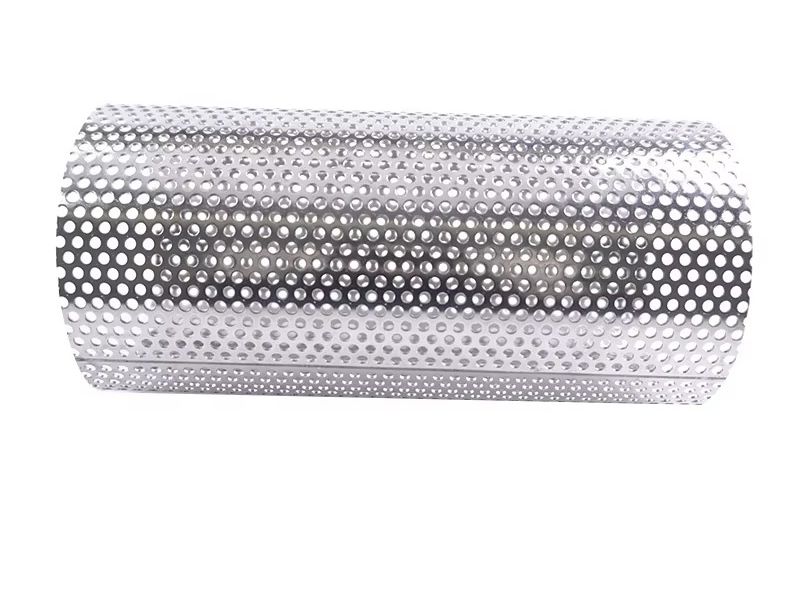
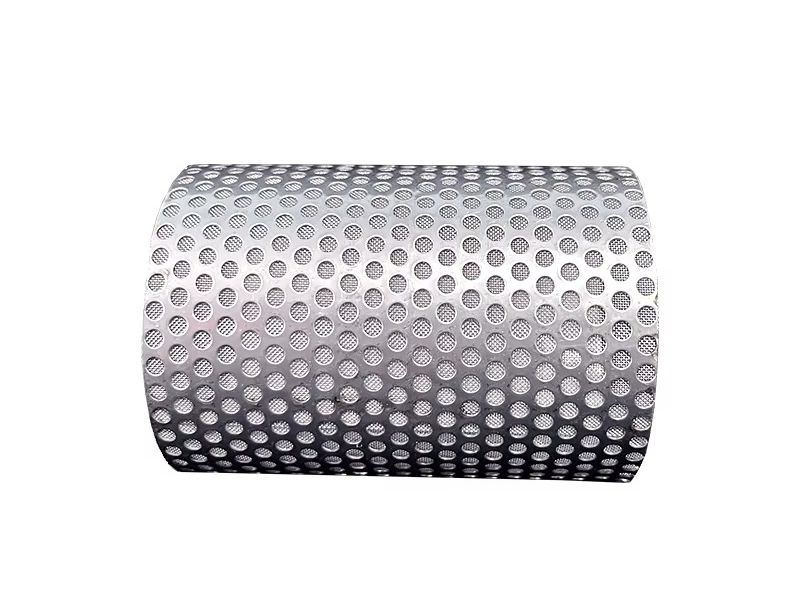
Stainless steel filter tubes and cylinders are rigid, cylindrical filtration elements built around a perforated metal tube core that is wrapped and welded with woven wire mesh — or produced as a sintered mesh or double-layer composite — to form a durable, cleanable filter wall. They serve as pre-filters, support cores, distributor tubes and in-line strainers in water treatment, chemical processing, food and beverage, and oil and gas systems. Most OEM projects require some degree of customization: typical filtration ratings range from 1 to 500 µm, standard materials are SS304 and SS316L (duplex available on request), wall thicknesses commonly run from 0.8 to 3.0 mm for the support core, and achievable open areas range from 20% to 60%. This guide walks through the entire custom-order process — from the drawing submission package, DFM review, material and construction selection, through welding, QC, certificates, and delivery — so you can order with confidence.
Custom vs. Off-the-Shelf: When to Go Custom
If you only need a standard diameter and length, off-the-shelf filter tubes are faster and cheaper. But as soon as your design has a non-standard OD, a specific open area, a unique end fitting (thread, flange, tri-clamp), or a filtration rating that stock parts don't cover, custom manufacturing becomes the practical route.
Custom tubes and cylinders make sense when you need:
- Exact dimensions — diameter, length, wall thickness matched to an existing housing or vessel.
- Specific filtration ratings — your process liquid, gas, or slurry dictates the micron rating, not the catalog.
- Mechanical strength — pressure and backwash loads require a thicker perforated core and denser weld pattern.
- End connections — threaded ends, flanges, caps, or compression fittings that off-the-shelf parts don't offer.
- Material compliance — food-grade, pharmaceutical, or corrosive service requiring 316L with full traceability.
The good news is that custom does not mean slow or expensive if you provide a complete drawing package. A well-prepared inquiry can be reviewed, quoted, and tooled in a matter of days. See our custom wire mesh fabricated parts page for an overview of what a fabricator can produce beyond standard catalog items.
The Drawing Submission Package: What to Send
The single biggest factor in quote speed and first-pass quality is the drawing package. You don't need perfect manufacturing drawings — but the more complete your package, the fewer questions and revisions.
A Complete Package Includes
- 2D drawing (PDF/DWG) with overall OD, ID, and length dimensions.
- 3D model (STEP/IGES) where available — helpful for complex end fittings and weld details.
- Material specification — grade, and whether a material certificate (EN 10204 3.1) is required.
- Mesh specification — weave type (plain, twill), wire diameter, mesh count, or target micron rating.
- Open area requirement — if the filtration performance depends on it.
- Operating conditions — pressure, temperature, flow rate, media, and cleaning method (backwash, chemical, ultrasonic).
- Quantity and target lead time.
Tolerances and GD&T
Even simple cylinders benefit from explicit tolerances. State what matters:
- OD and ID tolerances — typically ±0.1 mm for the machined ends; ±0.3–0.5 mm on the body is normal for welded construction.
- Concentricity and roundness — important when the tube mounts into a housing or mates with seals.
- Length tolerance — usually ±1 mm unless the part seals against a face.
- Surface finish — specify Ra where hygiene or low friction matters (food and pharma often require ≤0.8 µm on the ends).
You don't need formal GD&T symbols on every feature, but a callout like "OD Ø50 +0.0/−0.1, concentric within 0.15" beats a note that says "tight fit." If you already have manufacturing drawings, send them as-is; most fabricators — including KAIFIL — will do a design-for-manufacturability (DFM) pass and red-line anything that is impractical to weld or cut. Our custom stainless steel screen filter parts page shows the range of geometries a fabricator can handle from a drawing.
DFM Review: What the Manufacturer Checks Before Quoting
A DFM review is the manufacturer's pass over your drawing to catch issues before any metal is cut. Expect the review to look at:
- Mesh-to-core fit — whether the chosen weave lays flat against the perforated core without wrinkles at the required OD.
- Weld locations — seam weld position, spot-weld pitch, and whether end caps can be welded without distorting the mesh.
- Achievable tolerances — flagging dimensions that are too tight for welded construction and suggesting looser values.
- Open area vs. strength trade-off — pointing out where a larger open area weakens the core or reduces the filtration rating.
- Material and finish compatibility — e.g., whether 304 is acceptable or 316L is required for the operating environment.
For a truly complex geometry, the DFM review may also cover assembly sequence — for example, when a custom filter cartridge manufacturer approach is involved. The goal of DFM is a drawing that is both functional and buildable at a predictable cost and lead time.
Material Selection: 304, 316L, and Duplex
Material choice drives corrosion resistance, temperature rating, cost, and certification requirements.
SS304
- Best for: general water filtration, clean fluids, dry media, low-corrosion environments.
- Advantages: lower cost, good weldability, widely stocked.
- Limits: pitting and crevice corrosion in chloride-rich or acidic media.
SS316L
- Best for: chemical process, food and beverage, pharmaceutical, marine, and any chloride exposure.
- Advantages: molybdenum addition gives markedly better pitting and stress-corrosion resistance; L-grade (low carbon) improves weldability and avoids sensitization at the heat-affected zone.
- The default for most custom filter tubes where the application involves water, chemicals, or washdown.
Duplex (e.g., 2205)
- Best for: high-chloride, high-temperature, and high-pressure services — offshore, brine, and aggressive chemical duty.
- Advantages: roughly double the yield strength of 316L plus superior stress-corrosion cracking resistance.
- Cost and availability: higher cost and longer lead times; specify only when the service justifies it.
For elevated-temperature service, material selection is even more critical — the permissible operating temperature and the creep/oxidation behavior differ significantly between grades. See our guide on high temperature stainless steel filter tube materials before finalizing a grade for hot-gas or hot-liquid duty.
Construction Types: How Custom Tubes and Cylinders Are Built
The construction determines strength, filtration performance, and cleanability. Four common constructions cover most custom filter tube and cylinder projects.
1. Single-Layer Mesh Wrap on Perforated Core
A woven wire mesh is wrapped around a perforated metal tube and fixed at the seam, typically by TIG spot-welding along the longitudinal seam and at the ends. The perforated core provides the mechanical strength; the mesh provides the filtration. This is the workhorse construction for pre-filters and support cores.
2. Double-Layer Composite
A fine outer mesh is backed by a coarse inner mesh over the perforated core. The two layers are welded together or to the core at discrete points. The composite construction gives a finer effective filtration rating with higher dirt-holding capacity and better resistance to local damage, because the coarse layer protects the fine layer from abrasion and puncture.
3. Fully Welded Mesh Cylinder (Mesh-Only)
For applications where the pressure drop of a perforated core is undesirable, the mesh itself is rolled into a cylinder and seam-welded, with end caps welded on. This gives maximum open area and minimum flow resistance at the expense of structural rigidity — suitable for low-pressure, low-differential service.
4. Assemblies with End Fittings
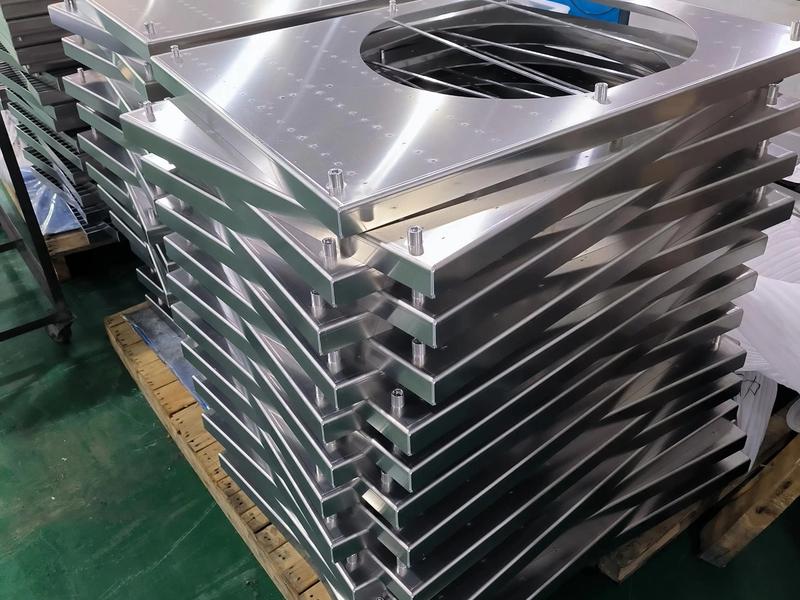
Many custom parts are more than a bare cylinder: threaded ends, flanges, tri-clamp ferrules, flat or domed caps, and spring-loaded end seals are welded or machined onto the body. End-fitting selection is usually driven by the housing interface and by sealing requirements.
Our stainless steel perforated filter tubes and perforated metal filter cylinders pages show representative single-layer and core-based cylinder products.
Comparison: Single-Layer vs. Double-Layer vs. Fully Welded Mesh Tube
| Construction | Mesh layers | Filtration range | Strength | Typical use |
|---|
| Single-layer mesh wrap on perforated core | 1 | 25–500 µm | High | Pre-filters; support cores; distributor tubes |
| Double-layer composite on perforated core | 2 (fine over coarse) | 1–100 µm | High | In-line strainers; final filtration; high dirt-holding |
| Fully welded mesh cylinder (no core) | 1–2 | 5–300 µm (weave-dependent) | Moderate | Low-pressure-drop strainers; chemical basket elements |
Open Area and Flow Design
Open area is the ratio of open aperture to total surface area, and it directly controls pressure drop and flow capacity. On a mesh-wrapped tube, open area is set by the perforation pattern of the core and the mesh aperture.
- Core perforation — hole size, pitch, and staggered vs. straight rows determine the core's contribution. A typical pattern achieves 30–50% open area.
- Mesh contribution — open area of the weave (mesh count and wire diameter) usually exceeds the core's, so the core is the limiting factor.
- Combined effective open area — for a mesh-wrapped core, the effective open area is roughly the product of the two, which is why designs targeting 40%+ overall open area need a highly open core.
If pressure drop and dirt-holding are your design drivers, sizing the perforation pattern correctly is the most important early decision — get the details in our filter tube support core open area design guide.
Welding and Quality Control
Welding is where filter tubes are won or lost. The seam weld must be continuous enough to prevent bypass, but not so heavy that it distorts the mesh or reduces local open area. Key QC checkpoints on custom work:
- Weld inspection — visual and, where specified, dye-penetrant or helium leak testing on the seam and end caps.
- Dimensional verification — OD, length, concentricity, and end-face squareness checked against the drawing.
- Mesh integrity — no tears, wrinkles, or burns in the filtration layer after welding.
- Surface finish and passivation — for 316L in food or pharma service, pickling/passivation restores the corrosion-resistant oxide layer.
- Hydraulic or airflow testing — a bubble-point or flow test confirms the filtration rating when the application demands it.
A rigorous QA process matters most for welded assemblies, because weld defects are the number-one cause of premature filter failure. Our welded wire mesh filter assembly quality control article explains the inspection steps and test methods in more depth.
Certificates and Documentation
Depending on your industry, you may need formal documentation:
- EN 10204 3.1 certificate — a mill test certificate stating that the material conforms to the specified grade, with chemical composition and mechanical properties. This is effectively standard for 316L in chemical, food, and oil & gas work.
- Material test reports (MTRs) — traceability back to the raw coil or plate lot.
- Compliance certificates — FDA/CFR or EU 1935/2004 for food-contact parts, ATEX notes for some process duties, and pressure-equipment documentation where applicable.
- Inspection reports — dimensional, weld, and pressure-test records.
If you are not sure which certificates your project requires, specify the application and your QA team's expectations; a capable manufacturer will advise. Our EN 10204 3.1 material certificate guide explains what the certificate covers and how to verify it.
MOQ and Lead Time Expectations
Custom fabrication runs on machine setup time, so realistic expectations help:
- MOQ — typically 5–20 pieces for custom tubes and cylinders, though single-piece prototypes are often quoted at a higher unit price. For standard diameters and lengths in stock mesh, smaller MOQs are possible.
- Lead time — prototypes and small batches usually ship in 2–3 weeks; production runs of hundreds of pieces typically run 3–5 weeks depending on welding, finishing, and certificate turnaround.
- What extends lead time — exotic mesh weaves, duplex material procurement, special end fittings that must be machined, and third-party inspection or certification.
Ask for a written lead time with the quote, and confirm which steps are on the critical path.
Real Applications: Where Custom Filter Tubes and Cylinders Earn Their Place
Water Treatment Intake and Distribution
In municipal and industrial water systems, filter tubes serve as intake screens, distributor tubes for media filters, and support cores for underdrain systems. Corrosion resistance and mechanical strength under backwash cycles are the priorities — which is why the water-treatment category is a core use case for welded filter cylinders and water treatment well screens.
Chemical Process
In chemical plants, filter tubes protect pumps, valves, and instruments as in-line strainers, and act as catalyst-support screens and process pre-filters. Chemical resistance and full material traceability drive the specification, with 316L and higher alloys common.
Food & Beverage
Sanitary filter tubes in breweries, dairies, and beverage lines see daily hot-CIP cleaning, so smooth finishes, 316L, and drainable end fittings matter. The fully welded, crevice-free construction prevents bacterial harborage between cleaning cycles.
Oil & Gas
Produced-water filtration, pipeline strainers, and well screens rely on high-strength cylinders that resist pressure surges, abrasion, and sour-service conditions. Here the mechanical design — core thickness, weld schedule, and end connections — is as important as the micron rating.
FAQ
What is the difference between a filter tube and a filter cartridge? A filter tube is a reusable, cleanable metal element built on a perforated core with a welded mesh or sintered wall, installed inside a housing or vessel. A pleated filter cartridge is typically a disposable, folded-media element (cellulose, polypropylene, or glass fiber) with a plastic or metal core. If your design calls for metal and cleanability, a filter tube or cylinder is the right family of products.
What micron ratings are available for custom filter tubes? Custom stainless steel filter tubes can be built from roughly 1 µm (sintered or fine double-layer mesh) up to 500 µm and coarser (open plain-weave meshes). The achievable rating depends on the weave and construction type you select.
Can you make a one-piece prototype from my drawing? Yes. Most custom manufacturers quote prototypes at a higher unit price with a 2–3 week lead time, then drop the unit price for production quantities once the design is validated.
What end fittings can be added to a filter tube or cylinder? Common options include threaded ends (NPT, BSP), flanges, tri-clamp ferrules, flat or domed end caps, compression fittings, and spring-loaded sealing ends. The fitting is typically welded or machined in the same fabrication run.
How do I know whether I need SS304 or SS316L? For clean, low-chloride water service, SS304 is usually sufficient. For chemical exposure, chloride-bearing water, food or pharma duty, or any washdown environment, SS316L is the safer default. If the service is high-temperature, high-chloride, or high-pressure, duplex may be warranted.
Get a Free DFM Review and Quote
The fastest way to start a custom filter tube or cylinder project is to send your drawing — PDF, DWG, or STEP — along with your target filtration rating, operating conditions, and quantity. You'll get a DFM review that flags any buildability issues, a material and construction recommendation, and a firm quote with lead time. Send us your drawing for a free DFM review and quote at https://www.kaifil.com/contact/.