Selection Guide
Multi-Layer Extruder Screen Pack: 3-Layer vs 5-Layer Guide
How to configure multi-layer extruder screen packs: 3-layer vs 4-layer vs 5-layer, each layer's job, pressure drop, service life. Get a quote from KAIFIL.
How to configure multi-layer extruder screen packs: 3-layer vs 4-layer vs 5-layer, each layer's job, pressure drop, service life. Get a quote from KAIFIL.
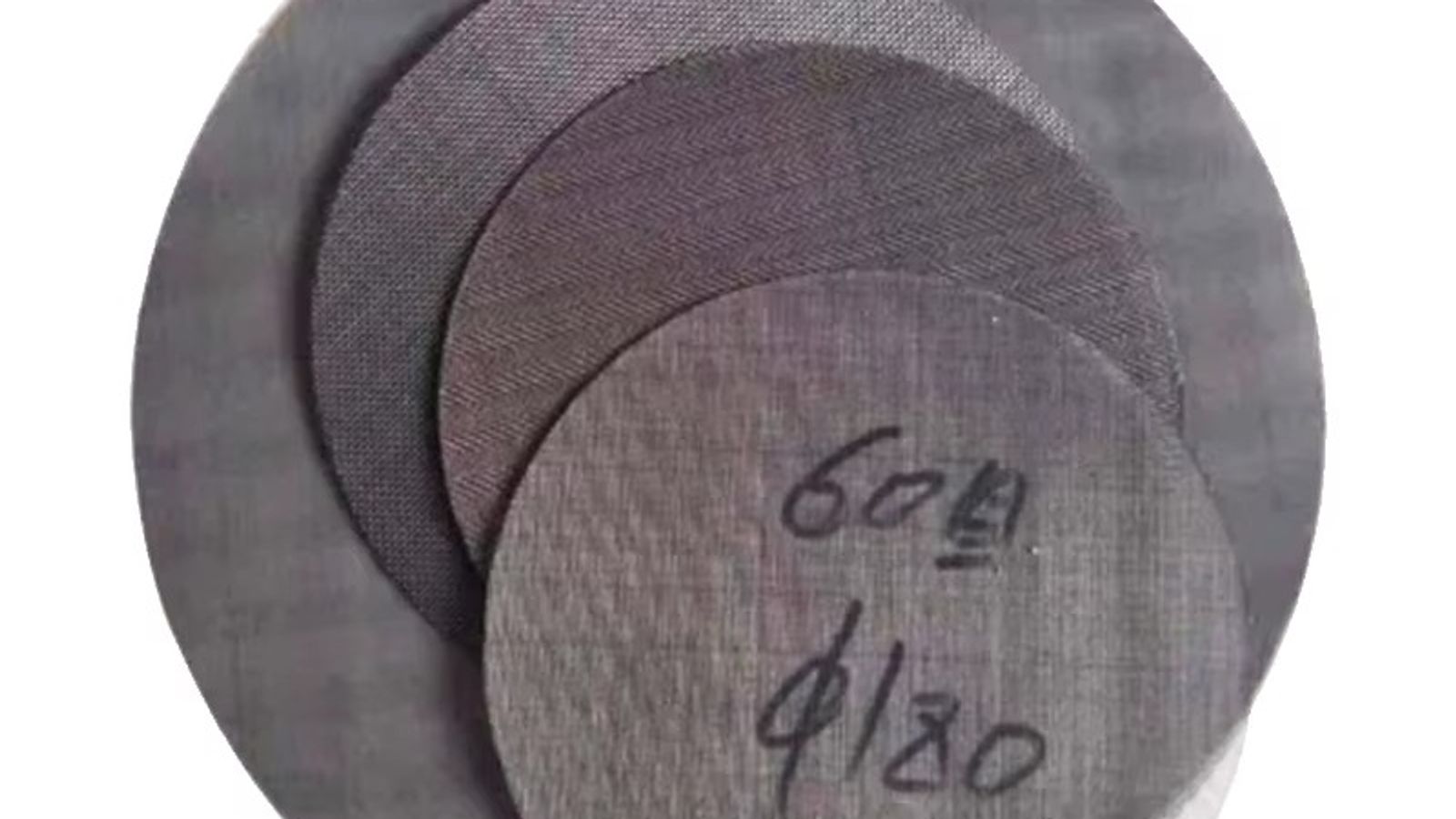
A multi-layer extruder screen pack is a stack of circular stainless steel wire mesh discs loaded against the breaker plate that filters molten polymer as it flows from the extruder screw toward the die. In a standard stack the upstream layer is coarse and sacrificial, the middle layer is fine and sets the effective micron rating, and the downstream layer is a coarse support that stops the fine mesh from ballooning or bursting under melt pressure. Most extrusion lines run packs rated between 20 and 500 microns at operating pressures of 100 to 350 bar (1,450 to 5,080 psi), and processors typically change the pack when the pressure differential across it climbs 50 to 80 bar above the clean baseline. Choosing how many layers to run — three, four, or five — is a structural decision that sets filtration quality, pressure drop, and the cost of every screen change.
A screen pack sits in a screen holder or slide-plate screen changer immediately upstream of the breaker plate. The breaker plate is a thick steel disc drilled with a pattern of holes, typically 3 to 10 mm in diameter, that supports the mesh stack and spreads melt flow evenly across the full filter area. Molten polymer at 180 to 300 °C for most thermoplastics (up to roughly 400 °C for engineering resins) is pushed through the stack at pressures of 100 to 350 bar. Each disc is a woven stainless steel fabric; the square openings between warp and weft wires form the filtration channels.
The quantity that matters is the pressure differential (ΔP) across the stack, not the machine's absolute head pressure. A clean three-layer pack contributes a baseline ΔP of roughly 5 to 30 bar depending on mesh fineness and open area. As contaminants build against the fine layer, the ΔP rises; operators change the pack when the rise crosses the threshold they have set, commonly 50 to 80 bar above the clean baseline, or about 25 to 40 percent of the extruder's rated head pressure. If a pack is left in service past that point, the fine mesh can collapse or blow out, or the screw can stall on back pressure — so the layer count is designed to keep that threshold predictable. KAIFIL builds multi-layer extruder screen packs in exact layer stacks to match the machine and the feed.
The three functional roles — sacrifice, filtration, support — exist in every pack regardless of total layer count. Adding layers adds extra sacrificial or intermediate stages; it does not change the jobs that must be done.
The first layer the melt meets is the sacrificial layer, typically 16 to 40 mesh, retaining particles above roughly 400 to 1,200 microns. Its job is to stop the big, hard contaminants — metal fragments from regrind, carbonized polymer skins, agglomerated pigment — before they reach the fine layer. Because it sits upstream, it blinds first and is deliberately treated as disposable. Blinding a cheap coarse disc preserves the expensive fine disc and keeps the pack's effective rating unchanged for longer.
The fine layer sets the pack's micron rating. In most applications this is 40 to 200 mesh, retaining approximately 20 to 400 microns. Film, fiber, and masterbatch lines typically use 120 to 200 mesh (about 70 to 120 microns retention), while pipe, sheet, and profile lines run coarser 40 to 100 mesh. This layer has the smallest open area and therefore the highest flow resistance, so it dominates both the baseline ΔP and the rate at which the pack blinds. These discs are usually supplied as plain wire mesh filter discs and then assembled into the multi-layer stack.
Downstream of the fine layer sits the support layer: a coarse, heavy-wire mesh such as 20 to 40 mesh with a high open area, typically 40 to 60 percent. Without it, melt pressure pushes the fine mesh into the breaker plate holes, where it balloons, stretches, and opens up — letting particles pass and producing the torn-pack "button" failures operators know well. The support layer holds the fine fabric flat against the plate so that every square centimeter of mesh does its rated work.
Table 1. Layer position vs function vs typical mesh range
| Layer position | Primary function | Typical mesh count | Typical retention (µm) |
|---|---|---|---|
| Upstream (sacrificial) | Trap large contaminants; protect fine layer | 16–40 | 400–1;200 |
| Middle (filtration) | Set the effective micron rating | 40–200 | 20–400 |
| Downstream (support) | Prevent ballooning; hold mesh flat | 20–40 | 400–1;200 |
Layer count is chosen to match contamination load, not to make filtration finer. The micron rating comes from the fine layer alone; extra layers buy service life and pack robustness.
Three-layer packs suit virgin polymer, film, sheet, and pipe lines where feed contamination is low. A typical stack is 20/60/30 or 40/80/20 — coarse sacrificial, fine filtration, support. Clean-virgin pellet lines often run three layers for 12 to 24 hours between changes, with the lowest cost per pack.
Four-layer packs add a second sacrificial or an intermediate stage and are the default for masterbatch, compounding, and light recycling. A common configuration is 20/40/100/30 or 40/60/100/20. The extra coarse stage absorbs more gel and agglomerate before it reaches the 100-mesh fine layer, so the pack holds its ΔP longer on mixed feed.
Five-layer packs are for heavy contamination: post-consumer recycling, regrind from painted or printed parts, and lines feeding contamination-prone polymers. A typical stack is 16/20/40/100/30, or a variation with reverse dutch weave as an intermediate. Multiple sacrificial stages let the pack run 16 to 48 hours even on dirty feed, at the price of a higher initial ΔP. For recycling lines, contamination is the deciding variable — our guide to extruder screens for plastic recycling lines walks through matching pack construction to feedstock, and the same layer-count logic applies: dirty feed gets more sacrificial stages, not a finer fine layer.
Table 2. 3-layer vs 4-layer vs 5-layer trade-offs
| Configuration | Typical applications | Sacrificial capacity | Typical initial ΔP (clean) | Typical service life | Notes |
|---|---|---|---|---|---|
| 3-layer | Virgin resin; film; sheet; pipe | Low–moderate | 5–15 bar | 8–24 h | Lowest cost per pack; shortest life |
| 4-layer | Masterbatch; compounding; light recycling | Moderate | 8–20 bar | 12–36 h | Best balance for mixed feed |
| 5-layer | Post-consumer recycling; dirty regrind | High | 12–30 bar | 16–48 h | Most discs; longest runtime |
Each additional layer adds flow resistance because the melt must pass through more wire fabrics in series. A coarse sacrificial disc adds roughly 1 to 5 bar of clean ΔP, while the fine layer typically contributes 4 to 20 bar. That means a five-layer pack starts with a noticeably higher baseline ΔP than a three-layer pack with the same fine mesh.
The more important effect is on the ΔP ramp. Contaminants blind the coarse layers first. With more sacrificial stages in front of the fine layer, the fine mesh sees far less material, so its blinding rate drops and the pack holds a stable pressure for longer. In practice, adding two sacrificial layers in front of a 100-mesh fine layer can extend pack life by 40 to 80 percent on a dirty feed, while raising the clean baseline by only a few bar.
This trade-off drives change-out economics. Every screen change costs 30 to 60 minutes of downtime plus labor and new discs. A five-layer pack costs more per change than a three-layer pack, but if it lasts twice as long it can cut per-tonne filtration cost nearly in half. The right question is not "how fine" but "how many tonnes per pack change" — and knowing when to trigger the change. Our guide to screen change frequency and backpressure covers the pressure thresholds and change triggers in detail.
Layer count interacts with mesh count combination. A practical rule is to step down fineness gradually: each successive layer should not be more than about two to four times finer than the layer upstream of it. A jump from 40 mesh directly to 200 mesh lets the fine fabric sag into the coarse openings, lose flatness, and develop uneven filtration; intermediate stages like 40/100/200 keep each layer supported.
Melt viscosity decides how aggressive the combination can be. High-viscosity, low-MFR polymers such as blow-molding HDPE (MFR roughly 0.3 to 2 g/10 min) generate high head pressure, so they need fewer layers and a coarser fine mesh to stay inside the machine's pressure budget. Low-viscosity, high-MFR resins such as fiber-grade PP (MFR 20 to 60 g/10 min) flow easily, tolerate finer filtration, and accept more layers. Melt temperature also matters: hotter melt means lower viscosity, which lowers ΔP for any given stack.
Rimmed vs plain discs. A rimmed wire mesh filter disc has a crimped or welded edge that helps it seal against the holder wall and resist flow-around bypass; plain discs rely on holder pressure to seal and are cheaper. In a multi-layer pack it is common to run rimmed discs on the outer positions and plain discs in the middle, or a fully rimmed set where bypass is a known risk.
Dutch weave as an intermediate layer. Dutch weave (and reverse dutch weave) packs more wire into each square inch, giving high strength and fine retention in a single layer. Where a conventional square mesh would need two sacrificial stages to protect a very fine layer, a dutch weave wire mesh intermediate can serve the same role with fewer discs and lower pressure drop — a common choice on five-layer recycling packs that need 80x700-grade or finer intermediates.
How many layers should an extruder screen pack have? Most extrusion lines run three to five layers. Three layers suit clean virgin resin, four layers fit masterbatch and light recycling, and five layers are for heavily contaminated feed. The fine layer sets the micron rating; extra layers extend service life.
What does each layer in a multi-layer screen pack do? The coarse upstream layer traps large contaminants and protects the fine layer, the middle fine layer sets the effective filtration rating, and the downstream support layer prevents the fine mesh from ballooning under melt pressure.
Does adding more layers make filtration finer? No. The micron rating is set by the fine filtration layer. Adding layers adds sacrificial and support capacity, which extends pack life and protects the fine layer, but it does not change the effective rating.
Why does a 5-layer pack have higher pressure drop than a 3-layer pack? Every additional wire mesh disc adds flow resistance. A five-layer pack starts with a higher clean baseline ΔP (roughly 12 to 30 bar) but blinds more slowly, so it holds a stable pressure for longer on contaminated feed.
When should I use Dutch weave in a screen pack? Use Dutch or reverse Dutch weave as an intermediate layer when you need high strength and fine retention in a single disc, such as an 80x700-grade intermediate on a heavy-duty recycling pack, to save layers and pressure drop.
There is no universal layer count — the correct configuration depends on your resin, contamination load, and pressure budget. KAIFIL, a Shijiazhuang-based stainless steel wire mesh manufacturer exporting worldwide, can build multi-layer screen packs to your exact layer count, mesh combination, and disc diameter, and can cut custom-shaped wire mesh filter discs to match your breaker plate or screen holder. Tell our engineers your resin, feed contamination, target micron rating, and change-out pressure, and they will recommend a stack — contact KAIFIL for a quote.
Custom screen discs and multilayer packs for plastic extrusion, recycling and polymer melt filtration.
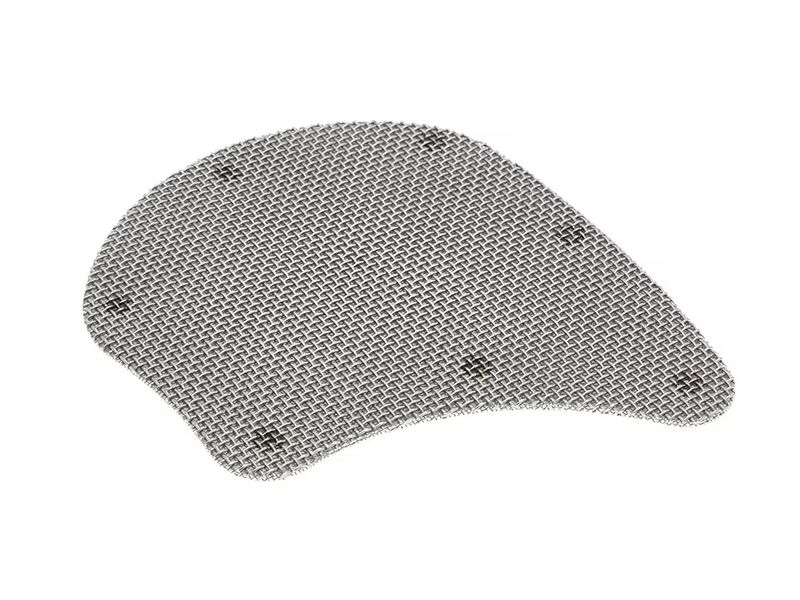
Irregular discs / custom mesh inserts / stamped shapes for non-standard filter seats and oem equipment interfaces, supplied to drawing with material, size and packing details confirmed at RFQ stage.
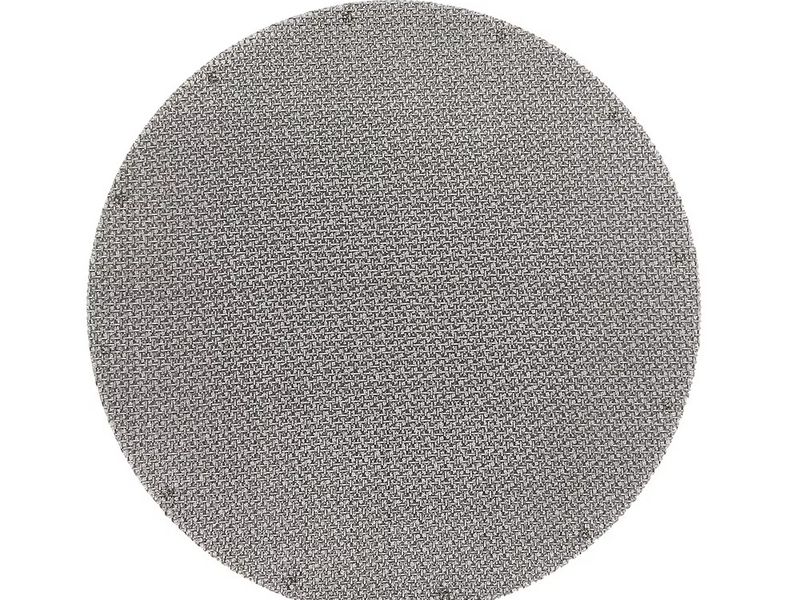
Plain discs / cut mesh pieces / custom shapes for economical mesh inserts and removable filter screens, supplied to drawing with material, size and packing details confirmed at RFQ stage.
Send drawings, dimensions, material, environment or operating conditions, and we will help confirm the right specification.
Uploaded reference files are included with the inquiry. For larger CAD packages, reply to the confirmation email or send them here:
Our team typically replies within 24 business hours.