In plastic recycling, the extruder screen pack does a job few operators ever see: it captures unmelted gels, tramp metal, wood splinters, paper fiber, and degraded carbon specks from the melt stream before they reach the die. A missed contaminant larger than the die-land gap scores the die, creates streaking on the finished product, and — in the worst case — plugs the die outright. Downtime on a recycling line runs expensive, and a significant share of unscheduled shutdowns trace back to screen selection errors that were entirely preventable.
This guide covers the five decisions that determine whether an extruder screen delivers the promised throughput and lifetime, or becomes the bottleneck in your recycling operation. We focus on single-screw recycling lines processing post-consumer and post-industrial polyolefins (PE, PP), the most common application where Kaifil extruder screens are deployed.
How the Screen Pack Works
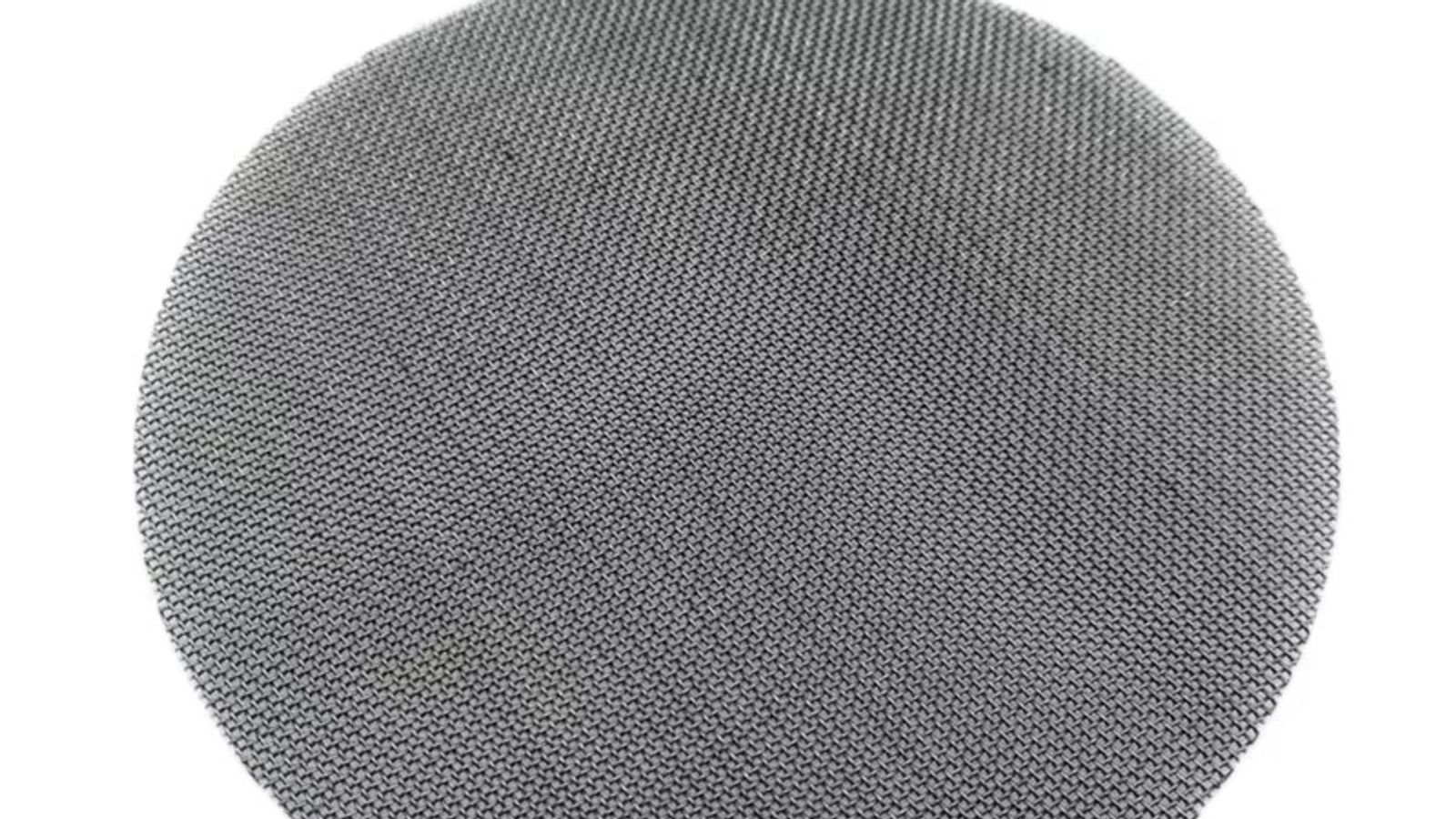
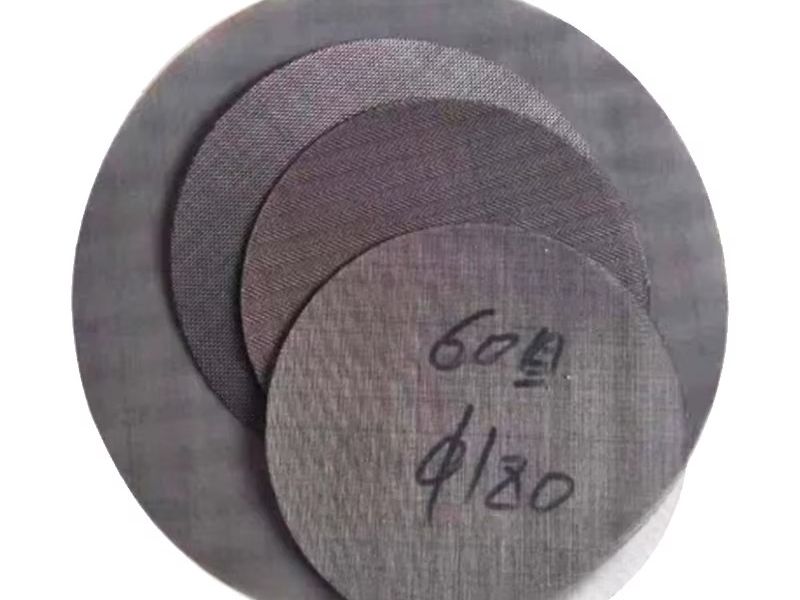
A screen pack sits between the extruder barrel and the breaker plate, held in place by downstream melt pressure. It typically consists of a coarse backup screen, one or more filtration layers of progressively finer mesh, and an upstream breaker-plate seal. The entire assembly is a consumable — most operators change screens at intervals that range from once per shift (heavily contaminated PCR feed) to once per week (cleaner in-house regrind).
Key operating parameters that drive screen selection:
- Melt temperature — typically 180–260°C for polyolefins. Determines allowable wire alloy.
- Melt pressure — upstream pressure before the screen, typically 50–350 bar. Drives wire diameter and support requirements.
- Throughput — kg/hour. Drives screen diameter and open area.
- Contamination level — ppm of non-meltables in the feed. Drives screen change interval and the fineness vs. throughput trade-off.
Decision 1: Filtration Rating — How Fine Is Fine Enough?
The single most common mistake in extruder screen specification is defaulting to the finest available mesh without analyzing what the downstream process actually requires. A 120-mesh Dutch weave screen can filter to 15–30 µm, but on a contaminated PCR line it may blind every 5 minutes — while a 40-mesh plain weave screen (≈380 µm) runs a full shift without issue.
Match your filtration target to the end product:
| End Product | Mesh Range | Filtration Rating | Weave Type |
|---|
| Pipe / profile / lumber | 20–40 mesh | 380–860 µm | Plain weave — square mesh |
| Film (≥ 50 µm / 2 mil) | 40–80 mesh | 180–380 µm | Plain or twill weave |
| Thin film (< 50 µm / 2 mil) | 60–120 mesh | 120–250 µm | Plain Dutch or twill Dutch |
| Sheet / thermoforming | 40–60 mesh | 250–380 µm | Plain weave |
| Fiber / strapping / monofilament | 80–200 mesh | 75–180 µm | Plain Dutch weave |
| Injection molding regrind | 30–60 mesh | 250–600 µm | Plain weave — coarse |
Filtration ratings are nominal unless otherwise specified. Actual retention depends on weave type, wire diameter, and contaminant geometry.
Decision 2: Weave Type — Square Mesh vs. Dutch Weave
Extruder screens use two fundamentally different weave constructions, and the choice between them determines the balance between throughput and protection.
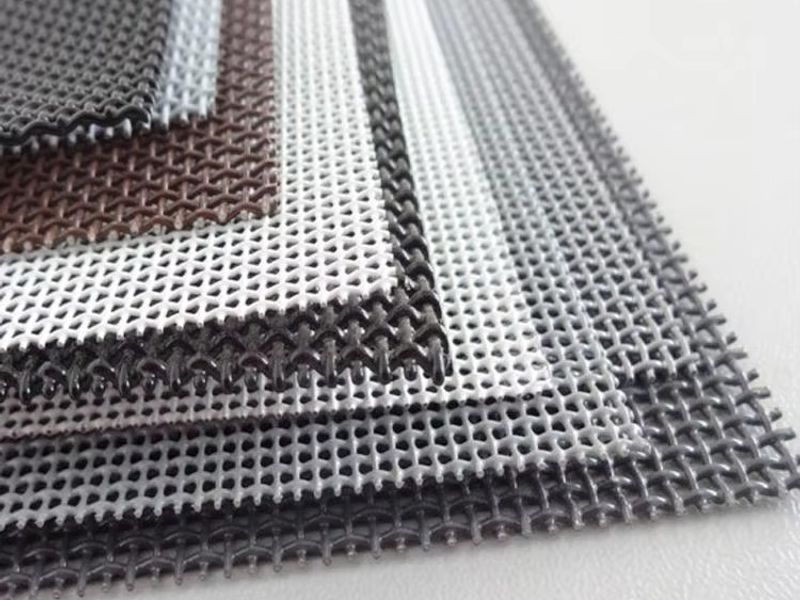
Square-mesh weave (plain or twill) provides straight-through apertures with the highest open area — typically 30–60% depending on mesh count and wire diameter. For the same filtration rating, a square-mesh screen passes significantly more melt per unit area than a Dutch weave. This is the default choice for coarse and medium filtration where throughput matters more than absolute particle capture.
Dutch weave (plain Dutch or twill Dutch) uses asymmetric wire diameters — heavier warp wires and finer, tightly packed weft wires — to create a tortuous, non-straight flow path. The result is filtration precision an order of magnitude finer than a square-mesh screen of equivalent mesh count. Dutch-weave screens are specified when the product requires gel- and speck-free film, fiber, or thin sheet at gauges below 50 µm. The trade-off: they accumulate backpressure faster, seal some open area permanently, and are harder to clean for reuse.
Practical rule: Start with square-mesh weave for any application that tolerates visible particles in the finished product. Reserve Dutch-weave screens for thin film, fine fiber, and high-clarity sheet — and budget for more frequent screen changes when using them on contaminated feed.
Decision 3: Screen Diameter and Breaker-Plate Compatibility
Extruder screen diameter must match the breaker plate exactly — a 2 mm gap around the perimeter creates a bypass path for unfiltered melt and negates the entire screen pack. Standard diameters for single-screw extruders range from 25 mm (lab scale) to over 300 mm (large compounding lines), with 80–150 mm being the most common range for commercial recycling.
The breaker plate itself matters more than many operators realize. A plate with 30% open area creates a localized high-velocity jet through each hole, which concentrates stress on the screen directly above the hole. Over multiple cycles, this stress concentration can fatigue individual wires and create premature holes in the screen. A well-designed breaker plate has 40–50% open area with chamfered holes that distribute melt flow evenly across the full screen face.
When ordering replacement screens, specify:
- Exact outer diameter (not nominal). Measure with calipers — a 100 mm screen is rarely exactly 100.00 mm.
- Edge finish — raw shear-cut, laser-cut (no fraying), or folded/hemmed edge for handling safety.
- Center hole or notch — some breaker plates have a central bolt; the screen needs a punched hole to match.
Decision 4: Multi-Layer Screen Pack Configuration
Most production lines run a stack of two to four screens, not a single layer. The purpose is to progressively capture contaminants while preserving throughput — the coarse upstream screens catch the bulk debris so the fine downstream screen doesn't blind immediately.
A typical 3-layer pack for a medium-contamination PE recycling line:
| Layer | Position | Mesh | Wire Diameter | Weave | Role |
|---|
| Coarse | Upstream (against melt) | 20 mesh (860 µm) | 0.40 mm ∅ | Plain | Protect finer layers from large debris / protect screen at startup |
| Medium | Middle | 40 mesh (380 µm) | 0.25 mm ∅ | Plain | Secondary filtration / distribute melt flow evenly |
| Fine | Downstream (against breaker plate) | 80 mesh (180 µm) | 0.14 mm ∅ | Plain or Dutch | Filtration layer — determines final particle cutoff |
Wire diameters are typical for SS304 mesh. Actual diameters vary with manufacturer and available inventory.
Decision 5: Material and Durability
Stainless steel 304 is the standard extruder screen material for polyolefin recycling. It provides adequate corrosion resistance at processing temperatures and is cost-effective as a consumable. For lines processing post-consumer PET (which generates acetic acid at melt temperatures), or when processing PVC or fluoropolymers, stainless steel 316 or 316L is recommended — the molybdenum addition resists pitting corrosion from halide and acidic byproducts.
When to specify SS316L: Recycling lines that process mixed-color feedstock with unknown contamination history, PET reclaim lines, and any operation where screens are chemically cleaned for reuse rather than discarded — because residual cleaning chemicals accelerate intergranular corrosion on SS304.
Quick Selection Guide
| Application | Recommended Configuration | Mesh Range | Notes |
|---|
| Post-consumer HDPE pipes / bottles | 2-layer: 20 + 40 mesh | 20–40 mesh plain | Expect 4–8 hour screen life on PCR feed |
| Post-consumer LDPE film | 3-layer: 20 + 40 + 80 mesh | 20–80 mesh plain | Add 120-mesh Dutch as 4th layer for thin blown film |
| In-house regrind (clean) | 2-layer: 30 + 60 mesh | 30–60 mesh plain | Screen life may extend beyond one shift |
| PET bottle flake (food-grade) | 3-layer: 20 + 60 + 120 | 20–120 Dutch | Specify SS316L; consider continuous screen changer |
| PP strapping / fiber | 3-layer: 20 + 60 + 120 Dutch | 20–120 Dutch | Fine filtration critical — fiber breaks at contaminant inclusions |
| Compounding (color masterbatch) | 2-layer: 30 + 60 | 30–60 plain or twill | Twill preferred for longer life under abrasive fillers |
All recommendations assume single-screw extruder processing at 180–260°C. Twin-screw and vented extruders may require different configurations.
Kaifil supplies extruder screens in stainless steel 304, 316, and 316L, from 25 mm to 300 mm diameter, with raw-cut or laser-cut edges. Standard meshes from 10 to 400 are kept in inventory; custom diameters and multi-layer pre-assembled packs are available with short lead times. Our engineering team can recommend the optimal screen pack configuration if you send us your extruder model, melt temperature, throughput target, and end product specification.