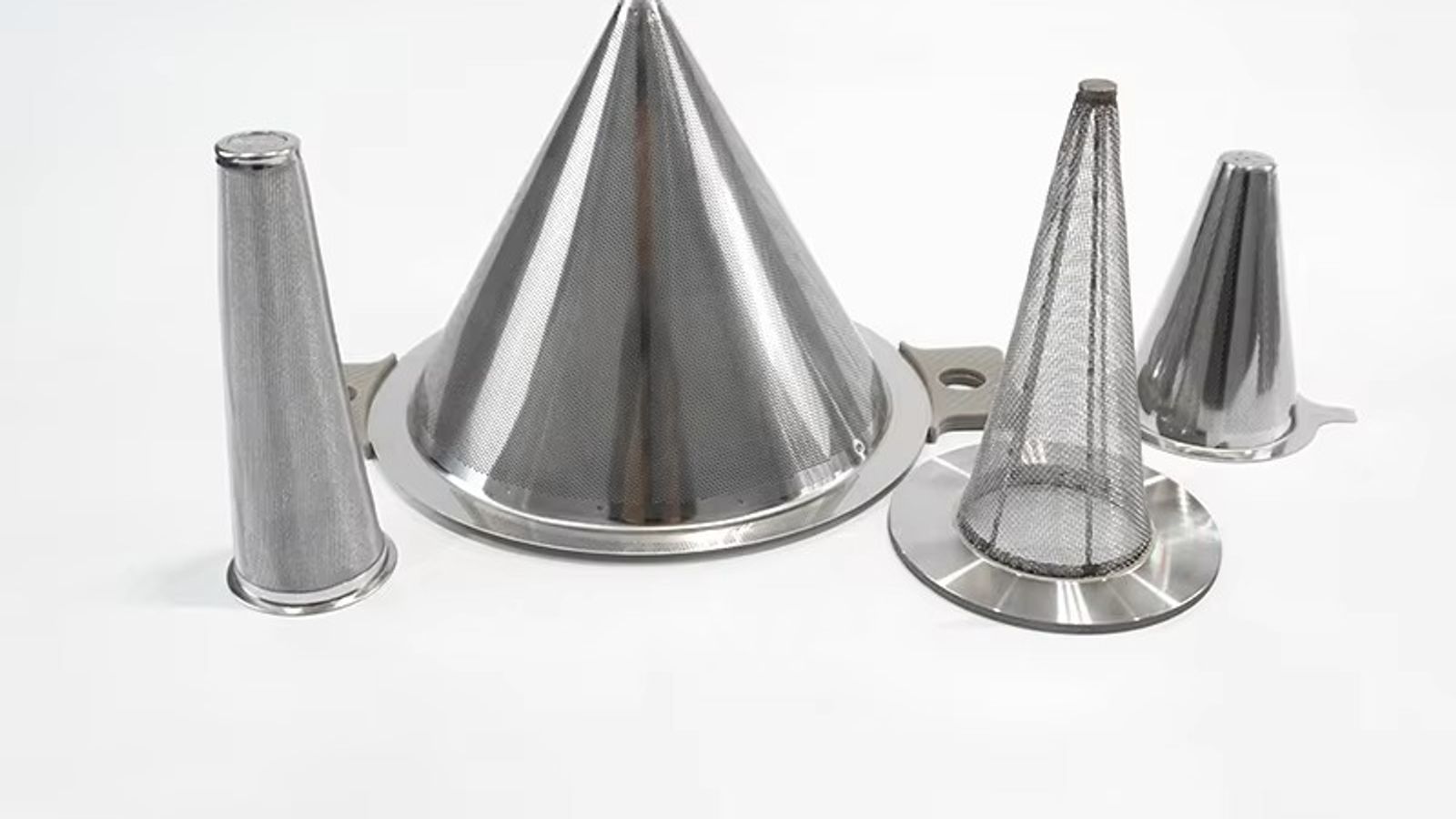
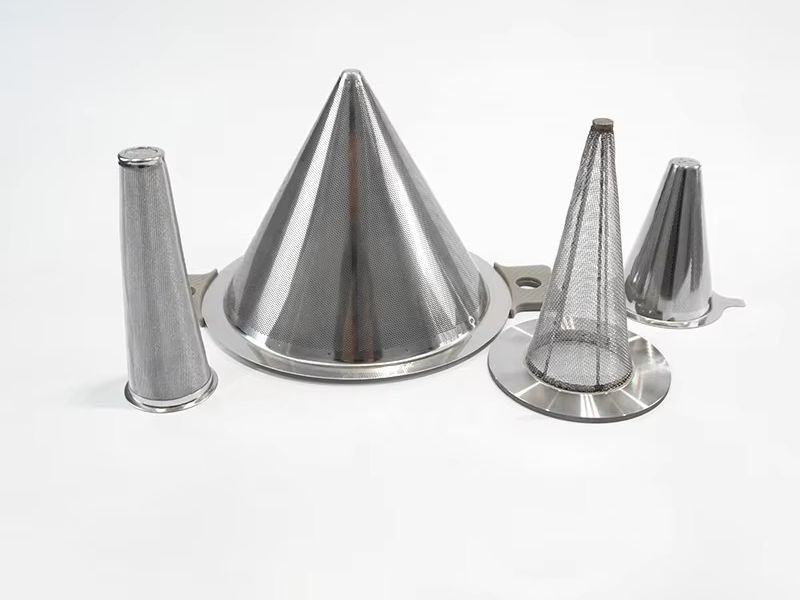
A temporary conical strainer is a type of start-up pipeline strainer fabricated from stainless steel with a cone-shaped woven wire mesh element that is clamped between flanges, installed at the start of a new or repaired line, and removed once the system has been flushed clean. It is typically supplied in Class 150 or Class 300 pressure ratings, fitted with woven stainless steel wire mesh ranging from 20 mesh (approximately 840 microns) to 200 mesh (approximately 74 microns), and sized so the fluid velocity through the effective screen area stays within the strainer-industry guideline of 0.3 to 0.9 m/s. Because a temporary conical strainer protects downstream pumps, valves, control orifices, and instrumentation from weld spatter, scale, sand, and other construction debris, it is one of the most cost-effective insurance policies an owner can install during pipeline commissioning — and selecting it correctly is a matter of three numbers: size, mesh, and pressure rating.
What a Temporary Conical Strainer Does During Startup
Every new pipeline carries construction debris. Weld spatter, cutting slag, rust scale, abrasive grit, PTFE tape fragments, and foreign material left inside flanges all travel with the first flow. If that debris reaches a pump impeller, a control valve seat, a flow meter, or a compressor, the damage is immediate and expensive. A temporary conical strainer is placed upstream of the most vulnerable equipment to trap this debris before it arrives.
The strainer is fitted between two standard flanges — no welding, no modification to the line — using the same gaskets and bolting already on the joint. The cone points downstream, into the direction of flow, so debris collects on the inside surface of the cone while the annular area around it remains clear. When startup and flushing are complete, the flange is opened, the strainer is lifted out, and the permanent gasket is reinstalled. The total cost of the device is usually a fraction of the first pump or valve it protects, which is why temporary conical strainers are standard practice in the oil and gas and petrochemical industries, as well as in power and water treatment.
One point deserves emphasis: a temporary conical strainer is not a filter and is not meant to stay in the line. Its mesh is deliberately coarse relative to the process's final filtration needs, and its pressure drop budget is measured in a few psi. It is a sacrificial device that catches large debris during the short, dirty window of commissioning.
How a Conical Strainer Geometry Works
The strainer's distinctive cone shape is what makes it effective in a flush application. Because the cone tapers downstream, the screen presents a large total surface area while occupying a small axial length between the flanges. A cone with a 15 to 30 degree included angle keeps the screen surface area high enough that the strainer does not throttle the flushing flow, even when some of the cone face is already loaded with debris.
Two load paths matter. During normal flushing, most of the flow passes through the forward portion of the cone, so the leading face does most of the filtration work. As debris builds up, the effective open area shrinks and pressure drop across the cone rises. Operators monitor differential pressure across the strainer; when it approaches the design limit — commonly 2 to 5 psi depending on the system — the strainer must be cleaned or replaced. The cone's ability to accumulate debris across its entire surface rather than on a flat disc is exactly why conical strainers are preferred over flat plate strainers for startup service: they hold more dirt and restrict flow less.
Selecting the Right Strainer Size
Sizing a temporary conical strainer starts with the line size, but it does not end there. The governing rule is to keep the velocity through the screen's open area in the range of 0.3 to 0.9 m/s (roughly 1 to 3 ft/s) for liquids. Below about 0.3 m/s, the screen area becomes uneconomically large; above about 0.9 m/s, even a lightly loaded screen generates excessive pressure drop and the strainer starts to act like an orifice.
The practical consequence is that the strainer is often one size larger than the nominal pipe size. For example, a DN150 (6-inch) pipeline running a high flushing flow may need a DN200 (8-inch) conical strainer, because the annular area between the cone and the strainer body must be added to the screen area before velocity can be evaluated. The total open area of the woven mesh — which is the mesh's open area ratio multiplied by the geometric screen area — is the figure that must satisfy the velocity limit.
Three sizing inputs are essential:
- Design flow rate. The maximum flushing flow, not the normal operating flow, because startup flows are frequently the highest the line will ever see.
- Fluid density and viscosity. High-viscosity liquids need lower permitted velocities to keep pressure drop acceptable.
- Available pressure differential. The system pressure available during flush must exceed the strainer's clean and dirty pressure drops by a comfortable margin.
A conservative sizing procedure is to calculate the required screen open area from the flow rate and the 0.3 to 0.9 m/s velocity band, then divide by the mesh's open area ratio to obtain the geometric cone surface area, and finally verify that the chosen nominal size provides that area. KAIFIL's engineering team routinely performs this calculation for customers and supplies the working dimensions with every quotation, which removes most of the guesswork from startup strainer selection.
Selecting the Wire Mesh and Micron Rating
Mesh selection for a temporary conical strainer is a balance between catching the debris that matters and keeping pressure drop low enough for the flush to work. The starting point is to protect the most sensitive downstream component — usually a pump, control valve, or instrument. The strainer mesh must be finer than the clearances of that component, but coarser than the final process filtration, because the strainer is temporary.
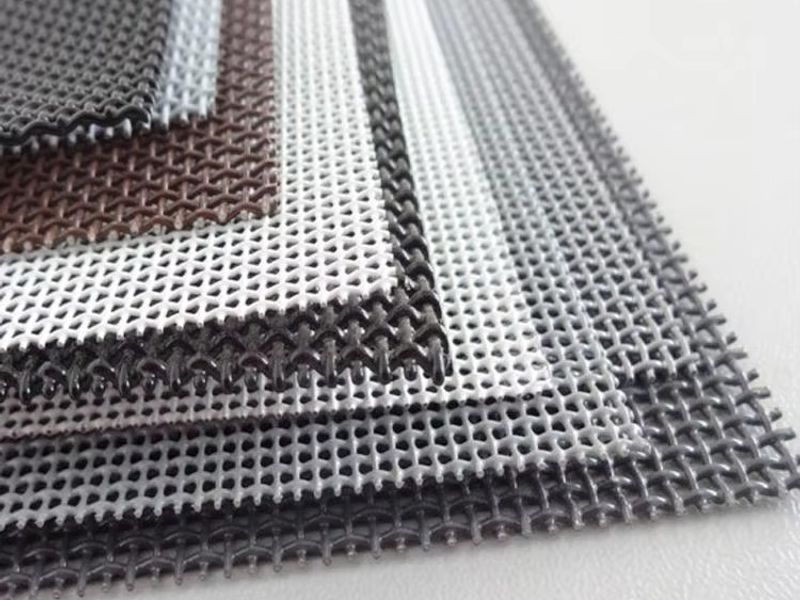
Mesh count and micron rating are directly related. In woven wire mesh, the mesh number is the number of openings per linear inch, and the micron rating describes the nominal opening size. Common selections for temporary conical strainers include:
- 20 mesh — approximately 840 micron openings, used for very coarse protection upstream of large rotating equipment where pressure drop must stay minimal.
- 40 mesh — approximately 400 micron openings, a common default for general pump protection during startup.
- 60 mesh — approximately 250 micron openings, used when downstream clearances are tighter or when the debris is fine scale rather than weld spatter.
- 100 mesh — approximately 150 micron openings, specified when instruments or small control orifices must be protected.
- 200 mesh — approximately 74 micron openings, the fine end of the practical range for a temporary conical strainer, since finer mesh would raise pressure drop unacceptably and clog within minutes during a dirty flush.
The table below summarizes typical startup selection guidance. Note that these are starting points — the final choice should always be checked against downstream component clearances and available pressure drop.
| Application / Protected Equipment | Typical Mesh | Approximate Micron Rating | Notes |
|---|
| Large pumps and compressors; coarse flush | 20 mesh | ~840 microns | Maximum open area; lowest pressure drop |
| Standard centrifugal pump protection | 40 mesh | ~400 microns | Most common startup default |
| Control valves and small process pumps | 60 mesh | ~250 microns | Catches fine scale and sand |
| Flow meters and instrumentation | 100 mesh | ~150 microns | Protects small orifices and sensors |
| Fine flush before catalyst loading or close-clearance internals | 200 mesh | ~74 microns | Check pressure drop before committing |
The weave construction also matters. Plain weave wire mesh, in which each wire passes alternately over and under the cross wires, offers the highest open area for a given mesh count and is the standard choice for conical strainer screens. Where extra strength is needed to resist distortion under high differential pressure, Dutch weave wire mesh — a construction with finer warp wires packed closely together — provides a tighter, denser screen, though with lower open area and higher clean pressure drop. For a more detailed explanation of the relationship between mesh count and micron rating, our guide on how to choose filter mesh size and micron rating walks through the arithmetic. If you are new to the terminology, our wire mesh terminology glossary defines mesh count, opening size, wire diameter, and open area in plain language.
Selecting the Pressure Rating
The pressure rating of a temporary conical strainer defines the maximum working pressure it can safely see, and it must match or exceed the flange class of the joint where the strainer is installed. The two most common classes are:
- Class 150 — rated to approximately 19 bar (285 psi) at 38°C, per ASME B16.5 for the flanges involved. This covers most water, utility, and low-pressure process lines.
- Class 300 — rated to approximately 49 bar (720 psi) at 38°C, specified for higher-pressure process lines, hydrocarbon service, and steam startup systems.
The rating is governed by the flange ring and hub of the strainer, not by the mesh. The screen itself is a thin woven element that would never survive full line pressure on its own; the strainer's strength comes from the stainless steel ring that sits in the flange joint and the cone's support structure. Two design details protect the screen during the flush: the cone is formed and supported so it does not collapse under differential pressure, and the open area is large enough that the differential across the screen — the real load on the mesh — stays small even when the line pressure is high.
Temperature derating must also be considered. Pressure classes are quoted at the standard reference temperature of 38°C, and allowable working pressure falls as temperature rises. At 260°C, for example, a Class 300 stainless steel assembly retains considerably less of its room-temperature rating. A startup strainer used in steam blow or hot commissioning service therefore needs a rating check at the actual flush temperature, not just at the design pressure.
Material selection follows the same logic as permanent piping. Austenitic stainless steels — most commonly 304L and 316L — give the corrosion resistance and weldability needed for the majority of chemical, petrochemical, and water applications. Where the fluid is corrosive to standard stainless, or where chloride stress corrosion is a concern, the mesh and ring can be supplied in higher alloys. KAIFIL manufactures conical strainers from the same wire mesh and plate grades used in our other strainer products, so the material traceability and certifications line up with the rest of the fabricated package. For assemblies that must integrate into a larger permanent screen system rather than being removed after startup, our welded wire mesh filter assemblies show the same fabrication standards applied to in-line service.
Conical vs. Basket Strainers
Once a line is commissioned, the temporary conical strainer usually comes out and a permanent basket strainer may go in. It is worth understanding the difference because the two are frequently confused and occasionally mis-specified.
| Criterion | Temporary Conical Strainer | Basket Strainer |
|---|
| Primary service | Startup and flushing protection | Permanent process protection |
| Installation | Between flanges; held by joint bolting | Flanged or welded inline housing |
| Screen element | Cone-shaped woven mesh; disposable or replaceable | Cylindrical basket; cleanable and reusable |
| Typical mesh | 20 to 200 mesh (~840 to ~74 microns) | 10 to 500 mesh; selected for process needs |
| Pressure drop budget | Low — a few psi during dirty flush | Sized for long-term operation |
| Removal after startup | Yes — designed to be removed | No — remains in service |
| Typical cost | Low; disposable | Higher; permanent asset |
The two designs are complementary, not competing. The conical strainer wins for the short, dirty, high-debris period of commissioning because it is cheap, easy to remove, and does not need a separate housing. The basket strainer wins for ongoing protection because it can be cleaned without opening the line and is built for years of service. If you are comparing strainer configurations in more depth, our article on wire mesh strainer baskets in food and beverage processing gives a real-world view of how permanent basket designs are specified — while the selection logic for temporary conical strainers in this guide follows the same sizing discipline.
Installation, Monitoring, and Removal Best Practices
A temporary conical strainer only protects the line if it is installed correctly and actually monitored during the flush. A few field practices separate a smooth commissioning from an embarrassing and expensive failure:
- Install the cone pointing downstream. The point of the cone faces into the flow. Installing it backwards destroys its capacity and creates a debris dam instead of a strainer.
- Use the correct gaskets and bolt torque. The strainer ring replaces the gasket in the joint, so the flange faces must be aligned and the bolts torqued to the same spec as the permanent joint.
- Fit a differential pressure indicator. A simple tee-and-gauge arrangement across the strainer tells the operator when the cone is loading. Removing the strainer when differential pressure spikes protects the screen from collapse and signals that the flush has done its work.
- Clean or replace, never reuse blindly. If the flush is staged, the strainer can be removed, cleaned, and reinstalled — but only if its screen is inspected for holes and distortion first.
- Log the removal. Record which strainer went in where and when it came out, so commissioning records show that every line was protected and every temporary device was recovered.
Once flushing is complete and the line is verified clean, the temporary conical strainer is removed and the permanent joint is restored. This removal step is what makes the device "temporary" — and it is also why the device should never be substituted with a permanent filter element that the commissioning team might forget to recover.
Frequently Asked Questions
What is the difference between a temporary conical strainer and a permanent basket strainer? A temporary conical strainer is a low-cost, flange-mounted device with a cone-shaped woven mesh element that is installed only during pipeline startup and flushing, then removed. A basket strainer is a permanent inline housing with a cleanable cylindrical basket that stays in service for ongoing process protection. The conical strainer is optimized for catching large quantities of construction debris over a short period with minimal pressure drop; the basket strainer is optimized for long-term, cleanable operation.
What mesh size should I use for a startup conical strainer? Choose a mesh finer than the clearances of the most sensitive downstream component, but coarser than final process filtration. In practice, 20 mesh (~840 microns) suits coarse protection of large rotating equipment, 40 mesh (~400 microns) is the common default for general pump protection, and 60 to 100 mesh (~250 to ~150 microns) is specified when control valves or instruments must be protected. Because finer mesh raises pressure drop and clogs faster during a dirty flush, the coarsest mesh that protects the equipment is usually the right choice.
How do I size a conical strainer for my pipeline? Size it from the maximum flushing flow, not the nominal pipe size alone. Keep the velocity through the screen's open area between 0.3 and 0.9 m/s for liquids, which often means selecting a strainer one nominal size larger than the line. Divide the required open area by the mesh's open area ratio to get the cone surface area, then confirm the available system pressure exceeds the clean and dirty pressure drops of the strainer.
What pressure rating do I need — Class 150 or Class 300? Match the strainer's pressure rating to the flange class of the joint where it is installed. Class 150 suits most water, utility, and low-pressure process lines (approximately 19 bar at 38°C), while Class 300 covers higher-pressure hydrocarbon, chemical, and steam startup service (approximately 49 bar at 38°C). Always check the rating at the actual flush temperature, because allowable pressure falls as temperature rises.
When should a temporary conical strainer be removed? As soon as the flushing is complete and the line is verified clean — typically when differential pressure across the strainer stops rising and debris in the collected sample drops to an acceptable level. The device is designed for removal, and leaving it in place risks it becoming a permanent flow restriction and a forgotten trap for debris.
Get a Custom Quote from KAIFIL
Selecting the right size, mesh, and pressure rating for a temporary conical strainer comes down to three numbers and one honest evaluation of your downstream equipment — but getting the fabrication details right is just as important. KAIFIL is a Chinese manufacturer of stainless steel wire mesh filters with decades of woven mesh and fabricated strainer experience, and we produce temporary conical strainers in Class 150 and Class 300 configurations with plain weave and dutch weave screens, complete with material certifications and working-dimension drawings. We routinely size strainers for oil and gas and petrochemical startups, and our custom wire mesh fabricated parts capability means we can build to your exact pipe size, mesh, and alloy specification rather than forcing a catalog part to fit. Contact KAIFIL with your line size, flushing flow rate, downstream equipment list, and pressure class, and our engineers will respond with a sized, quoted, and documented conical strainer proposal for your next pipeline startup.