Technical
Natural Gas Pipeline Filter: Sintered Element Selection Guide
Natural gas pipeline filter selection: micron ratings, ΔP limits, and sintered metal elements for compressor protection. Get a quote from KAIFIL.
Natural gas pipeline filter selection: micron ratings, ΔP limits, and sintered metal elements for compressor protection. Get a quote from KAIFIL.
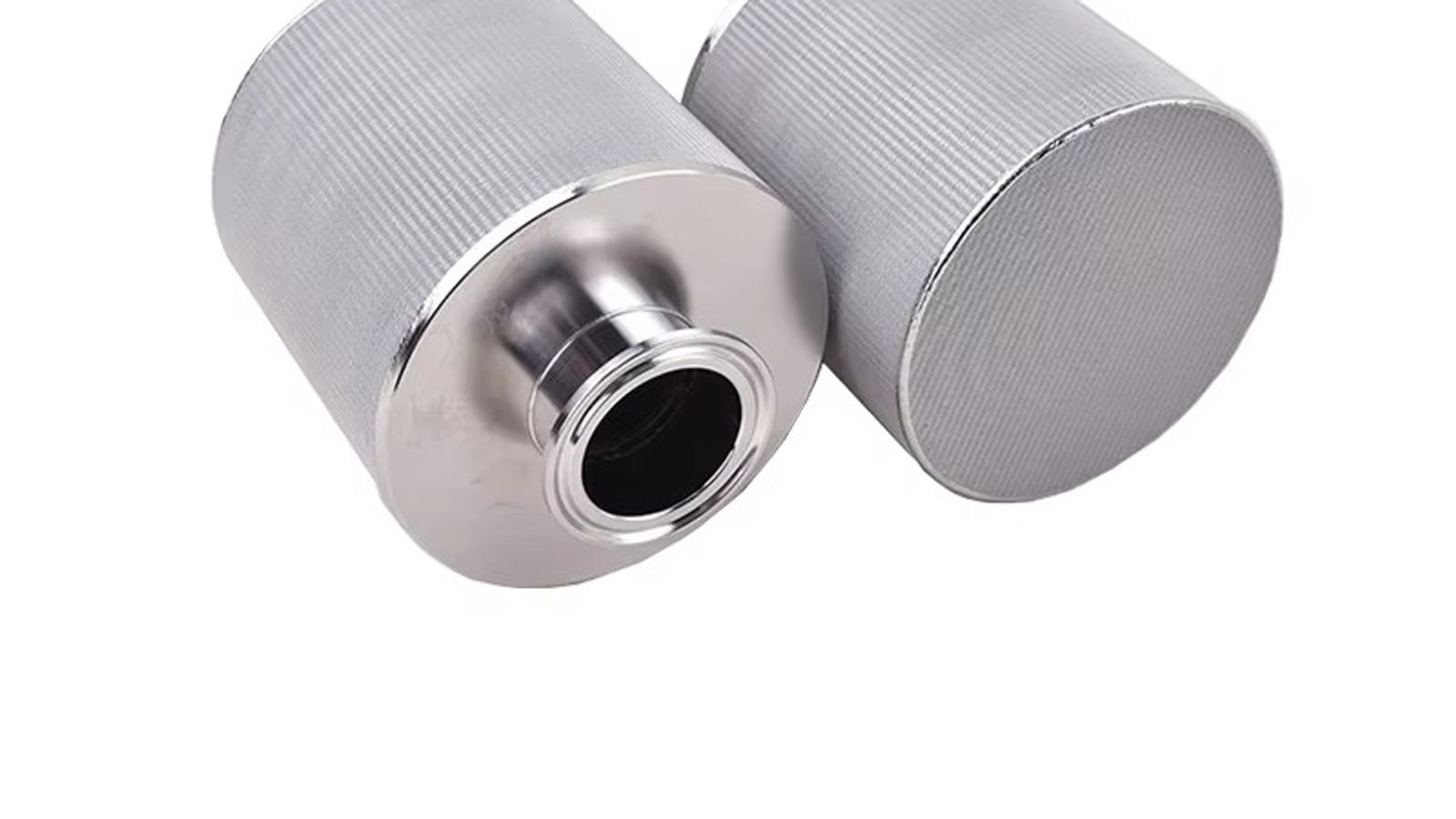
Natural gas pipeline filtration is a process in which solid particles carried by the gas stream — pipe scale, weld slag, sand, rust, and compressor wear debris — are removed before the flow reaches downstream equipment. In a typical high-pressure transmission system operating at 30–100 bar (435–1,450 psi), operators install a natural gas pipeline filter upstream of compressors, turbines, custody-transfer flow meters, and pressure regulators, because even a few milligrams of scale can erode a turbine blade or plug an orifice plate. Practical gas-service selection normally targets a 1–25 micron gas filter element for compressor protection, with coarser 50–100 micron screens upstream where the objective is bulk debris removal rather than fine polishing. This guide explains where filters sit in the pipeline system, how to balance micron rating against pressure drop, and how to select, monitor, and replace sintered metal filter elements for long, dependable service.
The debris that reaches a pipeline filter element is rarely one material. It is a mixture whose composition depends on where in the network the filter is installed:
Two practical consequences follow. First, contamination is not steady: commissioning debris arrives in slugs, while black powder builds gradually, so a single clean-pressure-drop figure never tells the whole story. Second, the right filtration duty is location-specific — a 100 micron screen at the station inlet cannot protect a turbine fuel nozzle, and a 5 micron element at the inlet will blind in a week on a dirty line.
Filters are placed at discrete protection points rather than continuously along the line. The three standard vessel types are:
Typical installation points are: the inlet of compressor stations, immediately downstream of compressors (to protect the next unit and downstream metering), at city-gate and district regulator stations, upstream of custody-transfer ultrasonic and orifice meters, and at gas-turbine fuel skids where filtration is finest.
| Location | Typical duty | Suggested micron rating | Primary contaminant |
|---|---|---|---|
| Compressor station inlet | Bulk solids removal; slug protection | 50–100 micron (nominal) | Scale; sand; rust; liquids |
| Downstream of compressor | Protect next equipment; trim debris | 10–25 micron | Valve/ring wear debris |
| City-gate / regulator station | Protect regulators and meters | 10–25 micron | Black powder; rust; hydrate dust |
| Custody-transfer metering | Erosion protection for orifice/ultrasonic | 10–25 micron | All residual solids |
| Turbine fuel gas skid | Fine polishing for nozzles | 3–5 micron (absolute) | Sub-10 micron fines |
In many transmission networks the same element family — rigid sintered stainless steel — covers all five duties, with only the micron grade changing. This simplifies spares and change-out discipline across a pipeline company's entire asset base.
The central design tension in any natural gas pipeline filter is the trade-off between particle removal and pressure drop. Because gas is compressible, the same filter that shows a modest ΔP at 70 bar can show a very different ΔP at 20 bar, where volumetric flow and velocity are far higher. The selection framework is built on four numbers:
The rule of thumb that emerges: protect the equipment first (micron rating), then maximize element area (ΔP and life), then confirm velocity. Most sizing errors in gas service come from selecting on micron rating alone and ignoring the face-velocity and clean-ΔP constraints.
For gas transmission and distribution, three element families dominate. They are not interchangeable, and the choice usually comes down to whether the element must survive backwashing, how much area fits in the vessel, and how fine the filtration must be.
| Property | Sintered metal element | Pleated stainless cartridge | Woven / wedge wire screen |
|---|---|---|---|
| Filtration range | 1–100 micron; absolute possible | 1–50 micron | 100 micron and coarser |
| Construction | Rigid; sintered powder or 2–5 layer mesh | Pleated media on perforated core | Single-layer weave or wedge-wire |
| Pressure rating | High; resists collapse | Moderate | High in rigid form |
| Cleanability | Backwash / ultrasonic; reusable | Usually disposable | Cleanable; wash-down |
| Dirt holding | High with deep media | Moderate–high via surface area | Low (surface only) |
| Best gas-service role | Compressor; turbine; meter protection | Fine duty in tight vessels | Scrubber; inlet; slug duty |
For the most demanding pipeline positions — right before a gas turbine or a custody-transfer meter — a rigid sintered metal element with an absolute rating is the conservative choice, because a collapsed or failed disposable cartridge downstream can mean an unplanned outage in addition to the element cost. For stations that run year-round without shutdown windows, cleanability matters more than first cost, which again favors sintered construction.
A gas filter element is changed on differential pressure, not on a calendar. The operating discipline is built around a clean baseline and two set points:
For sintered elements, cleaning is done by reverse-flow backwash with gas or liquid, or by ultrasonic bath, and the element is returned to service only if its dry ΔP is restored to near the original baseline and it passes a bubble-point or visual inspection. Pleated disposables are simply replaced. On either path, tracking ΔP across filter changes is the cheapest reliability data a pipeline station has — it tells you when the line upstream is producing debris and lets you forecast element consumption months ahead.
Sizing starts from the flow duty and the vessel class. Transmission and distribution filters are built to flange ratings from Class 150 (max ~19.6 bar / 285 psi) through Class 300, 600, and 900 (max ~153 bar / 2,220 psi); station headers commonly operate at 30–100 bar, so Class 600 and 900 housings are routine. The element itself must be rated for the maximum differential pressure the vessel can impose — a fully loaded element must not collapse even if the vessel bypass fails.
The sizing procedure, step by step:
High-pressure gas service also shapes the mechanical design. Elements see high collapse loads, so rigid sintered construction with reinforced end caps and support cores is preferred over fragile thin-wall media. Because maintenance access is limited on high-pressure skids, cleanable sintered elements that can be backwashed in place reduce the frequency of vessel entry. If your project requires elements for a new station or a retrofit, the practical path is to give your vendor the flow, pressure, temperature, contaminant, and target micron rating, and let them size the bank — most sizing errors originate in the data, not the math.
What micron rating should a natural gas pipeline filter use for compressor protection? Most gas transmission operators specify 10–25 micron elements for compressor and meter protection, and 3–5 micron absolute-rated elements where the gas feeds a turbine. Upstream stations that only need bulk debris removal can use coarser 50–100 micron screens.
When should a gas filter element be changed? On differential pressure, not on a time schedule. Plan to clean or replace the element when ΔP reaches roughly 0.7–1.0 bar (700–1,000 mbar), set an alarm at about 0.5 bar, and keep a record of the clean ΔP baseline so trends are visible.
Are sintered metal filter elements better than pleated cartridges for gas pipelines? For high-pressure, high-reliability positions such as turbine fuel and custody-transfer metering, yes: sintered metal elements are rigid, collapse-resistant, and cleanable by backwash, so they last longer and reduce vessel entry. Pleated cartridges offer more surface area in a small vessel and lower initial cost but are usually disposable.
Can sintered stainless steel elements be cleaned and reused? Yes. Sintered metal elements are backwashed in place or cleaned in an ultrasonic bath, then returned to service if their dry ΔP is restored near the original baseline and they pass inspection. This is a major reason they are preferred on continuous pipeline duty.
What material should a filter element use in wet sour gas with hydrogen sulfide? Standard 316L stainless steel covers most gas service, but in wet gas with H2S, selection must respect ISO 15156 / NACE MR0175 limits for sulfide-stress-cracking resistance. Where chlorides and H2S combine aggressively, a duplex stainless grade is often specified. Tell your element supplier the H2S partial pressure and whether free water is present.
KAIFIL manufactures sintered metal filter elements and filtration products in Shijiazhuang, China, for gas transmission and distribution operators worldwide — from 3 micron absolute turbine-fuel elements to coarse wedge-wire screens for inlet scrubbers. Whether you need a custom element size for a Class 900 vessel, help choosing between sintered and pleated construction for a specific micron rating and pressure drop budget, or replacement elements engineered to your existing housing, our engineers can size the element bank from your flow, pressure, and contaminant data. Contact KAIFIL for a quote and get sintered metal filter elements built to your station's exact duty.
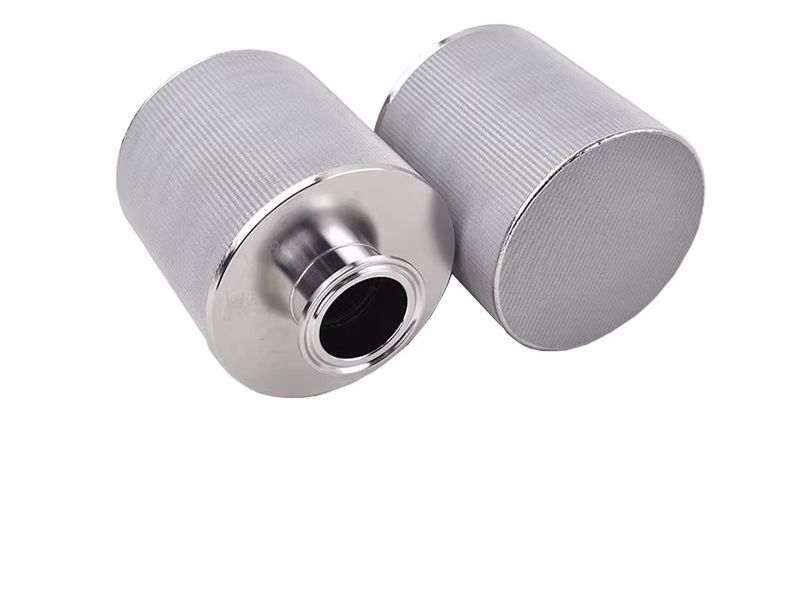
Cartridges / tubes / cylinders / cones for reusable high-strength filtration elements, supplied to drawing with material, size and packing details confirmed at RFQ stage.
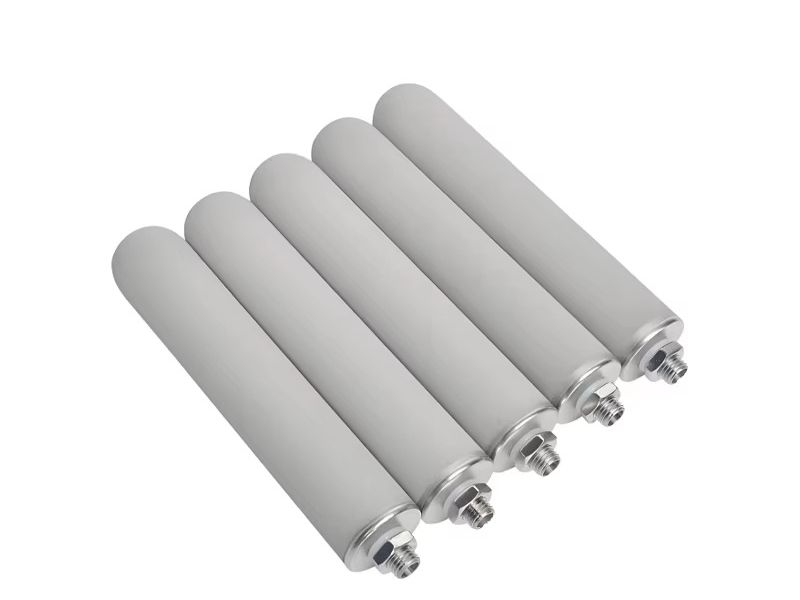
Cartridges / tubes / cylinders for reusable cartridge filtration with rigid sintered mesh media, supplied to drawing with material, size and packing details confirmed at RFQ stage.
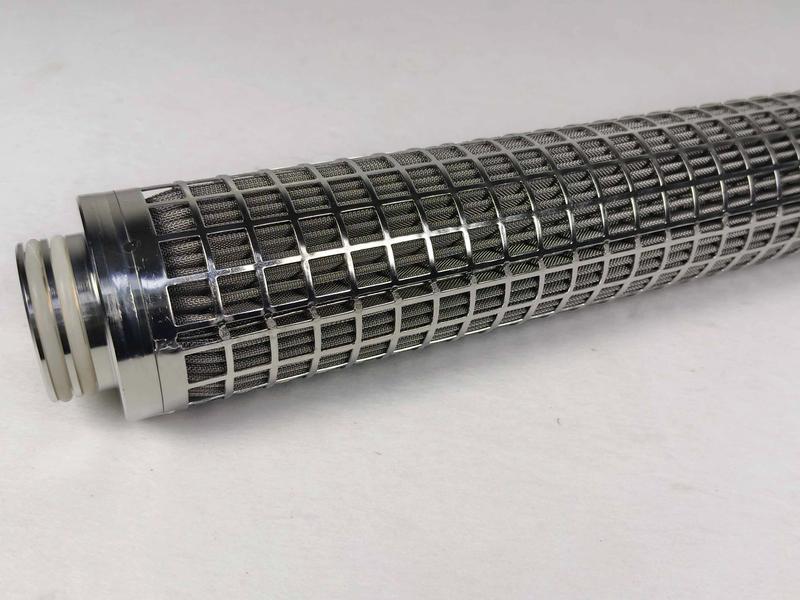
High-area pleated metal filter cartridges with custom media, end caps and seals.
Send drawings, dimensions, material, environment or operating conditions, and we will help confirm the right specification.
Uploaded reference files are included with the inquiry. For larger CAD packages, reply to the confirmation email or send them here:
Our team typically replies within 24 business hours.