Selection Guide
Screen Changer Filter Pack Specification Guide
Compare screen changer filter pack specs for pelletizing: mesh counts, layer stacks, backpressure limits, and 304 vs 316L materials. Contact KAIFIL for a quote.
Compare screen changer filter pack specs for pelletizing: mesh counts, layer stacks, backpressure limits, and 304 vs 316L materials. Contact KAIFIL for a quote.
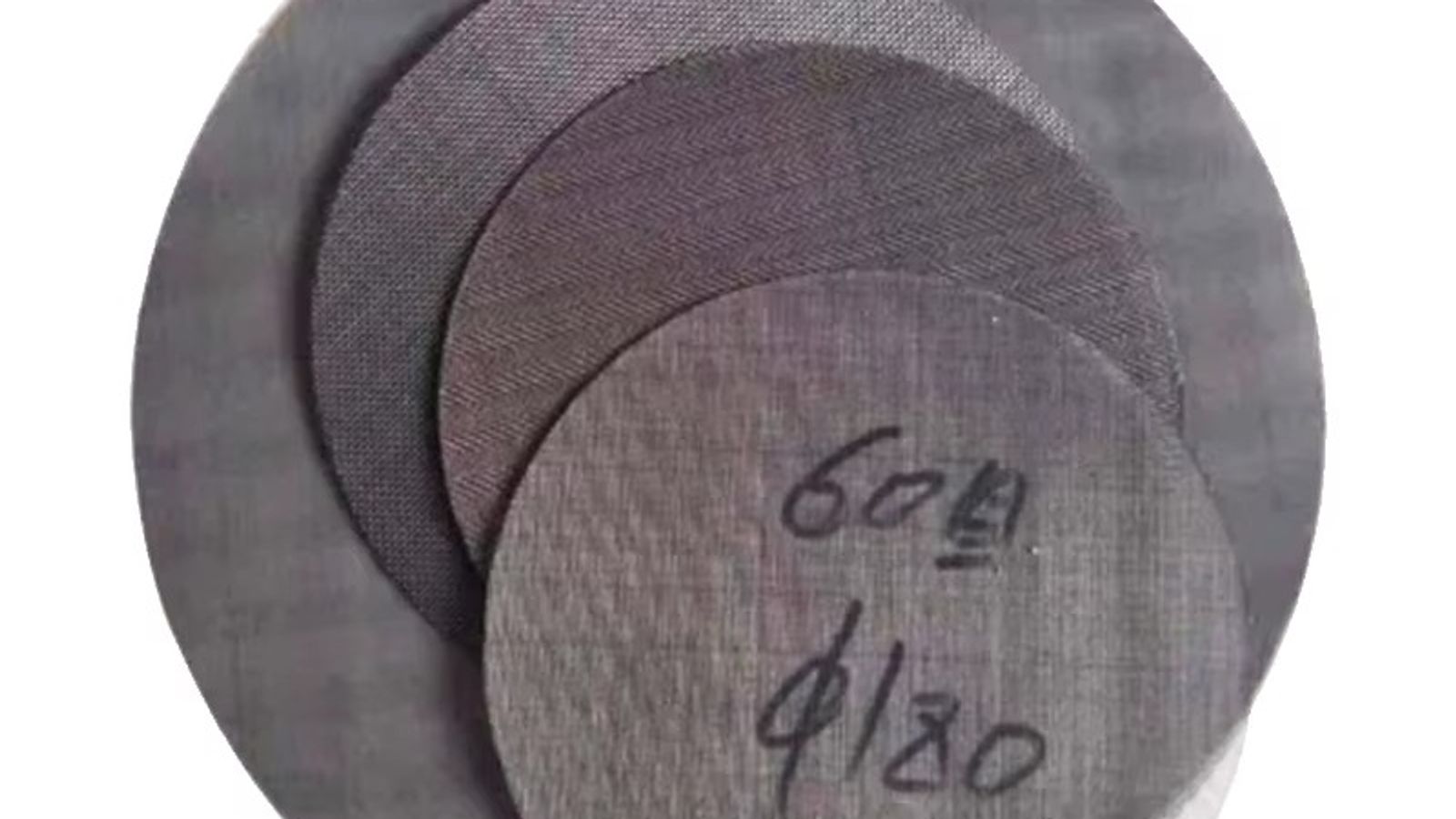
A screen changer filter pack is the replaceable, multi-layer stainless steel filter assembly mounted in the screen changer of a plastic pelletizing extruder — typically a stack of two to six woven wire mesh discs (commonly 20/40/60/80/100 mesh, with a Dutch-weave layer added for finer work) clamped against the breaker plate to trap gels, carbon specks, metal fragments and undispersed additives before the melt is stranded and cut into pellets. A correctly specified pack removes particles from roughly 100–500 µm at the coarse feed side down to 10–40 µm at the fine face, and it is normally swapped when melt backpressure reaches about 150–250 bar or when throughput starts to fall. Because the pack sits between the screw tip and the pelletizing die, its diameter, mesh counts, layer count, edge treatment and alloy determine both pellet quality and how often the line has to stop.
This guide explains how pelletizer screen changer packs are built, which mesh configurations fit which polymers, and exactly what to put on a purchase order so KAIFIL can quote the right assembly the first time.
Every pelletizing screen changer works on the same principle: the melt passes through a filter pack that loads up with contamination, and the changer swaps the pack out — or cleans it — without shutting down the line. The four common designs:
The filter pack is the wear item common to all four. Its job is to hold back solids while letting the polymer pass fast enough that melt temperature and pressure stay under control — which is why pelletizing filtration is really a balance between retention fineness, pressure loss and pack life.
A screen changer filter pack is not a single screen. It is a layered assembly of extruder screen discs stacked in a defined order, coarse layers toward the melt inlet and fine layers toward the outlet. Three parts matter.
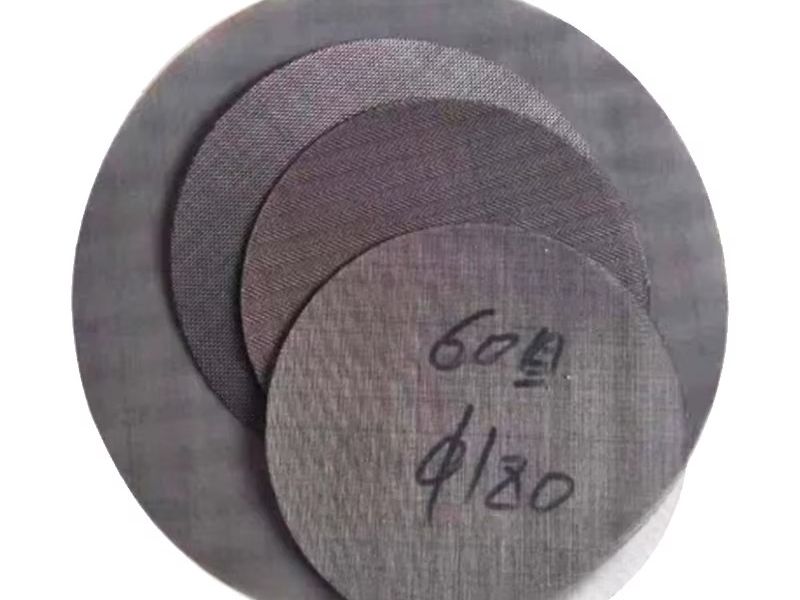
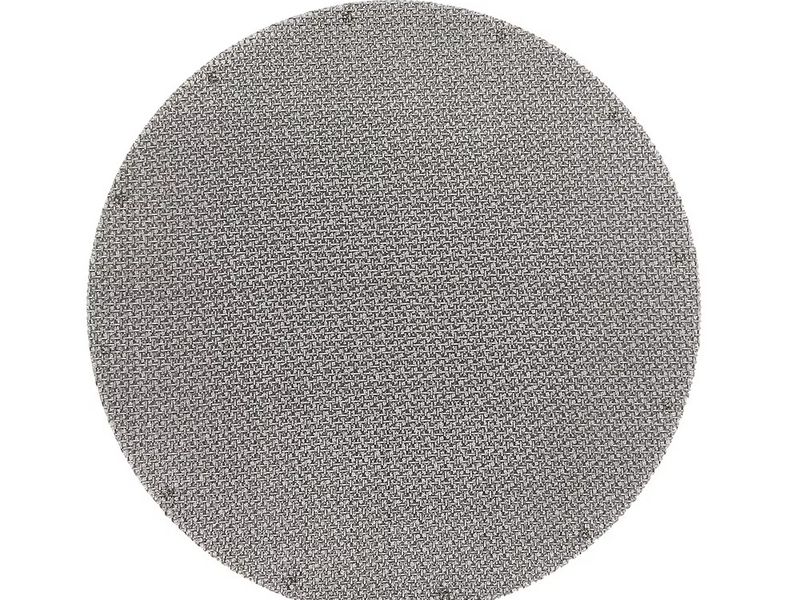
Each disc is a circular cut of woven stainless steel mesh, and the stack is ordered so that coarse mesh protects the fine mesh and carries most of the contamination load. A typical five-layer pack reads 20/40/60/80/100 — the 20-mesh layer on the feed side holds large particles and keeps the finer layers from blinding, while the 100-mesh face on the outlet side sets the filtration fineness. Layer count has a direct effect on pressure drop: each additional layer adds a small resistance, so a three-layer pack on a low-pressure line behaves differently from a five-layer pack on the same machine. Plain plain wire mesh filter discs are stacked directly in the changer cavity, while tighter assemblies add a fine Dutch-weave layer for gel and micro-spec removal.
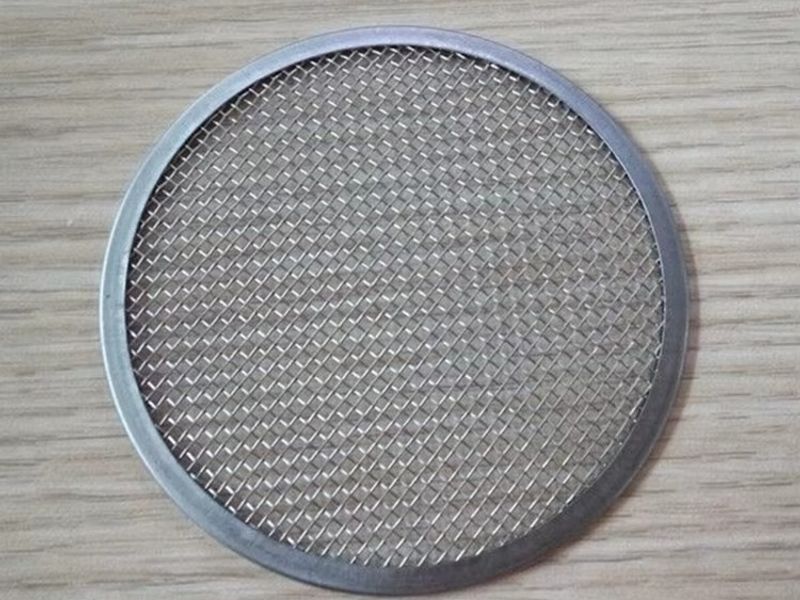
Plain discs are stamped circles; rimmed filter discs are additionally edge-treated with a welded or crimped stainless steel ring that stiffens the disc and seals it against the breaker plate. A rim prevents melt from bypassing around the pack edge — a common cause of "blown" packs that look clean but let contamination through into the pellets. For high-pressure pelletizing, rimmed wire mesh filter discs are the standard because the rim also stops the mesh layers from shifting or telescoping during a slide-plate or rotary change.
The pack seats in a recess on the breaker plate, the thick perforated steel disc that supports the mesh against full melt pressure. The pack diameter must match the recess closely (typically within ±0.5 mm, and tighter on larger plates) so the entire melt flow is forced through the mesh rather than around it. Non-circular or stepped plate recesses call for custom-shaped discs that follow the plate geometry exactly.
There is no single "best" pack. The right mesh configuration depends on the polymer, whether the feed is virgin or recycled, and the contamination level you can tolerate in the pellet. The table below shows typical starting points used on pelletizing lines; treat them as baselines and adjust after measuring actual backpressure and pellet quality.
| Polymer / feed | Typical mesh stack (coarse → fine) | Fine retention | Contamination load | Change interval |
|---|---|---|---|---|
| Virgin PP (homopolymer) | 40/80/120 or 30/60/120 | 120 mesh ≈ 125 µm | Low–moderate | 24–72 h at typical load |
| Virgin PE (LLDPE/HDPE) | 40/80/120 or 20/60/100 | 100–120 mesh ≈ 125–150 µm | Low | 48 h – 1 week |
| PET / polyester | 60/100/150/200 | 150–200 mesh ≈ 74–100 µm | Low–moderate | 8–24 h on spinning-grade |
| PA (nylon 6/66) | 80/150/200 | 200 mesh ≈ 74 µm | Low–moderate | 8–24 h |
| Masterbatch / color concentrates | 20/60/100 or 20/40/80 | 80–100 mesh ≈ 150–180 µm | High (pigment agglomerates) | 4–12 h |
| Recycled / regrind pellets | 20/40/80 or 30/60/120 | 80–120 mesh | High–very high | 1–8 h; or use backflush |
The change intervals above are order-of-magnitude guidance for pelletizing lines; the real number depends on screen area, screw throughput and upstream contamination, so track your own data rather than copying a neighbor's schedule. For a deeper look at how individual layers interact, KAIFIL's guide to extruder screen pack mesh combinations walks through the 20/40/60/80/100 and Dutch-weave stacking logic in more detail.
Mesh count describes the number of openings per linear inch, but the value that matters for filtration is the micron rating — the largest particle that passes through. Because a multi-layer pack stages retention, you can size each layer for its job:
| Mesh count | Approx. aperture (µm) | Role in a pack |
|---|---|---|
| 20 | ~840 | Coarse support and dirt-holding layer |
| 40 | ~420 | Coarse filtration layer |
| 60 | ~250 | Intermediate layer |
| 80 | ~180 | Intermediate layer |
| 100 | ~150 | Common fine face |
| 120 | ~125 | Fine face |
| 150 | ~100 | Fine face for PET/PA |
| 200 | ~74 | Extra-fine face |
| Dutch weave (e.g. 80×700) | ~10–40 | Gel and micro-spec removal |
Two rules follow from this table. First, contamination load decides how coarse the feed side should be: heavily contaminated recycled pellets need a coarse 20-mesh first layer with high dirt-holding volume, or the fine layers blind in minutes. Second, the fine face sets pellet quality, so pushing the last layer finer than needed only shortens pack life without improving the product — if 100 mesh gives the pellet spec you need, a 200-mesh face is costing you downtime for no benefit.
The failure mode to design against is blinding. When contamination fills the interstices faster than melt can push through, the effective open area collapses and backpressure climbs steeply. That is why coarse feed layers are not optional on dirty feed: they extend the life of the expensive fine layer and keep the pressure curve flat for most of the pack's life, with the sharp rise at the end acting as your change signal.
When the contaminant is gels and micro-specs rather than hard particles, a Dutch weave wire mesh layer — plain-woven with a heavy weft that creates a tortuous flow path — retains 10–40 µm and is the standard upgrade for PET, film-grade and high-gloss applications where a visible spec in a pellet means a rejected batch.
Screen changer packs fail by loading, not by breaking. As contamination accumulates, the open area of the mesh shrinks and melt backpressure rises. The practical trigger for a pack change on a pelletizing line is:
Running past the trigger point has real consequences: higher melt temperature from back-pressure heating, more specific energy consumption, and eventually a ruptured or blown pack that lets a slug of contamination into the pellets. On a pelletizing line a single blown pack can contaminate an entire batch, which is why most plants change on a conservative pressure setpoint rather than running to the limit.
Change economics are where the pack selection pays for itself. A pack is a low-cost consumable, but the downtime to change it on a non-automatic changer is minutes of lost production. A slightly coarser fine layer that extends the interval from 12 to 20 hours is often worth more than the fraction of a percent of extra fines it lets through. This is why change frequency is so tightly coupled to backpressure — KAIFIL maintains a practical write-up on extruder screen change frequency and backpressure with real-world numbers for setting change triggers on slide-plate, rotary and backflush changers.
When you contact a manufacturer, the fastest way to get an accurate quote is to send a complete specification. Here is what to include, in the order it matters:
If any of these fields is uncertain, send the screen changer make and model plus a photo or drawing of the breaker plate. KAIFIL regularly produces custom-shape wire mesh filter discs for non-standard plate geometries, so an unusual recess is not a barrier to a quote.
For recycled pellet lines, the selection logic has enough differences — higher contamination, wider particle-size distribution, occasional metal — that it deserves its own treatment. See KAIFIL's guide on selecting extruder screens for plastic recycling lines before finalizing a spec for regrind or post-consumer feed.
What mesh stack should I use for PP pelletizing? A common starting point for virgin polypropylene is 40/80/120 or 30/60/120, giving a fine face of about 125 µm. For recycled PP with more contamination, drop the feed side to 20 mesh (20/40/80) so the coarse layer holds the dirt and the fine layers stay open longer.
When should I change a screen changer pack? Change when melt backpressure reaches roughly 150–250 bar, when throughput falls 10–15% at constant screw speed, or on a fixed schedule based on your historical data. Changing on backpressure rather than on time protects pellet quality and avoids blown packs.
What is the difference between 304 and 316L screen packs? 304 is the standard stainless steel for most polymers and is cheaper. 316L adds molybdenum for better corrosion and pitting resistance, so it is chosen for PVC, fluoropolymers, aggressive recycled feed and any application where packs are washed and reused. For ordinary PP and PE pelletizing, 304 is normally sufficient.
Why do some filter discs have a rim? A rimmed filter disc has a welded or crimped stainless steel ring around the edge that stiffens the disc and seals it against the breaker plate, preventing melt from bypassing around the pack. Rims are standard for high-pressure pelletizing and for packs over about 150 mm diameter, where plain discs can shift during a screen change.
What diameter screen pack do I need? Measure the breaker plate recess — the pack diameter must match it closely, typically within ±0.5 mm, so that all the melt is forced through the mesh. If the recess is stepped or non-circular, you need custom-shaped discs matched to the plate geometry.
Choosing the right screen changer filter pack comes down to a short list of numbers: plate diameter, mesh stack, layer count, alloy and rim type. Send those — or just your screen changer model, polymer and throughput — to KAIFIL and you will get a specification recommendation and a quote from a manufacturer that produces stainless steel extruder screens, filter discs and screen packs for pelletizing lines worldwide. For a broader view of where these packs sit in the process, start with KAIFIL's overview of plastic extrusion filtration, then send your breaker plate drawing and mesh requirements to receive a custom spec.
Custom screen discs and multilayer packs for plastic extrusion, recycling and polymer melt filtration.
Plain discs / cut mesh pieces / custom shapes for economical mesh inserts and removable filter screens, supplied to drawing with material, size and packing details confirmed at RFQ stage.
Rimmed discs / edged screens / multilayer packs for durable filter inserts where edges need protection, supplied to drawing with material, size and packing details confirmed at RFQ stage.
Send drawings, dimensions, material, environment or operating conditions, and we will help confirm the right specification.
Uploaded reference files are included with the inquiry. For larger CAD packages, reply to the confirmation email or send them here:
Our team typically replies within 24 business hours.